Egypt has just upped its war on the Internet, and cut access to mobile phone communications, in areas where thousands of protesters gathered for a Day of Revolution. The aim seemed to be an attempt to control the flood of protesters and strangle the
movement.
Demonstrations sprung across the country, with calls for the end of President Hosni Mubarak's 30-year rule, corruption, economic failings as well as other grievances. Word of the protests and gathering points had been announced on social networking
sites, including microblogging site, Twitter, which has been blocked by the authorities.
Such censorship has sparked the anger of activists, especially since it is the first time in Egypt's history that such heavy-handedness is used to silence people online. The move is a stark reminder of the iron fist with which ousted Tunisian
strongman Zeine El Abidine Ben Ali clamped down on the Internet, in neighbouring Tunisia, whose uprising has inspired millions of Arabs.
It is reported that Egypt is now under an Internet and SMS blackout. The governments appears under siege after a series of major protests against the regime of President Hosni Mubarak.
Sebone, a major Egyptian service provider based in Italy, is reporting that no Internet traffic is entering or exiting the country. Reporters and citizens on-the-ground are also reporting that they are experiencing an Internet and SMS outage.
Egypt has been enveloped in unrest over the presidency of Hosni Mubarak, who has been in power since 1981. The protests have been partly inspired by the successful revolution in Tunisia that forced President Zine El Abidine Ben Ali out of power after
23 years. Facebook, Twitter and social media were key communication tools used by protesters to organize rallies.
Nilesat, the Egyptian state satellite company has stopped transmitting the signal of Al-Jazeera's primary Arabic language channel.
The Committee to Protect Journalists condemns the actions of Egyptian authorities to disrupt media coverage by Al-Jazeera and calls on them to reverse the decision immediately.
Both Al-Jazeera and Al-Jazeera English continued to report today on Egypt from other locations. CPJ research shows that viewers outside Egypt can now view the network's Arabic channel only on the Hotbird satellite or other satellites not controlled by
Egyptian authorities.
But at least two individuals in Egypt who spoke to the channel's anchor on air reported that they could not view the channel even on non-state satellites, an indication that authorities may be jamming those transmissions.
Al-Jazeera English's broadcast remained on Nilesat.
The Egyptian government shut down most of its country's internet by simply throwing a switch in a crucial data center in Cairo.
That according to a February presentation to the Department of Homeland Security's Infosec Technology Transition Council, obtained by Wired.com.
The presentation argues that the Egyptian Communications Ministry acted quite responsibly in the procedure it used to cut ties from the net, after the shutdown was ordered by Egypt's much-feared intelligence service.
Most of the outage was effected through a breaker flipped in the Ramses exchange, and the rest was phone calls and arm-twisting, the presentation says.
 Egypt has just upped its war on the Internet, and cut access to mobile phone communications, in areas where thousands of protesters gathered for a Day of Revolution. The aim seemed to be an attempt to control the flood of protesters and strangle the
movement.
Egypt has just upped its war on the Internet, and cut access to mobile phone communications, in areas where thousands of protesters gathered for a Day of Revolution. The aim seemed to be an attempt to control the flood of protesters and strangle the
movement.  It is reported that Egypt is now under an Internet and SMS blackout. The governments appears under siege after a series of major protests against the regime of President Hosni Mubarak.
  Nilesat, the Egyptian state satellite company has stopped transmitting the signal of Al-Jazeera's primary Arabic language channel.
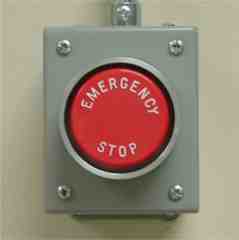 The Egyptian government shut down most of its country's internet by simply throwing a switch in a crucial data center in Cairo.