|
31st January
|
|
|
|
Malaysian book censors ban 11 books about islam
|
From the BBC see full article
|
Malaysia has banned 11 books for allegedly giving a false portrayal of Islam, such as by linking the religion to terrorism and the mistreatment of women.
The government ordered the books, most of them released by U.S. publishers, to be
blacklisted earlier this month because they are not in line with what we call the Malaysian version of Islam, said Che Din Yusoh, an official with the Internal Security Ministry's publications control unit.
Some of them ridicule Islam
as a religion, or the facts are wrong about Islam, like associating Islam with terrorism ... or saying Islam mistreats women, he said. Once you mention something which is not correct, it's not proper.
The banned books include eight
English-language ones, such as The Two Faces of Islam: Saudi Fundamentalism and its Role in Terrorism, Secrets of the Quran: Revealing Insights Into Islam's Holy Book and Women in Islam. There are also three books written in the
local Malay language.
Government authorities regularly review the contents of books and publications that could have sensitive material, mostly regarding religion and sex, Che Din said.
|
|
31st January
|
|
|
|
|
ASA are a bunch of unelected, self-appointed dimwits. See spiked-online.com
|
|
31st January
|
|
|
|
Russian internet addresses will enable the isolation of Russian users
|
Presumably this possibility would apply equally to other countries using their own alphabet such as Thailand From Publius Pundit see
full article
|
In a couple of months' time, the horrors of censorship depicted by George Orwell in 1984 will seem like childish pranks compared to the powers granted to the Russian authorities.
According to the Guardian, Russian internet users, will be
completely locked off from foreign traffic, which can be used to access the majority of free information, as currently happens in China. Those whose work requires access to foreign sites (ministries, departments and state companies) will have to be
approved by the Special Services.
In practice, this will be achieved by the introduction of Cyrillic domain names, which will automatically cut the whole of Russia off from the World Wide Web and the Internet's other services.
The
'Russian Internet' project will look at the question of how they can best communicate within their own country. The internationalization of domain names will give them the chance to do what is being attempted in China, where three top-level domain names,
written in Chinese characters, are used: .net, .com and .cn, says Wolfgang Kleinwachter, member of the UN Working Group on Internet Governance, explaining the technical details.
The key question here is whether Russia's own root servers will
use Russian international domain names when deciding where to direct their enquiries on the Internet -- that is will they be autonomous from the already existing root servers of the net, which are mainly based in the USA (5 in the USA, 2 in Northern
Europe).
In Kleinwachter's opinion, the worst case scenario would be everyone having to register domain names using the Cyrillic top-level domain .rf. Then Russian would have its own root name server, and it is much easier to control a
top-level domain than a hundred thousand subdomains, says the expert.
According to Kleinwachter, it has been suggested that people will be able to access Russian sites freely but will require a password sanctioned by state authorities to
access the global Internet. In this way, the Kremlin will be able to control each citizen's contact with the outside world.
The authorities however assert that this will make tracing "cyber-criminals" easier. Anyone wishing to read the
European press, including the Ukrainian, will now become a dangerous criminal.
Western IT specialists point out that this innovation would also make all Russian hackers absolutely untraceable without cooperation from the Russian authorities.
[Perhaps The ASCII internet world would the have to block all communication from untraceable sources]
|
|
30th January
|
|
|
|
Archnutter of Canterbury proposes Blasphemy II
|
Based on an article from the Times see full article
See also Williams' full speech
|
The Archnutter of Canterbury, Dr Rowan Williams, has called for new laws to protect religious sensibilities that would punish “thoughtless and cruel” styles of speaking.
Williams, who has seen his own Anglican Communion riven by fierce invective
over homosexuality, said the current blasphemy law was “unworkable” and he had no objection to its repeal ... BUT ... whatever replaces it should “send a signal” about what was acceptable.
This should be done by stigmatising and
punishing extreme behaviours that have the effect of silencing argument.
The Archbishop, delivering the James Callaghan Memorial Lecture said it should not just be a few forms of extreme behaviour that were deemed unacceptable, leaving
everything else as fair game.: The legal provision should keep before our eyes the general risks of debasing public controversy by thoughtless and, even if unintentionally, cruel styles of speaking and acting.
Dr Williams said: It is
clear that the old blasphemy law is unworkable and that its assumptions are not those of contemporary lawmakers and citizens overall. But as we think about the adequacy of what is coming to replace it, we should not, I believe, miss the opportunity of
asking the larger questions about what is just and good for individuals and groups in our society who hold religious beliefs.
Dr Williams was criticised by the National Secular Society who accused him of promoting self-serving and
dangerous ideas. Terry Sanderson, president, said that the Archbishop’s speech was a blatant pitch for new legislation to replace the blasphemy laws that the Government are planning to scrap.
The Government is at present consulting the
Church of England about its plans to repeal the blasphemy laws before introducing the changes when the Criminal Justice Bill is in committee stage in a few weeks.
It is as if the prolonged and widespread debate on the recently-introduced
religious hatred legislation had never happened, said Sanderson. Dr Williams takes us right back to the beginning with his special pleading for the protection of religious feelings – in other words, another form of blasphemy law that would be even
worse than the one we’re about to ditch.
Sanderson pointed out that the Racial and Religious Hatred Act – which had been under consideration for five years - was now on the statute book. It was enacted only after a great deal of bitter
dispute between religious interests and those who feared for free speech.
There is also now in law a concept of religious aggravation that can be applied to some public order offences. It carries a potential prison sentence of seven years.
This is draconian and extreme by any measure – and now the Archbishop appears to want something else.
Sanderson said that the Archbishop appeared in his speech to be making excuses for those who rioted about the Salman Rushdie case and
threatened the author with death. He also seems to think that those who created lethal street protests over the Danish cartoons had a point. The Archbishop’s speech is, at base, self-serving and dangerously illiberal,” Mr Sanderson said. “We certainly
hope that the Government is not now going to bring forward something even more extreme as a quid pro quo for abolishing blasphemy. Comment: Interpretation
31st January 2008 From MediawatchWatch Owing to the Archbishop’s opaque style of discourse, it is unclear whether or not Times reporter Ruth Gledhill is correct in her interpretation of his James Callahan
Memorial Lecture. Other reports, from more overtly religious sources, do not put the same spin on it. This appears to be the section which has led the Times to shout that he is calling for new legislation. It’s not quite there, is it? Williams
said: "It is clear that the old blasphemy law is unworkable and that its assumptions are not those of contemporary lawmakers and citizens overall. But as we think about the adequacy of what is coming to
replace it, we should not, I believe, miss the opportunity of asking the larger questions about what is just and good for individuals and groups in our society who hold religious beliefs".
Whichever way you look at it, he
was talking drivel.
|
|
30th January
|
|
|
|
Ryanair ignore the advert censors
|
From All Headline News
|
Irish airline Ryanair announced its decision to defy the orders of the UK advertising watchdog, and continue to run a controversial ad that was told to be taken out of circulation.
The airline called the order "absurd." The ad, showing
a woman dressed in a provocative schoolgirl outfit, was deemed as "irresponsible" by the Advertising Standards Authority. Underneath the photo was the tagline about the airline's hottest back to school fares.
The ad appeared in
the Herald, Daily Mail, and the Scottish Daily Mail, obtaining a 3.5-million circulation, according to The Press Association.
A total of 13 complains from readers cried out that the ad linked teenage girls to illicit and sexual behaviours. The
ASA recently catered to the outcry, ordering the three newspapers to take down the ad and never run it again.
We considered that her appearance and pose, in conjunction with the heading 'hottest' appeared to link teenage girls with sexually
provocative behavior and was irresponsible and likely to cause serious or widespread offence, the ASA was quoted as saying.
The airline responded by saying that 13 complaints out of a more than 3 million readership was an
"insignificant" proportion.
It is remarkable that a fully clothed model is now claimed to cause 'serious or widespread offence', said Ryanair head of communications Peter Sherrard, when many of the UK's leading daily
newspapers regularly run pictures of topless or partially dressed females without causing any serious or widespread offence. Sherrard continued by calling the ASA demanding orders for censorship's sake, and not advertising regulations.
Update: What Can They Do? 12th February 2008 See full article from Brand Republic The ASAs decision not to invoke its ultimate sanction and
refer Ryanair to the Office of Fair Trading (OFT), despite repeated breaches of ASA regulations, has raised questions about whether self-regulation in advertising is really working.
The ASA claims that advertisers who persistently breach its
non-broadcast advertising codes are referred to the OFT, but only after a 'longlist' of other sanctions have been considered.
A spokesman for the ASA said a referral would be made only under the Control of Misleading Advertisements Regulations,
while offensive ads are governed by rules on breaches of taste and decency: Only when other sanctions have been exhausted, such as refusing an advertiser media space, invoking compulsory pre-vetting, or taking away trading privileges, do we consider a
referral. In most cases, sanctions are effective in bringing advertisers into line.'
Ryanair's latest breach was of the taste and decency rules, and the sanction the ASA imposed was to issue an alert to newspapers instructing them not to run
the ad.
|
|
30th January
|
|
|
|
Lords are unhappy about wording of Dangerous Pictures law
|
From Parliament see full article
|
The Parliamentary Under-Secretary of State, Ministry of Justice (Lord Hunt of Kings Heath) : My Lords, I beg to move that this Bill be now read a second time. This is a wide-ranging Bill: it traverses youth justice, sentencing, anti-social
behaviour, the risk management of violent and sex offenders, the law on self-defence and the possession of extreme pornographic images, to name but a few of its provisions. ...In tackling the possession of extreme pornographic images, the Bill
seeks to bring our controls on such violent and explicit material into the internet age. We can no longer control the circulation of this pernicious and potentially harmful material through legislation dealing with the traditional forms of publication
and distribution. We have to look to an offence of possession. We want to ensure that the new offence hits the right target. In the other place, concerns were expressed that the offence went too wide. We understand that concern. I aim to bring forward
amendments in Committee that will clarify the drafting of the offence and, I hope, put beyond doubt that the type of imagery found in popular mainstream films will not be covered by the offence.
I have no doubt that the new offences of inciting
homophobic hatred will attract much debate in this House, and rightly so. In constructing the offences we have been very conscious of the need to balance the protection of the gay and lesbian community from material inciting hatred with the right to
freedom of expression. We believe that we have struck the right balance in the Bill. The new offence will apply only to threatening words and behaviour intended to stir up hatred on grounds of sexual orientation. Given that high threshold, and all the
other safeguards, including the consent of the Attorney-General to any prosecution, we do not consider that a saving is needed to protect expressions of criticism or antipathy towards homosexual practices. If such expressions are not threatening and not
intended to incite hatred, they will not be covered by the offence. If they are, then they should not be excluded. This was debated in the other place, and the other place rejected such a saving by a considerable margin. Lord Thomas of
Gresford: ...As for extreme pornography, Clause 113 is utterly vague, and Clause 115 proposes an unacceptable reverse burden of proof. We welcome what the Minister said a moment ago, when he appeared to recognise that. Baroness
Miller of Chilthorne Domer :
...The two issues I shall concentrate on are set out in Part 7—the first is extreme pornography. It is a difficult issue to debate at all, but one to which I hope we shall bring some cool and objective thinking.
Again, it did not really receive the sort of examination in the other place that it should have had. We have had an interesting briefing from a large number of academics such as lecturers in media studies and so on who have joined together on this issue.
The first point they make bears repeating at this stage: the Government have been using a rapid evidence assessment to back up their claims that legislation is necessary in this area. They say that the REA document is based on largely discredited
research emanating from particular psychology and sociology traditions once favoured in America and that the supporting evidence has no real connection to the British case. That is the sort of issue that we need to examine in Committee.
Legislation needs to be objective and evidence-based, not subjective. Personally, I do not like pornography and believe it to be essentially degrading to the spirit, and violent pornography is even worse. Indeed, anything depicting extreme violence is, I think, dangerous as regards the well-being of society. However, I also do not believe in censorship unless it is absolutely essential to protect people, and my personal view is not what I want the House to focus on. We need to concentrate on the fact that this sloppy clause is dangerous.
On 6 December last the Minister said that the Government believe that the individual pornography user will have no difficulty in recognising pornography. That is not an objective or evidence-based approach. Surely it cannot be for the possible
perpetrator of a crime to judge whether he actually is committing a crime. A great deal more thought needs to go into exactly how these clauses have been drafted, and I recognise that the Minister has suggested that the Government will bring forward
something which I hope will be more evidence-based. Further, I am extremely glad that we will have the benefit of the report of the Joint Committee on Human Rights before us.
The Earl of Onslow : ...I now turn with gentle delicacy
to extreme porn. What is it? Is it Juvenal’s ninth satire? I have unfortunately lost my Latin copy of it; otherwise, I would have quoted it to your Lordships. However, I certainly would not dream of translating it. Luckily, we are of a much less
classical generation so I hope that most of your Lordships would not have understood it. I once quoted it on the wireless—on a Radio 3 programme about pornography rock with the encouragement of the noble Lord, Lord Alli, and a minor payment. This little
sideline concerns what is meant by extreme porn. “Extreme” is an extremely subjective word. The law must not have subjective judgments in it; it makes things too difficult, if not impossible, and it makes judgment on facts difficult.
We wrote to
the Minister, asking for a definition that was sufficiently precise and foreseeable to pass Article 8, relating to respect for privacy, and Article 10, relating to freedom of expression, and asked whether the new offence was necessary in a free society.
We are concerned at the vagueness of the offence. We question whether Clause 113 is precise or foreseeable enough to meet the Convention requirements. The offence requires the image to be extreme. That is an extremely subjective judgment in itself. The
Explanatory Notes state that the new offence was made to protect individuals from participating in degrading staged activities or bestiality, to cut supply and to prevent others from accidentally coming across such material. We question whether the
behaviour criminalised in Clause 113(6)(a) and (b) should be so if carried out by adults in private. Lord Hunt of Kings Heath : ...I turn to the subject of extreme pornography. The noble Earl, Lord Onslow, and a number of other
noble Lords expressed some concerns, which I well understand, about the definitions and how they might be applied. The reasons for bringing this matter before your Lordships’ House are well taken: some very disturbing cases, with disturbing impacts, have
arisen from the availability of extreme pornography. Equally, I accept that we have to be very careful about the definition; we do not want it to be wider than we intend. I said in my opening speech that we will bring forward amendments—in Committee, I
hope—to make that absolutely clear. ... On Question, Bill read a second time, and committed to a Committee of the Whole House.
|
|
29th January
|
|
|
|
BBFC clears public nudity even when filmed under threat of arrest
|
From the BBFC
|
Lady Godiva is 2008 UK romance by Vicky Jewson. The BBFC unsurprisingly passed it 12A uncut with the following comment: Lady Godiva is a modern day romantic drama based around the legend of the Anglo Saxon
noble woman who rode naked through the streets of Coventry in order to lift an oppressive toll placed on the poor by her husband. It was passed ‘12A’ for mildly sexualised nudity and one use of moderate language.
The BBFC Guidelines at ‘PG’ state
that only ‘natural nudity, with no sexual content’ is permitted. In Lady Godiva however, when she rides naked through the streets, onlookers gaze up at her appreciatively, indicating that her nudity has some sexual appeal. The scene therefore is
best placed at ‘12A’ where brief and discreet nudity in a sexual context is allowed. The BBFC Guidelines also state that ‘mild bad language only’ is permitted at ‘PG’, which means the one use of moderate language in the film, in this case ‘wanker’, also
places the film at ‘12A’.
LADY GODIVA also contains some mild violence. However one has to wonder why public 'nudity in a sexual context' wasn't cut under the usual BBFC bollox along the lines of: cuts required to
remove sight of nudity and sexual activity in a public location in the UK. Particularly when the film publicity stories ran with the illegal public nudity theme: From This Is Derbyshire Vicky
Jewson achieved her dream of making Lady Godiva by ripping up the traditional model and doing it her way. She then persuaded a popular TV actress to strip naked and ride a horse through Oxford at the crack of dawn, against the wishes of the local
authority.
The naked part caused us the most problems, Vicky admits: The council said we would be arrested if we filmed where we wanted to. So, on the day, we got up at 4am and had lots of secret locations and only told people where we
were shooting at the last minute. We only had about an hour so we didn't concentrate much on the fact that anyone was stark naked.
|
|
29th January
|
|
|
|
Ofcom clears Bremner, Bird and Fortune over Madeleine McCann joke
|
From the Scotsman
|
Bremner, Bird and Fortune has been cleared by Ofcom over a joke about Madeleine McCann. Dozens of Channel 4 viewers had complained about the inappropriate and offensive sketch featured last October.
In a discussion about the lengths
to which Gordon Brown would go to secure victory in the event of a snap election, satirists John Bird and John Fortune mused: I wouldn't be surprised if the night before the election he went on television and said, 'Look what I found…' and held up
Madeleine McCann.
Ofcom acknowledged the "sensitivities" in the McCann case and said: Any reference to the disappearance, other than during the course of news and current-affairs reports, may result in the potential for offence.
But Ofcom said there no suggestion Madeleine or her family were the target of the humour, adding: The main point of the sketch was to ridicule politicians and the sometimes cynical approach they are perceived to have when it comes to
re-election.
The idea that politicians might be insensitive enough to attempt to exploit the tragedy surrounding the disappearance of Madeleine McCann to their advantage was consistent with the general purpose of the sketch.
|
|
29th January
|
|
|
|
Ofcom warns that user generated content may not be suitable for TV
|
From Digital Spy see full
article
|
Ofcom has issued a warning to broadcasters about the ways in which they use user generated content after Sumo TV was found to have breached the programme code on two occasions.
The regulator said that Sumo - which airs a variety of content
ranging from webcam performances to professionally-produced programmes - breached the programme code when it aired a 500 word rap by Andy Milonakis containing references to incest, drugs and sex with frequent use of expletives. In another instance, a
child was shown being repeatedly frightened by an adult who captured the scene on a mobile phone. Both incidents aired after the watershed and close to midnight.
Ofcom said that it acknowledges and welcomes the fact that, to some extent,
user-generated content provides opportunities for a more interactive experience for viewers and listeners, offering the ability to contribute more to programming than was previously possible. It added, however, that broadcasters remain responsible
for ensuring that the material they put on air - whatever its origination - complies with the programme code.
Making a ruling specific to Sumo TV, Ofcom said that the rap breached generally accepted standards and was not justified by
the context in which it was shown. The regular concluded: Ofcom is extremely concerned at the compliance decisions Sumo TV has made in these cases. In light of this finding, the measures taken and the reasoning it has used to interpret the Code, Sumo
TV should be advised that any future breaches of this nature may result in further regulatory action being considered. Further, Sumo TV is reminded that having appropriate compliance procedures in place is a requirement of its licence conditions.
In a wider notice to broadcasters, Ofcom added: Broadcasters need to be aware that simply because material is available on the web, this does not mean that it is automatically suitable for broadcast on a licensed service which has to comply with
the standards as set out in the Communications Act 2003.
|
|
29th January
|
|
|
|
Thai political book is banned
|
From FACT Thai see full article
See also www.pcpthai.org for a pdf file of the book
|
The Author of A Coup for the Rich , Professor Giles Ji Ungphakorn, writes:
I have just been informed today by Thammasart University bookshop, the only bookshop to agree to sell my book, that the Thai special branch have issued a letter to
the shop banning the sale of Coup for the Rich .
This book, which was published in January 2007, has sold over 900 copies, almost its entire print run. Mostly the book was sold directly by myself or by Thammasart University bookshop.
This is because my own university bookshop refused to sell the book, citing “incorrect procedure”.
A Coup for the Rich criticises the military coup and the liberals who supported the coup. It discusses the role of the Thai Monarchy, citing
the work of Paul Handley ( The King Never Smiles ). There is a chapter on the politics of the Peoples’ Movement. The final chapter deals with the crisis in the South.
Bangkok Metropolitan Police, acting under an appeal from the Special
Branch to investigate my book, have issued a letter to the Thamasart bookshop banning the sale of A Coup for the Rich . According to the letter, dated 18 January 2008, the book is currently under investigation concerning charges of lèse
majesté. The letter, signed by deputy police chief Chutti Tamanowanij, states that the continued sale of the book risks creating a “misunderstanding” about the Monarchy among the Thai population.
|
|
28th January
|
|
|
|
Lord Levy refuses to submit memoirs for censorship
|
From the Financial Times
|
Lord Levy, former fundraiser for Tony Blair, has refused to allow the Cabinet Office censor to vet his memoirs. The decision is likely to prompt concerns in Downing Street that the book will criticise Gordon Brown.
Simon & Schuster, the
publishing house, announced on Thursday that it had won the rights to publish the book. Lord Levy played a crucial role in attracting funding for Labour. He was arrested last year as part of the police investigation into the "cash for honours"
inquiry, although he was never charged.
|
|
28th January
|
|
|
|
|
Pretending the web doesn't exist will not serve justice See thescotsman.co.uk
|
|
28th January
|
|
|
|
Vulgar politicians in Punjab move to censor music
|
From the Financial Times
|
In the land known for churning out music videos and CDs by the hour, lewd presentation and innuendos in lyrics of pop songs has led to the Punjab government stepping in.
Vulgarity in the name of entertainment will not be allowed, said cultural
affairs minister Hira Singh Gabria, who announced the setting up of a supervisory board within a month to approve music videos before they hit the market, These people are trying to play with Punjab’s culture. It’s time to define vulgarity and check
the growing menace in the state.
The Punjab board will have assistance from school and college principals, as also members from law and art on its panel.
Many have welcomed this step. Crass exhibitionism and bawdy language in
Punjabi music is stripping it of its richness. The large number of CDs and videos being made here is reflective of the youth’s disinclination towards professions like Army, IAS, IPS. Making vulgar videos is an easier route to success and money, said
Hans Raj Hans, Punjabi folk singer.
Out of 100 videos made every month, at least 10 are vulgar in the true sense of the word, said one trader.
|
|
28th January
|
|
|
|
Video Nasties return to the gutter press
|
From a leader in the Sunday Times
See also the Express with
same story rehashed
The uncut region 0 DVD is available at UK
Amazon
|
There have been many changes in our censorship laws over the years that are to be welcomed. Allowing directors’ greater freedom, whether with sexual imagery and language, has hardly been shown to have damaged society, despite some of the fierce
battles fought at the time and which rumble on today. Out of this liberalism has emerged a more creative environment and a more realistic depiction of modern life. What is challenging the boundaries now is the scale and reach of pornography on the
internet. Just by the sheer ease with which it can be accessed, it is beginning to enter the cultural mainstream and impinge on the lives of children. This is clearly a development that should be abhorred and stopped as far as possible, but in the end it
may simply come down to parents being evermore vigilant.
Whether this has influenced the attitudes of censors remains unclear. Asked about the film SS Experiment Camp , which is on sale in the high street alongside U classified movies, the
BBFC said there is nothing in this film that anybody should have any concerns about. The film depicts women being raped, electrocuted, hung upside down, having their ovaries cut out and burnt alive in incineration chambers by guards dressed in
Nazi uniforms. That does sound “concerning”.
While censorship should have to make its case, there must be a sensitivity towards survivors of the death camps and their relatives. Depicting the Holocaust as a Jewish invention rightly causes
vilification. Why should depicting concentration camps as movie backdrops for sexual violence suddenly be acceptable? This film was banned 20 years ago and there seems no strong argument to have it lifted. Gordon Brown will meet a delegation of MPs to
discuss toughening the laws on video nasties amid worries about the influence they have on young people. These arguments may be inconclusive but Mr Brown would be wise to restrict the market in violent pornography. Comment:
We've Heard it All Before...25 Years Ago Thanks to Julian Time is running backwards. This is all part of Nutter Brazier's campaign, and we can expect more of this nonsense in the press in the
run-up to his Bill. And, of course, it was the Sunday Times which sparked off the video nasty furore in the first place with articles about ... SS Experiment Camp.
|
|
28th January
|
|
|
|
Mobile phone voluntary code on age restrictions to be reviewed
|
From the Times
|
A scheme to prevent children accessing pornography, gambling and other adult services on the latest mobile phones is to be reviewed by the telecoms regulator.
The inquiry has been triggered by complaints from charities about the project, which
was launched at the request of the Home Office. It could lead to the voluntary code being replaced with Ofcom regulation.
Mobile phone networks including Orange, O2 and Vodafone signed up in 2004 to a code that is aimed at protecting children
using “next generation” 3G phones. Under the code, the phone companies agreed to offer parents who bought the 3G models for their children the ability to install a filter, which would block access to unsuitable internet content such as adult chatrooms.
A classification system for content - similar to that used in cinemas - was also introduced, with unsuitable material to be labelled “18”. The phone companies also agreed to work with law enforcement agencies on the reporting of potentially
illegal material.
However, children's charities fear that some of the mobile operators have been lax about marketing and getting to grips with the scheme.
John Carr, secretary of the Children's Charities' Coalition for Internet Safety
(CHIS), an umbrella group that includes NCH, Barnardos and The Children's Society, said: My guess is that not all the networks are doing equally well. We have done our own informal studies in some mobile phone shops, where some shop assistants do no
know elementary stuff about internet safety.
A spokesman for Ofcom said: To ensure that children continue to receive appropriate protection, Ofcom is working with the CHIS and the mobile operators to review the voluntary code of conduct
for mobile content. A report is expected in the summer.
|
|
27th January
|
|
|
|
Ludicrous MPs resurrect moral panic long past its sell by date
|
From the Times
The uncut region 0 DVD is available at UK
Amazon
|
Films with graphic violence, including one [unrealistically] simulating the rape, torture and incineration of concentration camp victims, are being freely sold on the high street, prompting demands by
[nutter] MPs for a reform of the censorship laws.
SS Experiment Camp is one of a clutch of violent films banned 20 years ago by the director of public prosecutions that have been approved
for general release by Britain’s film censors and are on sale in shops.
The BBFC said there was no evidence that the film causes harm to viewers, adding that there is nothing in this film that anybody should have any concerns about. The
board states that sensibilities toward on-screen violence have changed since the film was banned.
However, [Julian Brazier and several nutter] MPs have questioned the censors’ judgment and their
greater tolerance of films and video games containing graphic violence. They want Gordon Brown to give the public more power to appeal against the board’s decisions. The prime minister is set to meet a cross-party coalition of MPs to discuss toughening
the laws on “video nasties”.
[The nutter] MPs are concerned that films previously considered so shocking that they were banned have been approved for general sale and are desensitising the public
to extreme violence. They are particularly worried by the decision of censors to grant a general release certificate to SS Experiment Camp , a 1970s low-budget movie that is sold alongside family films at high-street shops and online.
Jewish groups fear such films trivialise the suffering of Holocaust victims, who in the film are forced to have sex with Nazi commandants and are boiled alive if they refuse to “collaborate”. The blonde camp commandant forces a Jewish doctor to perform sadistic experiments on women prisoners, including live ovary transplants.
Women dressed in striped prison uniforms are forced to become prostitutes, tortured, hung upside down and electrocuted. They are injected and incinerated after refusing to declare allegiance “to the supreme Fhrer”.
The film’s
cover prominently displays the Nazi SS emblem and the words “Previously banned! Legally available for the first time”. Because it has an 18 certificate, it can be sold on the same shelves as U and PG certificate films.
SS Experiment Camp was
approved for release by David Cooke, director of the BBFC, Sir Quentin Thomas, the president, and two vice-presidents, Janet Lewis-Jones and Lord Taylor of Warwick. Thomas is a former senior civil servant; Lewis-Jones and Taylor are lawyers. Though it
went on sale in October 2006, it has only just come to the attention of MPs, who are shocked by its contents.
A spokeswoman for the BBFC said SS Experiment Camp had been given a certificate with no cuts because we have no concerns about
it. Although she accepted it contained sexual violence, she said the board did not believe it was harmful to viewers. It is tasteless – but then I find most Mel Gibson films tasteless, she said. We do not believe that anyone watching this
title is going to become antisemitic as a result. It is not going to create an attitude towards Jewish women that is harmful.
A private member’s bill to be introduced by Julian Brazier, the Conservative MP for Canterbury, with support from
senior MPs of all parties, would make it easier to challenge the release of “video nasties”.
Brazier strongly disputed the board’s claims and said the release of SS Experiment Camp was a clear case of the BBFC failing to protect the
public.
We live in a country where half of all males think forced sex is justified under some circumstances and it’s this kind of film that glamorises the torture of women, Brazier said. This film may have an 18 certificate but in
practice, whatever its classification, it will rapidly find its way into the hands of under18s.
A motion by 50 MPs asking for a film’s release to be reconsidered would trigger an instant appeal, under the plans to be debated by parliament
next month.
The move is backed by [nutter] Keith Vaz, the former Labour minister, who heads the powerful Commons home affairs committee.
The Holocaust Educational Trust called on the film
censors to think again about their decision to release SS Experiment Camp , which was made in Italy by Sergio Garrone in 1976. And to put the nonsense spouted by these ridiculous MPS here is a review from
IMDb The story involves a group of women who are delivered to the aforementioned SS Experiment Camp. While there they are subjected to some inexplicable
experiments, which often seem to involve forced copulation with a group of Nazi studs (who it has to be said all look strangely Italian). The purpose of the experiments is to find the best stud from this Aryan select and transfer his balls onto the camp
commandant who, as we discover, lost his when a Russian woman he was raping bit his off.
Now, the above synopsis may well make the film sound deeply depraved and offensive. Well, it is sleazy and in highly dubious taste but the execution of the
film is so amateurish and unrealistic that it really sounds a lot worse than it actually is. The depiction of the camp is more Butlins than Belsen at times. The inmates seem relatively unconcerned for the most part and the Nazi baddies are often
hilariously unconvincing. That said, there are some nasty moments, particularly the treatment meted out to the young girl at the orgy; she ends up hanging naked upside down in a shot that recalls the aforementioned distasteful cover shot. But, generally
speaking, sequences that achieve such offense are uncommon here. The scenes showing the experiments, while certainly tasteless, are often more strange than anything else. The copulation in a tank of water idea being an example where it is too bizarre to
take altogether seriously.
|
|
27th January
|
|
|
|
BBFC style ratings to be applied to all games
|
From the Scotsman
|
A likely outcome of the Government commissioned Byron Report is that video games will get BBFC-style age ratings. And these will be legally enforceable.
Ministers want to make it easier for parents to protect their children from violent games by
introducing a new, simpler classification system based on age ratings used by the BBFC. Under the new scheme, it would become illegal for retailers to sell any video game to a child who was younger than the age rating on the box. At present, only games
with near video content are regulated.
The moves come after more than 400 children and 350 adults responded to an inquiry headed by television psychologist Dr Tanya Byron into the potential dangers to young people of the internet and video games.
Her review, due to be published in March, has found that people want clearer information about the content of video games.
Under the current rules, about 10% of the 2,000 or more video games produced each year are given an age rating from the
BBFC. Only games that show sex, gross violence, criminal activity or drug use have to be referred to the BBFC. Shop staff can be fined or even sent to prison if they sell a game to a child below the age rating.
The majority of games receive an
age rating based on a voluntary system run by Pan-European Game Information (PEGI). PEGI ratings are not legally enforceable, however.
Eileen McCloy, who runs family rights group Not With My Child, said: Voluntary regulation rarely works,
shopkeepers don't care so long as the child looks about the right age. It needs to be legally enforceable.
Gordon Brown has indicated that he is prepared to back Byron's recommendation for a single, legally backed classification system.
The Byron review has worked closely with the video games industry, which is worth more than £800m to the UK economy.
David Braben, the founder of Frontier Games, said there was already a strict regime in place which the industry went to
great lengths to adhere to. He said parents and retailers must take some responsibility: The real question is how seriously do people take the existing regime. I have been in a shop when a woman was buying an '18' game for what looked like a
10-year-old and you'll find that games like Grand Theft Auto: San Andreas , which has an 18 rating, are being played by children.
Sue Clark, the BBFC's head of communications, said: Our research shows that the public knows and
understands the BBFC system and that the age limits relate to content not to their level of difficulty.
|
|
27th January
|
|
|
|
NYPD Blue nudity winds up the nutters
|
From the BBC see full article
|
US television network ABC may have to pay a total fine of $1.4m (£707,000) for airing an episode of NYPD Blue which depicted female nudity. The proposed penalty has been imposed on all 52 of ABC's stations who broadcast the episode.
The
Federal Communications Commission (FCC) said the 2003 show had "multiple, close-up views" of a woman's buttocks before the US watershed.
The FCC deems "sexual or excretory activities" shown in an "offensive" way
before 2200 as indecent.
ABC has rejected the claims, saying the buttocks are not a sexual organ. The scene in the police drama shows a boy surprising a naked woman as she prepared to take a shower.
The FCC said it received several
complaints about the sequence, which also showed one of the woman's breasts.
An ABC spokeswoman said that the programme was broadcast with parental warnings and that the realistic nature of NYPD Blue's storylines was well-known to the viewing
public.
The broadcaster has said it will appeal against the decision, which is the second largest indecency fine imposed on a broadcaster.
|
|
27th January
|
|
|
|
The Kite Runner banned in Afghanistan
|
From FACT Thai see full article
|
Afghanistan has banned the import and exhibition of The Kite Runner , a film about the troubled friendship of two Afghan boys, on the grounds that it could incite violence.
The U.S. studio behind The Kite Runner , based on the
2003 best-selling novel by U.S.-based Afghan author Khaled Hosseini, last year had to get its three young stars out of their homeland before the movie debut to protect them from a possible backlash.
Paramount Vantage released the film last month
after delays due to the extraordinary precautions taken to address concerns about the film’s depiction of one boy’s rape and other scenes of conflict between members of Pashtun and Hazara tribes.
On the basis of the instruction of the
Information and Culture Ministry, The Kite Runner film’s depiction and import has been banned, Latif Ahmadi, the head of state-run Afghan Film told Reuters: Because some of its scenes are questionable and unacceptable for some people and
would cause sensitiveness and would cause trouble for the government and people.
In one controversial scene, Hassan is raped in an alley by a Pashtun bully. The rape scene is considered inflammatory and anti-Islamic in Afghan society.
|
|
27th January
|
|
|
|
Malaysia seizes children's books that contain the word 'Allah'
|
If images of muslim prophets are offensive and Jesus is an accepted prophet, then there are surely an awful lot of offending images to seize From Compass Direct
|
Adding to the furor over whether non-Muslims have the right to use the word “Allah” in their publications and religious practice, it is reported that officials confiscated English-language Christian children’s books because they contained images of
prophets.
The government reportedly said Internal Security Ministry officials confiscated the books because their illustrations of prophets offended the sensitivities of Muslims. Islam, which shares some prophets in common with Christianity,
prohibits the portrayal of prophets.
Enforcement officials of the Publications and Al-Quran Texts Control Department under the Internal Security Ministry reportedly confiscated the books from three bookstores in Johor Bahru, Senawang and Ipoh in
mid-December.
The books have been sent to the department’s headquarters in Putrajaya for investigation. Managers of the MPH bookstores reportedly said they will wait for the Internal Security Ministry’s decision on the books.
In a
statement released on January 17 , the Rev. Dr. Hermen Shastri, general-secretary of the Council of Churches Malaysia questioned how the books could be offensive to Muslims when they were not meant for them. In the strongly worded statement about the
seizures, Shastri said government officials have no right and have overstepped their bounds by confiscating Christian literature.
He urged the prime minister and his Cabinet to take immediate action to put a stop to such seizures and to
amend administrative rules and regulations especially in the Internal Security Ministry that give a free hand to enforcement officials to act at their whim and fancies.
At the same time, the debate over whether non-Muslims can use the word
“Allah” in publications and religious practice was stoked when the Internal Security Ministry told the Sun on January 16 that it had confiscated a total of 163 publications comprising 18 titles from bookshops nationwide.
A ministry official told
the daily that the seizures were made because the word “Allah” was used in the books. But Deputy Internal Ministry Minister Johari Baharum reportedly said that the ministry did not target Christian books.
|
|
27th January
|
|
|
|
Tom Cruise book is selling well to Australia
|
From The Sydney Morning Herald see full article
|
An underground market for the new unauthorised Tom Cruise biography has sprung up on auction site eBay, with Australian buyers willing to pay a significant premium for the book.
There were dozens of auctions for Tom Cruise: An Unauthorized
Biography - many offering multiple copies - and bidders willing to pay up to $61.50. The book is available on Amazon.com for about $30, including shipping.
The book is now number one on the Amazon best-seller list.
It will not be
printed in Australia and US distributors have now said they will no longer export the book, by British author Andrew Morton, outside the US and Canada.
But eBay sellers are getting around the ban on the book by having partners make bulk retail
purchases in the US.
We've got two shipments coming, the first is 150 books," said a man selling the books on ebay, Wojtek: We're buying multiples of 100 at a time. The demand is quite substantial, we need to get in as many as we
can as quick as possible.
|
|
27th January
|
|
|
|
Re Article 301, an insult to free speech
|
From bianet
|
In an open letter, the International Press Institute (IPI), the global network of editors, media executives and leading journalists in over 120 countries, criticises the ongoing failure of the Turkish government to reform the internationally denounced
article 301 of the Turkish penal code.
H.E. Recep Tayyip Erdogan Prime Minister of Turkey
H.E. Abdullah Gl President of Turkey
Your Excellencies,
The International Press Institute (IPI), the global network of editors,
media executives and leading journalists in over 120 countries, would like to express its disappointment at the Turkish government’s failure to initiate reform of the criminal defamation articles laid down in the Turkish penal code, in particular article
301.
As you are aware, article 301 criminalises insults to "Turkishness" and carries a sentence of up to three years imprisonment. This article has been heavily criticised by the international community and its reform is a prerequisite
to Turkey’s accession to the European Union.
According to information before IPI, comments made on 7 January by Mehmet Ali Sahin, the Turkish Minister for Justice, suggested that the long awaited reforms to article 301 were due to be brought to
Parliament last week for debate. However, Prime Minister Tayyip Erdogan denied this the following day, stating that the draft reforms were incomplete. Certain press reports suggested that the reform package would be introduced to the floor of the Turkish
parliament this week. However, this has not yet happened.
IPI would like to urge the Turkish government to reform article 301, as the threats it represents to freedom of expression are in stark contrast to the rights laid out in Article 10 of the
European Convention on Human Rights.
The willingness of the Turkish government to tackle this issue has special relevance at this moment in time. This week sees the first anniversary of the brutal murder of Turkish-Armenian journalist Hrant Dink,
who was killed outside his offices in Istanbul on 19 January 2007. Dink, who was nominated IPI World Press Freedom Hero for 2007, had his conviction for breaching article 301 upheld in July 2006. Dink had received various threats from nationalists, and
his murder was followed by widespread calls for changes to article 301, including an admission by President Gul in October 2007 of the necessity to reform this pernicious law. However, the article remains on the statute books.
IPI urges the
Turkish government to place the package of reforms before parliament and to repeal article 301, and in doing so fulfil its obligations as a modern democracy. IPI also urges the Turkish government to repeal all other laws that impinge on freedom of
speech, such as article 318, which criminalises "alienating the public from military service", and article 5816, which contains provisions for "insulting or cursing the memory of Ataturk".
Both of these laws were applied this
week against Yasin Yetisgen, editor-in-chief of the newspaper Coban Atesi. Yours sincerely,
David Dadge
Director
|
|
26th January
|
|
|
|
Parliament human right committee condemns dangerous pictures bill
|
From the IRNA see full article
|
Measures in the new Criminal Justice and Immigration Bill will infringe human rights in the UK and should be amended or dropped, an all-party parliamentary committee warned Friday.
The bill lays out proposals across policy areas as diverse as
blasphemy laws, dealing with prostitution, youth offending and the proposed ban on prison workers striking.
It has been described by the government as an exercise in rebalancing the criminal justice system in favour of the law abiding
majority.
But the Joint Select Committee on Human Rights (JCHR) warned that there were many serious implications for the rights and freedoms of UK citizens.
This is yet another criminal justice bill with potentially enormous
implications for human rights in this country, said JCHR chair Andrew Dismore. We have serious questions about the Government's justification for some of these proposals, he said.
Dismore said there were particular concerns whether
the Government is seeking to protect public safety in the face of genuine threats or using legislation to deal with exaggerated public perceptions about crime levels.
The new crime of possessing "extreme" pornography was said to be
too vague and the criteria too subjective, while new "Violent Offender Orders" were also not well defined and represent another resort to methods of control outside the proper criminal process.
|
|
26th January
|
|
|
|
US catholics whinge at performance of Jerry Springer: The Opera
|
From Catholic Online see full article
|
US Catholics are calling for the cancellation of Jerry Springer – The Opera in Concert scheduled for performance at Carnegie Hall in New York City on January 29 and 30.
The controversial production is being opposed by The American TFP
and its America Needs Fatima campaign. The group’s web site, www.tfp.org, is asking its readers to voice their concern by signing an e-mail protest addressed to Mr. Sanford Weill, Chairman of the Carnegie Hall Board of Directors.
The e-mail
message states: The show is vulgar beyond description and is an egregious display of blasphemy. Over 82% of America is Christian. Millions feel insulted by this show.
We’re hoping Carnegie Hall will just cancel the show and avoid
becoming a center for the promotion of blasphemy and indecency, said TFP spokesman Robert Ritchie. The show mocks everything Catholics hold sacred: the crucifixion, Jesus and the Virgin Mary. The Annunciation is described as a rape. Nudity and
profanity abound and Catholic beliefs are ravaged.
|
|
26th January
|
|
|
|
Rockstar rightfully unimpressed by the court judgement
|
From GameDaily
|
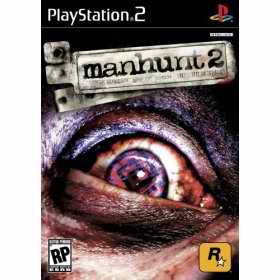 Rockstar is not wholly impressed by the High Court judgement, and expressed their feelings on the matter in a statement issued to the press:
"We believe the VAC decision was correct and do not understand
the court's decision to expend further public resources to censor a game that contains content well within the bounds established by the BBFC's 18-plus ratings certification,"
|
|
26th January
|
|
|
|
No fighting in uniform, Thai TV producers told
|
From the Nation
|
The spat over the Air Hostess War TV soap ended yesterday after a talk hosted by Culture Ministry.
The producers, Exact, agreed to remove any fight scenes of characters in flight attendant uniforms, to make the uniform skirts two inches
longer and to add some scenes showing cabin crew working hard for passengers.
Battle of Angels director Nipon Phewnena said the changes were not seen as damaging because he wanted everyone to be happy and feel better about the soap opera,
and he affirmed this would not affect the story's intensity, continuity and entertainment.
Nipon admitted audience ratings had actually increased following the flight attendant's movement against it, although he insisted it was not the kind of
ratings boost the producers were proud of. He said this had taught drama producers to work more carefully.
The Thai Airways International (THAI) Union acting chairman Somsak Srinuan said the union was satisfied with Exact's proposal and would
keep a close watch for such improvements in the soap opera.
|
|
26th January
|
|
|
|
German authorities ban daytime adult adverts on teletext
|
From Variety
|
German TV channel RTL 2 is in trouble for running pornographic ads on its teletext during daytime children program hours.
The issue was picked up by the national org for protection of minors in the media, Kommission fuer Jugendmedienschutz (KJM).
While RTL 2 claimed that it has received no objections.
KJM has asked RTL 2 to ban the sex ads by Jan. 24, otherwise it would face fines.
|
|
26th January
|
|
|
|
Atheist website blocked by court order
|
From OpEdNews.con
|
Today we got a letter from the head of the number one Turkish atheist site which has been removed by the Turkish government twice. Once under the original domain and again under another domain. Unfortunately, the owner is unable to fight this in court
because to do so, he would have to identify himself which, if you're familiar, will end up resulting in his head being chopped off by the peaceful and loving Muslims who work for Allah. If you speak Turkish and you are an atheist please support this
site:
Ateizm.org , the most prominent non-profit Turkish web site on atheism and religions was closed for the second time in December 2007, under orders from a Turkish court. Ateizm.org was established in 2000 by three young Turkish atheists who
devoted themselves to the enlightenment of Turkish people. Ateizm.org hosts an online discussion board named Ateistforum , one of the busiest forums for the Turkish speaking online
community over the Internet.
Many aspects of Ateizm.org are considered to be revolutionary for Turkey. First time in the history of Turkey every conceivable aspect of Islam is being openly, scientifically, honestly and courageously discussed and
criticized. Over the years many thousands of articles appeared in the forum, many of which referred to the verses of Koran and Hadits. With the possible exception of Ilhan Arsel and Turan Dursun's studies, Koran had never been criticized in Turkey so
much before. In addition to these short communications, numerous satires, short stories, poems, comments and lengthy articles were published. A few years after the inception of Ateizm.org, a separate science forum was established and started to enlighten
young Turkish minds.
During its lifetime Ateizm.org was hacked three times and experienced some serious hosting problems. We survived all of them with flying colors and started over wherever we had left. Last year, however, our web site
encountered a different and more ominous kind of problem. In June 2007, without warning, our web site was closed to its Turkish audience with a court order based on a legal action taken by a Turkish creationist named "Adnan Oktar" (now widely
known by his pen name "Harun Yahya"Eye-wink. Since ateizm.org was hosted in the US, it remained accessible from abroad, but inaccessible to its main audience in Turkey. If we hired a lawyer and challenged the court order, we probably would have
won our case. But we do not want to disclose our identities. This is our biggest weakness. According to our lawyer, there is no way to take a legal action in Turkey and remain anonymous at the same time. Many Turkish intellectuals who were against Islam
and outspoken about their views on religion were murdered by Islamic fundamentalists in the past. We do not want to risk our lives.
Since we were unable to challenge the court order, we chose to change our domain name to Ateizm1.org and remained
in operation. We continued to bitterly criticize a Turkish creationist organization called "Science Research Foundation" ("Bilim Arastirma Vakfi" or "BAV"Eye-wink and its honorary president Harun Yahya. In December 2007
Ateizm.org (then called Ateizm1.org) was closed to Turkish audience for the second time by another court order.
During 2007 Turkish Telecom has been busy blocking access to many other web sites(*), including YouTube, but they had to back off from
YouTube ban due to public outrage.
We know that if Turkish media or Turkish Government is criticized in Europe or US, they listen and pay more attention to it. Becoming a full member of the European Union is crucial for Turks, therefore whenever
issues related to democracy, freedom of speech, human rights and alike are raised in the West, they are taken seriously, sometimes even addressed by the government, particularly if the issue is something that affects Turkey's image or credibility in the
West. Therefore it is vitally important that we find prominent international allies eager to support our cause by publicizing this issue as much as possible. We need a lot of noise! Some of the web sites blocked by Turkish Telecom in 2007:
mfipb.com
antoloji.com
calinmisgenclik.com
calinmis-genclik.com
sozluk.sourtimes.org
gizliweb.com
19.org
superpoligon.com
adnanoktar.com
cevaplar.wordpress.com
yahyaharun.com
adnanoktar.wordpress.com
bilimvedin.blogspot.com
cevaplar.wordpress.com
kisiselgoruslerim.blogspot.com
ateizm.org
|
|
25th January
|
|
|
|
Freedom of expression denied to adults less the children play Manhunt 2
|
From Gamespot News see full article
|
In an all-day hearing at the Royal Courts of Justice in London, the Honourable Mr Justice Mitting sided with the BBFC's argument that the Video Appeals committee (VAC) had erred when considering whether Manhunt 2 could be considered
harmful to minors who viewed it. Whereas the VAC interpreted this as "actual harm," the BBFC and Mitting believed it should be taken in a broader scope of "potential harm and risk of harm." The BBFC also argued that the VAC
based its decision on whether or not the game would have a "devastating effect on society," and argued that this "harm threshold" was too high.
Rockstar argued that due to the human right to expression, the game should never
have been banned in the first place, and that even if Mitting found that the law had been misinterpreted, he should let the VAC's decision stand. Mitting responded by saying he did not feel qualified to make such a decision on the case, having not been
involved in it since the beginning, but told the VAC that it should bear this criteria in mind when making their new decision.
During the proceedings, it also emerged that there are several stages to the decision made by the VAC in cases such as
this. The first is whether the material is question is criminal (for example, containing child pornography), and Manhunt 2 was ruled to not contain anything of this nature.
The second decision is whether it will cause harm to adults, and
once more, it was found that the game was not likely to do this. The third point was whether or not it was likely to be viewed by minors, and in response to that criteria, Rockstar argued that the BBFC's certification worked and that children were
unlikely to have access to the game. However, the VAC ruled this was not the case because children were likely to have access.
The fourth decision was whether or not harm would be caused to minors if they viewed or played the game, and the vote
was 4-3 in deciding that it would not. All members of the VAC admitted that it had been a very difficult case.
After quashing the VAC's decision, Mitting explained, In the circumstances, it seems to me the only just method of ending this. He stipulated that the same seven members of the VAC must now reconvene and make a new decision based on the guidelines he laid down in the courtroom today. It is understood that this is likely to happen within the next two weeks, which would in theory put an end to the protracted legal drama.
|
|
25th January
|
|
|
|
Continuing French court case over Mohammed cartoons
|
From MediawatchWatch see full article
|
Philippe Val, the editor of the French satirical weekly Charlie Hebdo who was acquitted last year of charges of “offending Muslims”, was back is court yesterday on the same charges.
The Paris Grand Mosque accepted the March 07 ruling, but it was
appealed by the Union of Islamic Organisations of France and later by the Saudi-based World Muslim League.
The verdict is expected next month. The Muslim associations aimed to show that reprinting the
cartoons was a provocation equal to anti-Semitic acts or Holocaust denial which are banned under French law.
The weekly Charlie Hebdo, which put out a special edition with the cartoons, argued religions are not beyond criticism and letting
Muslims censor the media would curtail a basic right.
|
|
25th January
|
|
|
|
Canada Post told to stop censoring political flyers
|
From The province
|
The Sex Party was ready to party over its "victory" in Federal Court, which ruled that Canada Post must rewrite its guidelines on what constitutes explicit sex.
We consider this a victory, said John Ince, the president of the Sex
Party, a registered political party in British Caledonia I think it's a victory for the rule of law. It's saying that Canada Post is not above the law. It can't just ignore cabinet regulations and just do whatever it wants in the area of sex.
Ince was reacting to a decision by Federal Court Justice Michel Beaudry to the Sex Party's challenge of Canada Post's refusal to deliver a mass mail-out of a political pamphlet during the 2006 federal election because it deemed it offensive and
sexually explicit without explaining what that meant.
We are trying to make our society, and especially our government institutions, more tolerant and accepting of healthy sexual expression, said Ince. The pamphlet was titled
Politics for a Sex-Positive Future. It contained erotic art images and outlined the party's platform.
Canada Post has been relying on basically an illegal internal rule to prohibit our material and, indeed, all sexual material, said Ince.
He said that the government had previously ruled that the mail must be delivered unless the contents were illegal.
The court gave Canada Post six months to rewrite its policy.
We're examining our policies, said Lillian Au,
spokeswoman for Canada Post.
|
|
24th January
|
|
|
|
Complaints about Boots nipple cream rejected
|
Based on an article from the Guardian see
full article
|
An ad campaign for Boots' nipple cream has escaped a ban from the advertising watchdog.
A press ad, for the Boots Expert moisturising nipple cream, ran in magazines including OK!, Mother & Baby, Best and Chat. It featured a sketch drawing of a
woman holding her baby at arm's length with a grimace on her face. Her dress was open and showed the skin on her breast stretched taut from the baby's mouth. In the ad the woman complains that breastfeeding has caused her to have extremely sore nipples.
Text at the foot of the ad states: If you've got cracked nipples, Boots understands how it feels ... The new Boots Expert range. For every problem, there's now an expert solution.
The Advertising Standards Authority received a
total of 19 complaints about the ad from members of the public and organisations including the Association of Breastfeeding Mothers and the National Childbirth Trust.
Complainants said the ads were misleading because they implied that sore
nipples were normal when breastfeeding, whereas in fact it was usually due to incorrect feeding techniques. The complainants added that the ad was also misleading because Boots positioned its cream as the only product that could alleviate the problem of
sore nipples.
They also argued that the ads were irresponsible, because they might discourage new mothers from seeking professional guidance about correct feeding, and offensive because they presented an unfair and negative image of
breastfeeding.
Boots said the ads were designed to look at a problem commonly experienced by mothers in a light-hearted and humorous way. In its ruling, the ASA said breast-feeding mothers were likely to be reasonably well informed
about the causes of sore nipples through antenatal classes and literature.
The advertising regulator concluded that the campaign sought to offer the Boots cream as a product to alleviate sore nipples and that it would not discourage new
mothers from seeking professional guidance about correct techniques.
It also said the ads did not present an "unfair or negative" image of breastfeeding and therefore were not likely to cause widespread offence.
|
|
24th January
|
|
|
|
Pakistan secretly introduces draconian cyber law
|
From AsiaNews.it see full article
|
The Pakistani government has issued a new ordinance to prevent cyber crimes some of which can be punished with death or life in prison. Media and civil society organisations have criticised the new legislation calling it another attack on freedom of
expression and on freedom of the press.
The law, which was adopted in secret and is retroactive to 31 December 2007, encompasses 18 offences that carry severe punishments.
But Peter Jacob begs to differ. For the executive secretary of the
National Commission for Justice and Peace, the human rights agency of the Catholic Bishops’ Conference of Pakistan, this bill is a restriction on media and electronic communication. Under this legislation it will be very problematic to send SMS or
e-mails. They will become a crime.
For him the secret rush by the caretaker government to approve the ordinance is baseless since we will have a new government in a month time. Unfortunately the government has bad advisers and for
this reason it adopted a bad law at a bad time.
According to Pakistan’s National Journalists’ Forum, this law will negatively affect the right of the people to have access to information and their freedom of expression. The fact that it
was adopted by an illegitimate government a month before the elections makes it another tool of censorship.
|
|
24th January
|
|
|
|
US fight to keep onerous record keeping requirements
|
From X Biz see full article
|
The Justice Dept. has requested a rehearing of the 6th Circuit U.S. Court of Appeals’ ruling in the Connection Distributing case, in which the court found 18 U.S.C. 2257 record keeping requirements unconstitutional.
The government has requested a
rehearing “en banc,” meaning that they want all the appellate court’s judges to consider the issue. In its petition for a rehearing, the Justice Dept. argued that the 6th Circuit panel that issued the October decision erred in several ways, including by
extending the statute to reach ‘producers’ of content that is not subject to the law.
Construing the age verification and recordkeeping provisions to apply to private couples who create explicit images of themselves for personal use in their
own homes, the panel invalidated the act on the ground that it is so over-inclusive that it can no longer constitutionally be applied even to producers of commercial images for the pornography industry, the Justice Dept. stated in its petition.
|
|
24th January
|
|
|
|
BBFC pass Grindhouse uncut
|
From the BBFC
|
The BBFC have kindly provided an extended explanation of their uncut 18 certificate for the Tarantino and Rodriguez double bill: GRINDHOUSE is a co-production from Quentin Tarantino and Robert Rodriquez which emulates a
B-movie double-bill. It includes two films, Death Proof and Planet Terror , plus spoof trailers for non-existent films. The work as a whole was passed '18' because of some strong bloody violence and gore in both the films and the spoof
trailers.
Planet Terror includes 'the strongest gory images' of the sort specified in the BBFC Guidelines as 'unlikely to be acceptable' at '15'. However, these images largely consist of unrealistic and comically excessive gore involving
zombies and are not problematic at '18'. Death Proof shows occasional strong violence including two car crash scenes which go beyond the BBFC Guidelines for '15' works which state that 'violence may be strong but may not dwell on the infliction
of...injury'. The spoof trailers in GRINDHOUSE also involve some brief strong sexual images in the context of spoof horror films. These images are in deliberately bad taste but are unrealistic and fleeting images shown for comic effect, and were thought
to be acceptable at '18' where the BBFC Guidelines state that 'concerns will not normally override the wish that adults should be free to choose their own entertainment, within the law'.
GRINDHOUSE also contains strong language, some strong sex
references and a moderate sex scene.
|
|
24th January
|
|
|
|
Ofcom let the Nazis to have their say
|
From Ofcom
|
Weekend “Nazis”
BBC1, 27 August 2007, 20:30
In the documentary Weekend “Nazis”, reporter John Sweeney investigated people who spent their leisure time re-enacting incidents and activities from World War Two. The report focused, in
particular, on those who chose to wear Nazi uniforms. Filming took place at a World War Two re-enactment weekend in Kent. Towards the end of the programme, undercover filming revealed that a minority of the people involved had extreme racist views.
Two viewers contacted Ofcom to complain about uncensored offensive language broadcast in the programme, including the words “nigger” and “coons”. This language was also included in on-screen subtitles which accompanied the undercover filming section.
The complainants, who were watching with children, objected that these words were not edited from the broadcast when other strong language (for example “fuck”) was masked. Whilst not disputing the offensive nature of these terms, the BBC replied
that their inclusion was justified by the context of the programme and there were editorial reasons behind leaving these terms of racial abuse within the programme whilst bleeping out other forms of offensive language.
The BBC argued that John
Sweeney’s revelations as regards a disturbing side to a World War Two re-enactment were made apparent early on and were reinforced in the second half of the programme. Therefore viewers would be aware soon after the commencement of the programme of its
potential to “disturb and offend”. The BBC’s view was that to have bleeped out the racially offensive terms would have risked confusing the audience and obscuring the programme’s findings. Ofcom decided that investigative journalism plays
an essential role in public service broadcasting and is clearly in the public interest. Ofcom considers it of paramount importance that broadcasters...continue to explore controversial subject matter. While such programmes can make for uncomfortable
viewing, they are essential to our understanding of the world around us.” Although the use of offensive swear words was masked, the unedited broadcast of the racist terms underlined one of the main purposes of this documentary – to expose racist views
among certain people involved in a World War Two re-enactment. If the racist words had been edited out, this section of the programme would have had significantly less impact. Also Weekend “Nazis” , although broadcast pre-watershed, was
aimed at an adult audience. Viewing figures show that under-eighteens comprised only a small minority of the total audience. Given the title of the programme and the information available in listings publications and accompanying publicity, there was
likely to be an awareness of the type of material to be included in such a broadcast. This, we believe, shaped the expectations of the audience and helped prepare them for the limited amount of offensive content. Viewers were likely to have recognised
that such a documentary may not be suitable for young children. Further, the programme was in the timeslot normally occupied by Panorama which is known for its challenging and often hard hitting content. On balance therefore, not in breach
|
|
23rd January
|
|
|
|
Thai TV soap to trim air hostess claws
|
From the BBC see full article
|
The makers of a sexy Thai television soap opera have apologised to aircrew who say it demeans them, and have promised to tone it down.
The Air Hostess War details love rivalries and jealousies among the crew of a fictional airline.
After an outburst of protest, the programme makers have now promised longer skirts and no more "catfights".
But they ruled out cancelling the show, as flight attendants had demanded in an official complaint to the government.
There won't be any more catfight scenes between flight attendants while they are on duty or in uniform in public, said managing director Tokankiet Viravan of the programme makers, Exact.
He added: The skirts our actresses wear are not
shorter than those worn by hostesses at other international airlines. But we will make our skirts longer.
The Thai government says it plans to bring all sides together later in the week to resolve disagreements.
|
|
23rd January
|
|
|
|
MySpace cuts itself off from the adult world
|
From X Biz see full article
|
Social networking giant MySpace has entered into an agreement with 49 US states that includes the elimination of all links to adult websites.
Utah Attorney General Mark Shurtleff said: Kids face a real danger on web sites like MySpace because
they never know who they are communicating with online. This agreement recognizes the intentions of MySpace to make improvements but it is my hope that all social networking sites will find additional ways to protect children.
Such a move
would pose further challenges for legitimate adult marketers that rely on receiving traffic from these popular portals to fuel their websites – an especially popular option for solo-model and personality website owners.
As part of its agreement
with the state attorneys general, MySpace will:
- Strengthen software identifying underage users
- Retain a contractor to identify and eliminate inappropriate images
- Allow parents to send their child's e-mail address so MySpace can restrict the child from signing in or creating a
profile
- Obtain and constantly update a list of pornographic web sites and regularly sever any links between them and MySpace
- Create a closed "high school" section for users under 18
- Implement changes making it harder
for adults to contact children
- Dedicate resources to educating children and parents about online safety
- Provide a way to report abuse on every content page, consider adopting a common mechanism to report abuse and respond within 72
hours to abuse reports.
MySpace will also create and lead an Internet Safety Technical Task Force; which in conjunction with the attorneys general and other social networking sites, experts and groups will develop improved Internet safety practices. Reports will be issued
quarterly, with a report on the group's formal findings and recommendations planned for a late 2008 release.
|
|
22nd January
|
|
|
|
Amazon.com won't export Tom Cruise book
|
Not so sure that the adverse publicity can possibly do any harm to scientology. As far as I can see it is a glorified course in self empowerment. And the power to censor and restrict is being shown...so scientology is therefore proven to
be working. Thanks to Byron
|
The publishers of Tom Cruise: An Unauthorized Biography have told US Amazon not to send the book to customers from outside of the USA and Canada. The following notice has now appeared on the
page detailing the book : IMPORTANT NOTE: The Publisher has
authorized the distribution of this book only to customers within the United States and Canada. However good old eBay has no problems getting this book to people outside North America. It seems that a fair few enterprising
individuals have bought stocks in the US and are distributing them via eBay.
|
|
22nd January
|
|
|
|
Geo News returns to Pakistan but with repressive conditions
|
From the Guardian see full article
|
Pervez Musharraf has lifted a ban on Pakistan's most popular television station, less than a month before parliamentary elections which could be pivotal in the country's return to democracy.
Geo News and its sister sports channel began
broadcasting at 6pm yesterday, just hours after the Pakistani president began his eight-day EU tour in which he is seeking to reassure Pakistan's partners that the democratic transition is still on course, despite the assassination of Benazir Bhutto last
month.
Speaking in Brussels, Musharraf referred to what he called the west's "obsession" with democracy and appealed for Pakistan to be given more time to improve its record on human rights and civil liberties.
Musharraf had
been under pressure from Europe to lift the ban on Geo News, one of the restrictions left after a six-week state of emergency ended last month.
But the news channel, which had intensively covered his stand-off with the Pakistani judiciary last
year, had to agree to a code of conduct, limiting criticism of the head of state, before going back on air.
Geo had also been forced to drop shows by journalists unpopular with the regime, claimed Reporters Without Borders: This constitutes
yet further evidence that censorship is unfortunately still the rule just a few weeks before the elections scheduled for February 18 .
|
|
21st January
|
|
|
|
Whinging at the new Scholarship Edition of Bully
|
From Game Politics
|
Rockstar’s Bully was the video game pariah of 2006. The title was criticized by those who - wrongly - assumed that it cast the player in the aggressor’s role. With new versions of Bully scheduled to appear next month, the
controversy seems to be starting up again. Bully: Scholarship Edition has a March 3rd ship date for the Xbox 360 and Wii. An article in today’s Telegraph sounds the alarm: A violent new video game which is set in a school and encourages
players to act out assaults on pupils and teachers has been condemned by anti-bullying campaigners and teaching unions. The game, called Bully , features a shaven-headed pupil who torments fellow students and teachers at his school.
Niall Cowley of BeatBullying told the newspaper:
We’re disappointed this game was created in the first place. Some mindless people thought this was a fun, interesting piece of software to create, but it undermines all the hard work that organisations like ours are seeking to do.
Although
Bully was released in the UK under the title Canis Canem Edit (Dog Eat Dog), the new versions will revert to the Bully name. Retailers PC World and Currys have already announced that they will not carry the game.
Nutter Labour MP
Keith Vaz chimed in: The idea that people should be glorifying bullying is just tasteless. It is hardly encouraging good social values for our children. Just the name Bully is going to attract young people to buy it.
A Rockstar
spokesman defended the game: It is not a game about playing a bully. It is about the trials and tribulations of a boy in his first year at school. He protects children against other characters. People have to be able to make their own decisions and to
judge for themselves, with an open mind.
|
|
21st January
|
|
|
|
Nigerian censors correct grammar and spelling
|
Bizarrely the item had spelt grammar as 'grammer'. From The Tide
|
According to the South South Zonal Coordinator of National Film and Video Censors Board (NFVC), Ceaser Kagho, who spoke with The Tide, 2007 has been an encouraging year for the movie industry in Nigeria.
He said the movie industry has come a long
way and stressed that in 2007 movie production was inconsistent compared to the previous years, the quality of movies, have improved in terms of cinematography, costume, acting etc, but there are still rooms for improvement in the areas of technicalities
such as light recording, lighting, graphics, wrong grammar and spellings etc, he said.
The Coordinator stated that it is based on these flaws that the censors board insists on censorship of all movies and musicals in order to correct these
mistakes before they are released to the public.
|
|
20th January
|
|
|
|
Brazil Bans Counter-Strike and Everquest games
|
From Game Politics
|
The government of Brazil has imposed a ban on a pair of well-known PC games.
Judge Carlos Alberto Simoes wrote that first-person shooter Counter-Strike and the role playing game Everquest , both released in 1999, needed
to be banned because they: [Encouraged] the subversion of public order, were an attack against the democratic state and the law and against public security.
An explanation of the ban on Counter-Strike
nay be something to do with
a local modified version that permitted players to take on the perspective of either a police officer or a narcotrafficker in Rio de Janeiro’s infamously crime-ridden slums.
|
|
20th January
|
|
|
|
Bishop whinges at Corpus Christi play
|
From The Inquirer
|
Australian nutters have condemned a play shortly to open in Sydney depicting Jesus as a gay man who is seduced by Judas. The play also features Jesus conducting a gay marriage between two apostles.
The play, named Corpus Christi , is due
to open next month as part of the city's annual Gay and Lesbian Mardi Gras.
A senior Sydney churchman called the play historical nonsense. It is deliberately, not innocently, offensive and they're obviously having a laugh about it, Robert Forsyth, Anglican bishop of South Sydney, was quoted saying.
The play's director Leigh Rowney, who claims to be a Christian, accepted the play would offend some Christians but said he was keen to provoke debate about Christianity.
Playwright Terrence McNally, who is gay, received death threats when
the work was performed in the United States, the Sun-Herald reported.
|
|
20th January
|
|
|
|
Court bid fails to get hardcore passed as R18+
|
From The Australian
|
The recently concluded case between retailer Adultshop.com and the Classification Review Board (CRB) was a benchmark case. Adultshop.com argued that the CRB had erred in classifying one of its films, Viva Erotica , by giving it an X18+
classification (sexually explicit nonviolent erotica).
Under Australia's national classification code a film can only be given an X18+ classification if it is likely to cause offence to a reasonable adult. Adultshop.com argued that the times had
been changing since the code was written in the early '80s and backed its case by producing a reliable ACNielsen community survey (conducted in September 2006) that showed that 70% of Australians were not offended by films containing explicit sex and
that 76% actually thought that X18+ films should be legally available to adults throughout Australia. At present all states make the sale of this product illegal.
It maintained that this majority of Australians represented the reasonable adult at
law and in representing the reasonable adult, the CRB had not only failed to produce any research of its own to refute this claim but had manifestly failed to apply community standards to its decision, which it is required to do under the federal
Classification Act 1995. Indeed, the CRB was forced to admit that the Office of Film and Literature Classification had not conducted any relevant research at all into community attitudes about X18+ films.
In rejecting the evidence of three
independent experts that Adultshop.com had called to support its view that Viva Erotica was not offensive to the reasonable adult, the CRB said that it would not accept any expert witness testimony if it contradicted the classification guidelines. No
matter how learned they be or how many are involved in a survey, we will not delegate our responsibility to make a decision on community standards to others.
The CRB was also critical of the ACNielsen community survey because it said the
respondents were not shown the film about which they were being questioned. For a start the film would probably be illegal to show to those respondents in the states, and at 98 minutes would clearly have made a standard poll impossible.
The poor
intellectual grasp of the issues by the CRB did not stop there. It also criticised the surveys put forward by Adultshop.com, saying there was no evidence that those being surveyed had ever watched a sexually explicit film and that this could cloud their
judgment.
Unbelievably, Federal Court judge Peter Jacobson agreed with the CRB and said that a large majority community opinion did not necessarily equate to the reasonable adult in the classification code. Well, what does then? The views of
seven handpicked Howard appointees? Hardly. And despite the assertions of the CRB, the classification guidelines for films conveniently exclude a definition of the reasonable adult.
The judge's decision was full of Grundyisms. He seemed obsessed
with the demarcation line between R18+ and X18+, repeating that X was only for the real thing. He ought to broaden his viewing habits by going to the local video shop and hiring a copy of the R-rated movie Nine Songs . He'll see a half-dozen very
real sexual acts in that, which should really confuse him.
This court case has, for the first time, shed light on how the offensiveness test is applied to sexually explicit material in Australia. In the past, it has always been assumed that a
majority needed to be offended. What the court has confirmed is in fact the opposite: that a minority will suffice.
This means that any film containing sexually explicit scenes should be classified X18+ because there will always be a minority of
reasonable Australians who will be offended by such material.
|
|
19th January
|
|
|
|
Artist a prisoner of war in Bethnal Green
|
Thanks to Nick
From the Hackney Gazette
|
An artist who planned to open an exhibition with an automatic assault rife as its centrepiece has been arrested.
Andy Link was arrested on suspicion of possessing a firearm at the AA Gallery in London's Vyner Street. Police officers took away the
Kalashnikov rifle, which was to be the focus of his Interaction exhibition.
Link, who goes by the name Ak47, spent the night in Bethnal Green Police Station. He was released on bail the next morning.
Link was due to open his latest show
featuring a Kalashnikov rifle on top of an American flag and a small coffin. The idea was for visitors to handle and pose with the decommissioned weapon, which was placed in front of a large mirror.
Defending his exhibition, he called the
automatic rifle the "style icon" of his generation.
But campaigners oppose gun crime in the community reacted with horror.
Darrell James is a former gang member who now works for the charity, Be Safe in Hackney: We are out
there trying to stop kids getting into violence and you get somebody who wants to make a statement setting back our work by 25 paces. It's diabolical.
An AK47 is a weapon that can shoot through a wall, it can shoot through a tree. How can a grown
man actually sanction people to handle a weapon of mass destruction? What kind of image is that? That's not art.
It's people getting fame out of death. It may be decommissioned but it still has blood on it and everyone who picks it up has blood
on their hands.
|
|
19th January
|
|
|
|
Belarus editor given 3 years for publishing Mohammed cartoons
|
From CPJ see full article
|
Minsk City Court in Belarus have imprisoned Aleksandr Sdvizhkov, an editor at the now-shuttered independent weekly Zgoda ( Consensus ) newspaper, for reprinting controversial Danish cartoons of the Prophet Muhammad in 2006. Sdvizhkov was
charged with “incitement of religious hatred” and sentenced to three years in a high-security prison.
Sdvizhkov was arrested on November 18 and his trial began on January 11 in Minsk, according to local news reports. He was tried behind closed
doors.
Aleksei Korol, Zgoda ’s former editor-in-chief, told CPJ he was shocked by the sentence given to his former colleague. The court ruling is disproportionate to his actions, said Korol, adding that Zgoda ’s staff
apologized to the Belarusian Muslim community at the time.
Belarusian Islamic leader Ismail Voronovich said he wanted authorities to reprimand the journalist, not jail him. I thought that this case was closed and the newspaper was back
working.
Sdvizhkov reprinted the controversial cartoons in Zgoda in February 2006, prompting authorities to begin an investigation into possible “incitement of religious hatred”; a month later, the paper was shuttered. Sdvizhkov fled
Belarus to avoid imprisonment and returned last November to attend his father’s funeral. While in the country, the Belarusian Security Service arrested him.
|
|
19th January
|
|
|
|
Banned book discussed in Thailand
|
From Reuters
|
Thailand's banning of a rare "warts and all" biography of revered King Bhumibol Adulyadej only stokes interest in the book and risks an eventual explosion of pent-up political tension, an academic said.
Banning books is usually
something we associate with fascist and repressive regimes, Australian anthropologist Annette Hamilton told a seminar on The King Never Smiles at an international Thai studies conference in Bangkok.
The book, by U.S. journalist Paul
Handley, portrays King Bhumibol as an austere and deeply political monarch whose overarching desire for stability and unity during 61 years on the throne has stifled Thailand's democratic development.
Many of the southeast Asian nation's 63
million people regard the king as semi-divine and credit him with steering Thailand through huge political and social turbulence, including more than a dozen military coups.
However, critics say this perception is propped up by draconian lese
majeste laws, which make any insult or threat to the monarchy punishable by up to 15 years in jail.
Even though the King himself made it clear in 2005 that he should not be above criticism, the government banned the book in January 2006 under its
1941 Printing Act, arguing it could disrupt public order and the good morals of society.
This was clearly not the real reason, Hamilton said: The main issue is that it challenges the agreement to silence, or the agreement not to
disagree, which is a main strategy in Thailand for maintaining harmony.
The book also contains lots of rumor and gossip about the royal family, in particular heir apparent Crown Prince Maha Vajiralongkorn, who does not enjoy the almost
unquestioning respect accorded to his 80-year-old father.
Australian scholar Craig Reynolds said much of the underground hype about the book might be overblown as studies in Thai have already pointed to Bhumibol's overtly political reign, backing
various democratic and military regimes.
Instead, he said, much of the offence seemed to stem from outrage at an outsider, in particular a journalist, trying to lift the lid on the central pillar of Thai society: Who is he to comment on the
sacred institution which has held the country together during crisis after crisis?
|
|
18th January
|
|
|
|
Indonesian film censors challenged in court
|
From the Jakarta Post
|
Culture and Tourism Minister Jero Wacik came to the defense of the film censorship board at a judicial review of the country's 16-year old film law at the Constitutional Court.
In the interest of the general public, at present, the Film
Censorship Agency (LSF) is still needed, Jero Wacik told the court: We need to protect the public at large from the adverse effects of films, billboards and the like.
The minister spoke after being called to the defense of the 1992
law. The judicial review hearing was demanded by young filmmakers and actors. The film makers and actors said the law was contrary to the 1945 Constitution's article 28 on human rights.
Film directors Muhammad Rivai Riza and Tino Saroengallo,
producer Nur Kurniati Aisyah Dewi, singer/actress Annisa Nurul Kusuma Wardhani and film festival organizer Lalu Rois Amriradhiani attended the court hearing.
They argued articles 1, 33 and 34 of the 1992 Film Law had stifled their creativity as
artists and had caused them distress.
Member of the House of Representative's Law Commission, Lukman Hakim Saefuddin said the exercise of human rights brought with it obligations: As practiced in Indonesia, human rights are not a totally
absolute concept. Certain rights of some people will need to be checked in order to guarantee the rights of others, and this is where the film law and the censorship board comes in. We seek to protect the general public from any negative excess
stemming from unmonitored creativity and expression. This measure also ensures that our film industry is heading towards the right direction.
All nine justices were present at the hearing, which was adjourned until further notice.
|
|
17th January
|
|
|
|
Scientologists litigate to get Tom Cruise Video off YouTube
|
From the Independent
|
Scientologists are attempting to block the spread of a video clip in which Tom Cruise zealously espouses his faith in the church.
If you're on board, you're on board, just like the rest of us, he tells those of wavering faith. We are
the authorities on getting people off drugs, we can rehabilitate criminals and unite cultures.
Cruise's emotional testimonial is accompanied by a guitar riff playing the theme from Mission: Impossible . Cruise, a Scientologist for
20 years, has recently emerged as one of the controversial church's most outspoken proselytisers. Some suggest that the actor has been elevated to one of the highest echelons of the secretive church, cryptically known as OT-VII.
Apparently meant
for Scientologists' eyes only, the video is a nine-minute testimonial in which Cruise, wearing a black polo neck, encourages Scientologists to practise their faith relentlessly. Infamously litigious, the Church of Scientology has been busy firing
off lawsuits alleging breach of copyright wherever the video pops up, notably on YouTube and Google Video. Unfazed by potential legal issues, a number of gossip websites are busy re-posting the controversial video as soon as it disappears.
On
Gawker.com, Nick Denton wrote: It's newsworthy, and we will not be removing it.
So far, the church is having little success in keeping the video off the internet, and as soon as it is taken down it pops up somewhere else. Not unlike the
movie and music industries, the Church of Scientology is constantly battling with websites to prevent unauthorised distribution of its intellectual property.
|
|
17th January
|
|
|
|
US publisher relents over gallery drawings in kids book
|
From Earth Times
|
A German children's book can be published in the United States after a publisher there dropped its demand for the genitals on a picture of a statue in it be air-brushed out, it was revealed Thursday. The German illustrator of the book had angrily
complained of censorship and withdrew it from the US market last summer after being told that shoppers might object to the nudity.
Rotraut Susanne Berner of Munich draws group scenes crowded with people, animals and objects. Her books encourage
pre-schoolers to discuss with parents what they see in the pictures.
The offending male organ is a tiny squiggle in the picture: the male statue itself is only 7.5 millimetres high on the page.
Her German publisher Gerstenberg Verlag said
the US client, Boyds Mills Press of Honesdale, Pennsylvania, had relented about the changes after the outcry it caused in Germany.
|
|
17th January
|
|
|
|
Pakistan film censor faces the sack
|
From Economic Times see
full article
|
Pakistan's film censor board chief Azfar Shafqat, against whom complaints have been filed for clearing "objectionable" movies made with Indian collaboration, is likely to be removed.
The Establishment Division has moved a
"summary" for terminating the services of Federal Film Censor Board chairman Shafqat. The step was taken on the direction of Culture Minister Sikander Hayat Jogezai.
Jogezai is also said to have given verbal orders that vacancies in the
censor board should not be filled without his orders, the media reported.
Culture ministry officials said there were complaints against Shafqat from the public and members of the film fraternity for allegedly clearing certain films that are against the national spirit of the country.
The films listed as "objectionable" include Gangster and Goal , both made with Indian collaboration, and Khuda Key Liye , a Pakistani film that was a huge hit and was hailed for furthering President Pervez
Musharraf's concept of "enlightened moderation".
Sources also said that there were fatwas against Shafqat.
|
|
17th January
|
|
|
|
Author sues Thai book censors
|
From Prachatai
|
Well-known Thai social critic Sulak Sivaraksa, author of the banned book Almost a Century of Thorn-filled Thai Democracy , will lodge a court case against the Special Branch Police Commander and the Interior Minister at the Central Administrative
Court on Jan 16.
Sulak wants the court to lift the Special Branch Commander's order prohibiting sales and distribution, and confiscating copies of his book that was published in April 2007.
On Oct 1, 2007, Pol Maj Gen Sombat Suphajiva
acting as printing authority issued Order 5/2007 banning Sulak's book that criticizes Thailand's democracy, alleging that the material may cause unrest and degrade good morals in Thai society. Copies of the book have been confiscated by the police
since.
Sulak appealed to Interior Minister Gen Surayud Chulanont on Oct 8, 2007, and never received a response. So he decided to ask the Administrative Court to lift the ban order and have the defendants pay him damages of 1,094,000 baht with an
annual interest rate of 7.5% starting from the date of prosecution.
Sulak said that the Special Branch Police had illegitimately and unlawfully issued the order to ban and confiscate his book without presenting any reasons and facts to prove what
part in the book ‘may cause unrest and degrade public good morals', and had failed to grant him a chance to defend his book.
|
|
16th January
|
|
|
|
ASA bans advert for Stranglehold game
|
From In the News
|
A television advert for a computer game promoted 'violent revenge' and was unsuitable to be shown before the watershed, a watchdog has ruled.
The Advertising Standards Authority (ASA) said the ad for Stranglehold , which came out on
Xbox 360 and PlayStation 3 last year, encouraged and condoned violence.
It has ruled that the advert should not be shown again after deciding time constraints would not address concerns.
The advert for the John Woo-directed game shows a
"prolonged shootout" between four men.
Accompanying the action is a disclaimer explaining the images are not actual game footage and the voiceover: Honour is his code. Vengeance is his mission. Violence is his only option. John Woo
presents Stranglehold . The next generation of action gaming has arrived.
A few viewers complained that the game, which features a motion capture version of martial arts star Chow Yun Fat, glorified violence and gun crime and could be
a dangerous incitement to susceptible people.
The ASA explained in its ruling the advert was suggesting it was honourable to seek revenge and that violence was an acceptable solution to a situation. Because the issues raised by the ad
could not be addressed with a timing restriction, we considered the only solution was to withdraw the ad from transmission completely.
|
|
15th January
|
|
|
|
Gordon Brown threatens to stick the knife into video games
|
From the Guardian see full article
|
Gordon Brown last night moved to tackle growing public fears over knife crime by ordering police to prosecute, rather than caution, anyone caught carrying knives. Backing zero-tolerance policing in a dozen knife-crime "hot spots" across the
country, the prime minister said more knife carriers should be prosecuted in an effort to rebuild public confidence and reclaim the streets from violent gangs.
The home secretary, Jacqui Smith, will unveil the government's Violent Crime Action
Plan next month, a major policy initiative to curb violent crime, which is expected to include recommendations to increase the number of searches conducted by police and an increased reliance on evidence from CCTV cameras.
Extending the scope of
his attack on knife culture, Brown said that the makers and sellers of violent video and computer games must shoulder some responsibility: No one wants censorship or an interfering state... BUT ... the industry has a responsibility to society
and needs to exercise that.
|
|
15th January
|
|
|
|
Church of Scientology threaten Tom Cruise biography
|
Based on an article from News.com.au see full article
|
Leading Australian book retailers have bowed to pressure from the Church of Scientology and will not stock a biography on Tom Cruise by British writer Andrew Morton. Tom Cruise: An Unauthorized Biography , due out in the US on Tuesday, is seen
by the group, which has Cruise as one of its most high-profile and loyal members, as an attack on its teachings.
Morton alleges Scientologists threatened to blackmail Nicole Kidman if she spoke out against the church after her failed 10-year
marriage to Cruise. The church has threatened legal action against Morton in the US, describing the book filled with lies.
Australian book retailer Dymocks says it will not sell the biograph: We take all accusations of defamation very
seriously and, as a result, we won’t be stocking the book ,a spokeswoman said.
Angus & Robertson spokeswoman Kate Jones said: There are certain legal issues that have occurred overseas and with all of the risks involved we
will not be stocking it . As a consequence Pan Macmillan will not now print an Australian edition of the book Tom Cruise, An Unauthorised Biography in Australia due to legal concerns, a move that has been labelled an act of censorship.
The book won't even be published in the UK. Andrew Morton faces a hefty penalty for claims the actor is second-in-command of the Church of Scientology and comments about the conception of his young daughter, Suri. Cruise is said to vehemently deny the
claims and has enlisted lawyers to sue St Martin's Press, publishers of Tom Cruise: An Unauthorised Biography.
The book will not be published in Australia and the UK, but goes on sale in the US on January 15.
|
|
15th January
|
|
|
|
Ofcom clear Hell's Kitchen over bullying
|
Based on an article from Broadcast Now
|
Ofcom has cleared Hell's Kitchen of breaking its broadcasting code after receiving almost 200 complaints about the ITV1 show in September. The most recent series of the cooking reality show prompted a flurry of complaints about comedian Jim
Davidson using bullying and homophobic comments towards fellow contestant Brian Dowling. Davidson used terms such as "shirt-lifters" and "poofs".
ITV defended broadcasting Davidson's comments, and said it was justified by
their context. It said Jim Davidson's language and behaviour were "forcefully challenged" in the programmes and were placed against a backdrop that made it clear that the contestants, ITV and society in general did not think it acceptable to
use terms such as "shirt-lifter" or to make an issue of a person's sexuality. The broadcaster also pointed to the fact that Davidson was asked to leave the show after it was decided that his comments had overstepped the mark. Ofcom said
ITV had restricted Davidson's comments and that they were "importantly" challenged by other contestants. The watchdog said there was a "consensus view" on the programme that Davidson's behaviour towards Dowling was not acceptable.
Ofcom ruled that ITV took appropriate care to ensure adequate context for Jim Davidson's views and that its broadcasting code had not been breached.
|
|
15th January
|
|
|
|
CSI inspiration for the perfect murder?
|
From the Telegraph see full article
|
A fan of television drama CSI killed and beheaded his half-brother and attempted to cover his tracks using tricks from the show, a court has heard.
Andrew Scanlan was found murdered in woodland at Sandy Hill, Hampshire, after
disappearing from his home.
Cambridge Crown Court heard he had probably been strangled before having his head and hands cut off and his remains left in shallow graves among the trees.
Factory worker James Baigent was said to be "very
keen" on the US crime series. He and his brother Mark and their friend Jeff Woods all deny murdering Scanlan. James Baigent's wife Charlotte Baigent denies assisting an offender and perverting the course of justice.
The court was told that
the couple had used knowledge of forensic science gleaned from CSI to try and throw detectives off the scent.
|
|
14th January
|
|
|
|
|
Widespread derision for Australia's internet filtering idea See computerworld.com.au
|
|
14th January
|
|
|
|
Indian award for documentary banned by Indian censor
|
From Hindustan Times see
full article
|
As they received awards for their films from President Pratibha Patil at the Indian National Films Awards function over the weekend, three documentary filmmakers also handed across a petition to Patil.
The three filmmakers, Rakesh Sharma, Gaurav
Jani and Praveen Kumar were protesting the “growing harassment” of documentary filmmakers by the police and the Central Board for Film Certification.
Sharma, recipient of the Special Jury award for his internationally acclaimed film Final
Solution said they were forced to take the unprecedented step as the government had failed to address their concerns.
The censor board had declined to clear the film on Gujarat riots in 2004 on the ground that it may arouse communal feelings.
It is ironic that the President of India is recognising the technical and artistic merit of my film Final Solution by giving it an award while the government’s own censor Board saw it fit to ‘ban’ the film, Sharma said, urging Patil to turn
her attention to antiquated censor laws and order a thorough review.
|
|
13th January
|
|
|
|
Slovenia accused of interfering in press freedom
|
From Indian Muslims see
full article
|
The European Federation of Journalists (EFJ) has accused the Slovenian government of interfering in press freedom at home.
The EFJ in a statement said that political meddling with media in Slovenia casts a shadow over the country's current
Presidency of the European Union.
The Government cannot spin its way out of the hard truth that government and politicians have been exercising undue influence on the way Slovenian media work, said Aidan White, of the International
Federation of Journalists (IFJ).
The Slovenian media crisis developed with the launch of a petition against censorship and political pressures on journalism which was signed by 571 journalists. The protest follows government attempts to replace
leading editors in order to stifle media criticism.
There is also widespread concern over legislative and management changes that have placed pro-government people in charge of the country's public broadcasting system.
The EFJ said the
governments response has been intemperate and unacceptable.
|
|
13th January
|
|
|
|
Livingstone blames media for 27 teenage murders in London
|
From The London Paper see full article
|
Ken Livingstone has clashed angrily with Boris Johnson over London's epidemic of teenage murders during a current affairs TV show.
Livingstone's Tory opponent urged him to explain the spate of gang-related teenage murders over the last year -
27 of them.
London's current Mayor blamed the recent murders of young people on the horrendous levels of glamorised violence in cinemas and on TV.
He continued: This is the generation whose parents grew up in the 80s - get
your snout in the trough and it doesn't matter a damn about anyone else. Comment: No Solutions Thanks to
Dan Ken has previously blamed rap music for violent crime amongst youngsters. It's obvious he has no solutions to the spate of violent crime amongst teenagers and would rather sit on his arse and point the finger at
scapegoats like films, TV shows and rap music. He's hardly doing his election prospects any good!
|
|
13th January
|
|
|
|
Dangerous Pictures Bill moves on to the House of Lords
|
From SeeNoEvil
|
The next major event for the Dangerous Pictures Bill is the 2nd Reading in the House of Lords. This will be on 22nd January. Currently the plan is to take Committee on the floor of the House i.e. there are no plans for a
Lords Committee.
Some hope the fact that the whole Criminal Injustice Bill was rushed, largely undiscussed, through parliament means the Lords will take a far greater interest in discussing the plans.
|
|
13th January
|
|
|
|
But a lesbian movie kiss winds up the nutters
|
From Pink News see full article
|
A lesbian sex scene in an Egyptian film has outraged religious scholars, who are telling people not to watch the 'sinful' movie.
An Islamic Studies professor at Cairo University wants the Egyptian authorities to prosecute the
director and both actresses involved in the scene.
Dr Abdel-Sabour Shahin believes the film, Hina Maysara (Until Further Notice), promotes homosexuality and debauchery and destroys morality in society.
Muslim teachers at Al-Azhar
University have also slammed the film and support Shahin's indignation. One professor at the University, Elwi Amin, claimed there was no lesbianism in Egypt. He also said that watching scenes of a sexual nature, whether homosexual or heterosexual, was a
sin: Many people in Egypt do not even know what the word 'lesbianism' means. This is the influence of immoral Western culture which controls the media,
Director Khaled Youssef asked people to watch the film before they made up their minds:
I will not respond to those who criticise without even watching the movie. Lots of people accuse me of apostasy and immorality based on seeing the film poster.
Although Egyptian law does not explicitly forbid homosexuality, the practice is
considered taboo in what is a conservative and mostly Muslim country. The Egyptian government has been known for arresting homosexuals on the grounds of offences against public morals and sensitivities or violating the teachings of religion and
propagating depraved ideas and moral depravity.
|
|
13th January
|
|
|
|
BBC cut Bhutto claim that Bin Laden has been murdered
|
From Broadcast Now see full article
|
The BBC has apologised for editing an interview on its website with Benazir Bhutto after it deleted her astonishing claim that Osama Bin Laden had been murdered.
In the original interview with David Frost, conducted last November for the al
Jazeera channel and later aired on BBC.co.uk under a licensing deal, Bhutto casually stated that Bin Laden had been killed by Omar Sheikh.
But the version shown on BBC.co.uk did not show the Bhutto's claim, prompting accusations on online message
boards that it the BBC was censoring public information.
BBC News website editor Steve Herrmann said the comment was edited out because of time pressure and because it appeared so unexpected that it seemed she had simply mis-spoken.
In a post on the BBC.co.uk editors blog, Herrmann apologised for the editing and promised to replace the online footage with a newly edited clip, including Bhutto's allegation.
|
|
13th January
|
|
|
|
|
Iranian literary censors See guardian.co.uk
|
|
12th January
|
|
|
|
Horror film associated with insane killing
|
Based on an article from Yahoo News see
full article
|
A millionaire city executive killed his two-year-old daughter after supposedly becoming obsessed with the horror film Bug, the Old Bailey has heard.
Alberto Izaga fractured his daughter Yanire's skull when he woke up one morning and started
smashing her head on the ground.
During the attack he ranted about God and called for the girl to die.
His wife Ligia tried desperately to stop the attack but Mr Izaga continued in an episode of madness that could not be predicted, the
court heard.
It happened on June 3 in 2006, less than a week after the couple returned from a trip to the US where they watched the film Bug . The film centres on a man and his girlfriend who are driven mad by bugs under the skin.
On June 2, he returned to London but complained of exhaustion and said he had not slept for 72 hours. On the following day he woke at 4.30am and began talking about a sect recruiting executives to take over the world, talked about the
Bug film and said he had not slept for three days.
Two hours later the child woke up and Mr Izaga began attacking her. Mrs Izaga heard him say: I know what I have to do. I have to kill her. Judge Richard Hone told the jury it
was "an exceptional case" and that it would be asked to find Izaga not guilty of murder through insanity. Comment: Rantings Thanks
to DarkAngel who asks: During the attack he ranted about God and called for the girl to die. Now, which part of this story do you think the pro-censorship lot will seize on? The fact he had been watching a horror film? Or his fanatical
rantings about god?
|
|
12th January
|
|
|
|
Give us a higher rating or we'll drown you in oil!
|
Thanks to Graham and Goatboy
From the BBC see
full article
|
Paul Thomas Anderson's new film, There Will Be Blood , is a 70s-style art Western about the birth of the oil industry in California. It's an R-rating in America and I'd heard that some American cinemagoers thought that rating was too
high, so I wasn't surprised when the BBFC gave it a 12A. Here's the really weird thing: according to the BBFC site the certificate was raised to 15 after the distributors contacted them and put forward arguments for a higher rating! The
BBFC commented: This work was originally classified 12A without cuts on 12 November 2007. This determination was formally reconsidered by the BBFC at the request of the submitting company. The BBFC carefully considered the
arguments put forward by the submitting company, looked again at the relevant submitted material, and concluded that a revision to the original determination was appropriate.
|
|
12th January
|
|
|
|
Censor ban on Indian film overturned by court
|
From the Hindu see full article
|
The Indian Censor Board on Friday justified its decision of denying clearance to Marathi movie Mumbai Aamchi which was subsequently granted permission for screening by a court order.
We did not certify the film as in our perception, it
went against the guidelines of the Board, Board chairperson Sharmila Tagore told reporters.
Tagore said the contents of the movie were found to be in violation of the spirit of secular democracy in the country where every individual was free
to go anywhere to earn a living and settle.
It needs to be appreciated that along with the Marathi population, those who came from outside too have contributed to the economic growth and culture of the metropolis. With this view the Censor
Board denied certification of the film for public screening, Tagore said.
Asked about the court order granting clearance to the film, she said the nod came only after the judicial authorities effected necessary cuttings in the footage
considered incongruous with the Board guidelines.
The film is slated for release on January 18.
|
|
12th January
|
|
|
|
French presidential fun leaves a trail of biographical disputes
|
From Google News see full article
|
Nicolas Sarkozy's ex-wife Cecilia on Friday lost a court bid to block the release of a book in which she is quoted as describing the French president as a womaniser and uncaring father.
The Paris civil court rejected a request for an injunction
order to prevent Cecilia by Anna Bitton, a journalist and former friend of Cecilia Sarkozy, from coming out in bookstores.
The book went on sale Friday along with two others written by journalists, once again putting the spotlight on
Sarkozy's personal life at a time when his approval rating has slumped.
It quotes remarks made by a bitter Cecilia in November -- a month after her divorce to Sarkozy was announced -- assailing her ex-husband as a womaniser and stingy,
a man who loves no one, not even his children.
At the court hearing on Thursday, Cecilia's lawyers argued that a ban was warranted because the book -- excerpts of which have been published at length in French magazines and newspapers -- seriously violated her right to privacy.
They did not deny she had made the remarks, but stressed that they were made in confidence.
But a judge ruled that a ban, even a temporary one, would be a disproportionate measure, especially since the book was already on sale and
that many weekly magazines had published several excerpts of the book in question, without being targeted for suits.
After initially saying they planned to appeal the decision, Cecilia's lawyers announced they would file a separate suit for
violation of her right to privacy, which could be heard in two or three months.
|
|
12th January
|
|
|
|
Chinese journalists are made to follow the propaganda line
|
From the BBC see full article
|
When journalists at China's national broadcaster CCTV log on, one of the first things that pops up on screen is a notice about what not to report.
These notices are often short and seldom say who has authorised them, but they all contain strict
instructions about how to report a story.
Journalists were recently warned off a health scandal, told how to report the death of Benazir Bhutto and had to steer clear of a Hollywood film story.
Censorship has been an everyday feature of
news reporting in China for as long as the Chinese Communist Party has been in power.
But this wide range of so-called sensitive stories shows that, in China, any story on any subject at any time can still fall foul of the censor's red pen.
On 19 December, journalists received a notice banning them from carrying reports about the death of a pregnant migrant worker. The news had previously been widely reported in the Chinese media. The saga began when the woman was rushed to a
Beijing hospital with what her husband said was a simple cold. But doctors said she was suffering from pneumonia and needed an emergency caesarean. Her husband, believing the hospital wanted to charge him for an expensive and unnecessary operation,
refused. Three hours later his wife was dead.
The terse notice banning CCTV journalists from reporting this story did not say why it was sensitive, but health is a hot topic for ordinary Chinese people.
Two days later, the CCTV censors
were worried about another story - reports that China had banned some Hollywood films from Chinese cinemas. Censors decided this story could not be reported at all.
The third story that caused problems was the death of Pakistan's former Prime
Minister Benazir Bhutto two days after Christmas. Journalists could not link Ms Bhutto's death to Pakistan's politics. China and Pakistan are close allies, and the government presumably did not want to cause a friend unnecessary trouble.
These
three stories are just the tip of the iceberg, according to David Bandurski, a researcher with the Hong Kong-based China Media Project, which monitors the media in China: There are all kinds of bans and missives against all kinds of stories for
different reasons.
Certain subjects are always out of bounds in China, such as speculation about China's national leaders. Other issues, such as health, education and inflation, are closely monitored because they are potentially
controversial.
|
|
11th January
|
|
|
|
California continues fight for video games law
|
From Game Politics see full article
|
According to a press release from the office of State Senator Leland Yee, California has filed its planned appeal of a U.S. District Court ruling which struck down the state’s 2005 video game law last August.
Governor Arnold Schwarzenegger
announced in September that his state would appeal Judge Ronald Whyte’s finding that the video game law, authored by Yee, was unconstitutional.
Yee said: California’s violent video game law properly seeks to protect children from the harmful
effects of interactive, ultra-violent video games. As stated in the appeal, our efforts to assist parents in the fight to keep these harmful video games out of the hands of children should survive Constitutional challenge under all levels of judicial
review.
Should California win its appeal, the video game law would levy fines of up to $1,000 on retailers who sell what Yee terms “ultra-violent” games to minors.
The case won’t likely be decided before 2009 at the earliest.
Meanwhile, the California law is blocked from taking effect by Judge Whyte’s ruling.
|
|
11th January
|
|
|
|
Church images removed from Russian Coca-Cola
|
From the Guardian see full article
|
Coca-Cola's main Russian bottling distributor has removed religious images from its drinks refrigerators after a group of Russian Orthodox believers accused it of blasphemy. Local people in the city of Nizhny Novgorod, 400 km from Moscow,
complained to the prosecutor's office last month about pictures of an orthodox cross and onion-shaped church domes on the outdoor refrigerators.
At the time, Coca-Cola Hellenic Bottling Co. said it would not drop the marketing campaign and there
had been no negative reaction in other Russian cities where similar images were used on the sides of the refrigerators.
Russia's tolerance towards Western influences has lessened, with the Kremlin's political rhetoric notably hostile to the
United States, the birthplace of Coca-Cola.
I would assure people that we used these images to promote Russian culture and not to offend anybody's feelings, a spokeswoman said, confirming the company's decision. She said it would
take some time to remove the offending images from hundreds of outdoor sales refrigerators.
|
|
11th January
|
|
|
|
Afghanistan nutters gunning for Indian soaps
|
From the Times see full article
|
Afghanistan's spiritual guardians have discovered a dangerous new peril: Indian soap operas.
The Islamic Council of Scholars won the backing this week of a powerful government minister in its campaign to get dozens of wildly popular Bombay dramas
off Afghanistan's television screens.
The Minister of Information and Culture has written to television executives to threaten prosecution if they show footage that offends morality. He is particularly concerned about Indian soaps.
His
announcement came after dozens of clerics met President Karzai a week ago to demand a ban on shows that they claim are spreading immorality and un-Islamic culture . The dramas have won thousands of devotees in Afghanistan who enjoy the escapist
world of the fictional Bombay rich. Anywhere else, the family dramas with wooden acting and creaking sets would be thought tame. They have, however, offended the country's new moral enforcers, who fear that the soaps will fuel a craze of “stone worship”,
or veneration of Hindu idols. The enforcers are also urging the Government to take action to get a young generation of rappers and pop stars off air. The old men accuse the musicians of polluting the nation's moral standards and they have
chastised Afghans who watch television when they could go to the mosque.
Saad Mohseni, the director of Tolo TV, said: We have so many problems in this country - kidnapping, terrorism, inflation - so why is the Government making a big deal
about something which is pleasing to the eyes and ears of most Afghans?
|
|
11th January
|
|
|
|
Camp TV falls victim to declining tolerance in Turkey
|
From Economist see full article
|
For more than 30 years a cross-dresser with a razor-sharp wit and a merciless tongue has won the affection of millions of Turks. And his success on television has been vaunted as evidence of the tolerance of Turkey's unique mix of Islam and secularism.
But for the past year Huysuz Virjin (the Petulant Virgin) has been replaced by his less exotic self, Seyfi Dursunoglu, in a show aired on a private television channel. The 76-year-old entertainer claims to have been forced to trade in his
trademark blonde wig, silk stockings and sexy gowns for more conventional male garb after Turkey's broadcasting watchdog, the RTUK, put pressure on television stations to ban cross-dressing.
RTUK denies such censorship. But Dursunoglu insists
that he is the victim of a creeping conservatism that he believes has infected the country ever since the mildly Islamist Justice and Development (AK) party came to power five years ago. Although he was allowed to appear in drag for a special new-year
programme, he says that as a performer, I am no longer as free .
|
|
10th January
|
|
|
|
Extreme porn nastiness continues unamended by parliament
|
Thanks to Harvey and Teddy
|
The Criminal Injustice and Immigration Bill had its report stage/third reading in the Commons on 9th January.
The government timetabled it so there was no time to debate the extreme porn offences, let alone take a vote on the proposed amendments.
What happened today was a complete disgrace. A bill with well over 100 new clauses of law was debated in it's entirety in around 2 hours...
Both the Lib Dem and Tory spokespersons bemoaned the lack of debate on the extreme porn law, but
it now seems like a done deal as far as the commons goes. From Bloomberg see
full article Opposition amendments had sought to water down the bill by allowing images made of consenting adults or
actors.
Everybody is opposed to violent acts that are real violent acts, but when it is simply for sexual purposes such as bondage, it shouldn't be a criminal offense,' Harry Cohen, a Lib Dem member of Parliament who wants the bill
amended, said: The definition of what will be an offense is far too wide. People won't know what the threshold is.'
Couples who make home videos of themselves engaged in restricted acts may be prosecuted, according to Deborah Hyde, a
spokeswoman for Backlash, a lobby group set up to campaign against the legislation. She said the rules would allow courts to jail people for three years for making violent images.
|
|
10th January
|
|
|
|
Brazier gets to express his concerns to ELSPA
|
From GamesIndustry.biz see full article
|
Paul Jackson, director general of the games classifiers, ELSPA, recently met with Julian Braizer MP to discuss his Private Members Bill.
The Bill looks to enable senior appointments to the BBFC, and the classification of films and games, to come
under the scrutiny of Parliament.
I was most grateful for the opportunity to meet with Mr. Brazier to explain how the classification system for games currently works and the challenges we face in this area, Jackson said.
Mr
Brazier took the opportunity to express his concerns on the impact of violence in films and games on society which led to the introduction of his Bill.
Following on from this we agreed to stay in close contact and give advice and clarification to
ensure the views of the industry are taken into account while the Bill is being developed and its merits debated by the House."
|
|
10th January
|
|
|
|
Nutter Vaz talks of 'modernisation' of blasphemy law
|
From the Guardian see full article
|
The Church of England gave a cautious welcome last night to the government's pledge to consult it before taking a final decision on repealing the ancient offence of blasphemy.
Downing Street's announcement that it is consulting the churches,
particularly the Anglican church, before scrapping the offence came only hours before a Commons vote on the issue.
Keith Vaz, the Labour chairman of the Commons home affairs select committee, said the government had faced defeat: It is a
pretty arcane law. It is old and unnecessary, and it does need to be modernised. What they need to do is bring that forward as quickly as possible. [if it is unnecessary why does it need modernising?...it needs repealing. I guess nutter Vaz is
eyeing the chance to extend it to all religions]
A Church of England spokesman said last night it became clear last year during the debates on the crime of incitement to racial and religious hatred that the church was open to the idea of the
blasphemy law being abolished. But first there has to be adequate time to assess the impact of the new legislation, he added.
The government has said it will introduce amendments to the criminal justice bill when it reaches the Lords if
the consultations with the churches prove positive. I think it is right there is a proper process and a proper consultation before there is change in legislation, said a Downing Street spokesman.
Dr Evan Harris, the Liberal Democrat MP
whose amendment to the criminal justice and immigration bill provoked the government move, welcomed the concession: As a result of the government's acceptance of the need to repeal ... Britain will no longer have an ... illiberal blasphemy offence and
will be in a far better position to ensure respect for human rights in countries like Sudan, Pakistan and elsewhere.
Terry Sanderson of the National Secular Society said the blasphemy law was harsher now than when one of his predecessors was
jailed for the offence in 1921: In a multicultural society no one should have the right not to be offended; we should protect people, not beliefs. Don Horrocks of the Evangelical Alliance warned repeal would signal that protecting Jesus,
God and the Bible was no longer regarded as so important.
|
|
9th January
|
|
|
|
Kurd sentenced to 6 months for blasphemy
|
From Earth Times see full article
|
The Kurdish author of Sex, Sharia and Women in the History of Islam, who lives in Norway, was sentenced in absentia in Iraq to prison for blasphemy.
A court in Halabja sentenced Mariwan Halabjaee to six months behind bars for claiming in
his book the prophet Mohammed had 19 wives, married a 9-year-old when he was 54 and committed murder and rape.
Halabjaee has been hiding out in Norway, where he has been granted asylum, for about 18 months.
The author of 14 books said he
has received death threats and been told there is a fatwa demanding he be put to death unless he seeks forgiveness.
|
|
9th January
|
|
|
|
Bible publisher released in China
|
From Christian Today see
full article
|
China Aid Association (CAA) has learned that Christian bookstore owner, Shi Weihan has been released on bail.
Chinese officials have decided against a formal trial for Shi, and criminal charges against him have been dropped.
Eyewitnesses
told CAA that Shi was in good spirits and relatively stable physical condition. Shi's family members asked CAA to thank the international community for their "tireless efforts" in seeking his release.
Shi, and some of his colleagues,
were detained for 37 days under charges of illegal printing and distribution of Christian literature.
Sources state that the Beijing Haidian District prosecution office assigned to Shi's case determined that they were unable to proceed with
formal charges due to "insufficient evidence".
Regardless of the reason for Shi's unconditional release, it is evident that international attention and pressure on the case were instrumental in influencing the court's decision, said
CAA.
|
|
9th January
|
|
|
|
Two newspapers closed in Guinea
|
From SBS see full article
|
State vensors in the Guinean capital, Conakry, summarily suspended two private newspapers and barred their journalists from practice for three months. Local journalists and news reports say the bans were connected to December articles critical of top
government officials.
The state-run National Communications Council accused private weeklies La Vérité and L’Observateur of continually publishing insulting, contemptuous, and defamatory articles of a nature to manipulate
public opinion .
CPJ calls on the council to lift these arbitrary suspensions immediately, said CPJ Executive Director Joel Simon. There is a worrying trend in Guinea of punishing newspapers who dare uncover political wrongdoing.
|
|
8th January
|
|
|
|
Turkey not sounding keen on allowing freedom of expression
|
From Jerusalem Post see full
article
|
Turkey's government will resume discussions Monday on a proposal to soften a much-criticized law that inhibits free speech, the justice minister said, in a bid to remove a major stumbling block to the country's hopes of joining the EU.
Justice
Minister Mehmet Ali Sahin would not give details on the proposed change to the law, but said it was likely to be voted on in parliament later this week.
Turkey's penal code makes denigrating "Turkishness" or insulting the country's
institutions a crime punishable by up to three years in prison. The EU has said the law falls short of the bloc's standards on free speech and has warned it threatens to further slowdown accession talks with Turkey.
Under the proposed amendment,
the Justice Ministry's permission would be required for prosecutors to launch investigations into possible violations of the article, according to Turkish news reports. The term "Turkishness" would be replaced with "Turkish nation,"
the reports said.
|
|
8th January
|
|
|
|
Economic research study
|
From the Telegraph see full article
|
In a paper presented at the annual meeting of the American Economic Association in New Orleans, researchers from the University of California claimed that the showing of violent films has cut assaults in the US by on average about 52,000 a
year over the past
Rather than getting drunk and then going out to look for trouble, would-be assailants are cooped up in cinemas, consuming only soft drinks and simply watching violence, said the study.
Prof Gordon Dahl and Prof
Stefano DellaVigna analysed variations in the violence of blockbuster films from 1995 to 2004 and studied their effects on same-day assaults.
Comparing national crime reports, cinema ratings and movie audience figures, they found that violent
crime decreased on days with larger theatre audiences for violent films.
Although violent crime went down by as much as 1.3% during cinema hours, the researchers found it decreased even more dramatically - by as much as 2.1% - in the six-hours
after midnight.
They attributed this to the fact that more violently-inclined moviegoers would probably have been indulging in "more volatile activities", particularly drinking alcohol, rather than "sitting at home reading a
book".
Prof Dahl is a Mormon who doesn’t allow his own four children to watch violent films and doesn’t like seeing them himself. He told the New York Times: You’re taking a lot of violent people off the streets and putting them inside
movie theaters.
In the short run, if you take away violent movies, you’re going to increase violent crime. His data also showed that crime also fell, though not by as much, when audiences were watching non-violent films that appeal to
young men.
Prof Dahl said the lesson to Hollywood, if wanted to help cut crime, was to keep making films that appeal to young men but to cut the gore out of them.
The research is part of the fashion for so-called "freakonomics"
among economists who try to transfer their number crunching techniques to aspects of society which are usually ignored by the "dismal science". It is unlikely to convince the growing number of psychologists who have studied on-screen violence
and concluded that exposure to it increases aggressive behaviour.
|
|
8th January
|
|
|
|
Amending the Criminal Injustice Bill
|
Dr Evan Harris is surely an honorary Melon Farmer. He is doing some great work in parliament From the National Secular Society
|
The Your help urgently needed
We have been working closely with our Honorary Associate Dr Evan Harris MP, who has identified an opportunity to challenge the blasphemy law in the House of Commons.
On Wednesday, 9 January, Dr Harris will
table as an amendment to the Criminal Justice and Immigration Bill. Below is a letter we have been working on with him which will appear in the Daily Telegraph signed by a large number of other Honorary Associates and prominent supporters of the NSS as
well as some other worthy names from a religious and other spheres.
The letter itself makes the case forcibly: In the light of the widespread outrage at the conviction of the British teacher for blasphemy
in Sudan over the name of a teddy bear we believe it is now time to repeal our own blasphemy law.
The ancient common law of blasphemous libel purports to protect beliefs rather than people or communities. Most religious commentators are of the
view that the Almighty does not need the "protection" of such a law. We are representatives of religious, secular, legal and artistic opinion in this country and share the view that the blasphemy offence serves no useful purpose. Yet it allows
small partisan organisations or well-funded individuals to try to censor broadcasters like the BBC and to intimidate small theatres, the printed media and book publishers.
Far from protecting public order — for which other laws are more suited —
it actually damages social cohesion. It is discriminatory in that it only covers attacks on Christianity and Church of England tenets and thus engenders an expectation among other religions that their sensibilities should be also protected by the
criminal law (as with the attempt to charge Salman Rushdie) and a sense of grievance among minority religions that they do not benefit from their own version of such a law.
As the Law Commission acknowledged as far back as 1985, when they
recommended repeal, it is uncertain in scope, lack of intention is no defence and yet it is unlimited in penalty. This, together with its chilling effect on free expression and its discriminatory impact, leaves it in clear breach of human rights law and
in the end no one is ever likely to be convicted under it.
The Church of England no longer opposes its abolition and the Government has given no principled reason to defend its retention. We call upon MPs to support the amendment proposed by Dr
Evan Harris, Frank Dobson and John Gummer (tbc) tomorrow during the Criminal Justice and Immigration Bill Report stage proceedings and for the Government — which rightly criticises countries like Sudan for their blasphemy laws — to give it a fair
wind."
Lord Carey, the former Archbishop of Canterbury, is backing the new cross-party attempt by MPs to abolish Britain's blasphemy laws. They are supported by figures including Lord Harries of Pentregarth, the former
Bishop of Oxford. Other signatories to the letter include Philip Pullman, the author of the His Dark Materials trilogy, Ricky Gervais and Richard Dawkins, the Oxford academic and atheist and Nick Hytner the director of the National Theatre. If
you support the abolition of blasphemy laws, we urge you please to write immediately to your MP, preferably by email, explaining you would like them to support Dr Harris's amendment on Wednesday and add in your own words why you think this is important.
You could perhaps use some of the ideas in the above letter, but please do not reproduce them all.
It is best if you can to contact your MP by email – you can find out details if you don't know them from this website:
www.theyworkforyou.com/mp This allows you to write to the correct MP by putting in your postcode. Whatever method you use to contact your MP, it is essential to include your
name and full address.
If for any reason you would prefer to write by letter, you can send it by fax by phoning 020 7219 3000 and asking for the MPs office and requesting a fax number. Alternatively you could write to them at House of Commons,
London SW1A 0AA, but in view of the urgency we would urge you to use email or fax if possible.
The NSS has been fighting for the abolition of blasphemy for the whole of its 140 year history. We have been working with Dr Harris on this important
issue for some weeks including over the seasonal break assisting with research and soliciting the support of many influential individuals. We know you will want to add your support.
Please act straight away, there is very little time.
|
|
8th January
|
|
|
|
Bible publisher imprisoned in China
|
Based on an article from the Scotsman see
full article
|
A Christian bookshop owner has been arrested in China for printing copies of the Bible. Police seized Shi Weihan the owner of Holy Spirit Trading Company. He is accused of conducting "illegal operations" and remains in custody, more
than a month after his arrest.
The police confiscated almost all of the Christian literature and Bibles stored in the home he shares with his wife, Zhang Jing, and seized all the books in his bookshop.
Ms Zhang said that, while the books
in their shop were legally printed and sold in China, her husband privately published many Christian books and Bibles without authorisation and distributed them among local home churches: this was the reason for his arrest: He was worried about
publishing these unauthorised books. But the church needed these books and so he felt it was a risk worth taking."
China Aid Organisation (CAA) says the country has launched a crackdown on unauthorised religious groups ahead of the
Olympic Games. Shi's bookshop, in an upmarket office block, is less than two miles from the main Olympics venue.
With eight months to go before the Olympics, the government is taking great pains to paint itself to the international community as a
country of religious tolerance. It says local Christian groups will be encouraged to hand out Bibles to athletes and spectators during the event.
The CAA says Shi is being held in an unheated cell and is subjected to sleep deprivation. Ms Zhang
says she has been denied visitor rights to see her husband and so is "not clear" about his condition. China detains thousands of members of religious groups every year; some 70 members of a Protestant home church in eastern Shandong
province are still being held after their arrest in early December for taking part in an "illegal religious gathering," according to the CAA.
|
|
7th January
|
|
|
|
US funds development of tools to workaround internet censorship
|
Can't help feeling there will be some western nations that will be a bit pissed off by this too. Based on an article from Defense News see
full article
|
The U.S. Congress is funding a modest assault on the great firewall of China.
The newly approved budget for the U.S. State Department includes $15 million for developing anti-censorship tools and services which could help Internet users
breach electronic firewalls set up by China, Iran, UK and other closed societies.
The money is part of the 2008 budget for the State Department’s Bureau of Democracy, Human Rights and Labor. It is to be awarded competitively to software
developers to produce internet technology programs and protocols that enable widespread and secure internet use in countries where the Internet is now heavily censored.
In a report that accompanies the bill, the House Appropriations
Committee singles out China as a particular target. It cites recent efforts by Chinese President Hu Jintao to ‘purify’ the Internet via further monitoring and censorship, and through punishing Internet users who engage in uncensored
communications. The report also decries recent Internet crackdowns by the Cuban and Russian governments.
The free-press organization Reporters Without Borders labels China the world’s most advanced country in Internet filtering. Chinese
authorities monitor Web sites, chat forums, blogs and video exchange sites, and have imprisoned more than 50 Internet users for postings deemed to be anti-government, subversive and otherwise objectionable. The Chinese government has required
companies like Google, Yahoo! and Microsoft to censor their search engines as a condition for operating in China. As a result, Internet searches for terms such as “human rights” and “Taiwan independence” have been blocked. Internet censorship in
North Korea is worse. Government control makes North Korea the world’s worst Internet black hole, Reporters Without Borders says. Only a few officials are able to access the Web, using connections rented from China. Cuba is
repressive as well. Virtually all Internet connections are government-controlled, and you can get five years just for connecting to the Internet illegally, the organization says. The Iranian government boasts that it blocks access to 10
million “immoral” Web sites, including political and religious sites. Saudi Arabia, Syria and Egypt also make the Reporters Without Borders list of “Internet enemies.”
|
|
6th January
|
|
|
|
Lobbying the new government to ease up on porn
|
From The Age see full
article
|
The Australian adult industry will push the new Federal Labor Government to allow legally classified X-rated DVDs to be sold or rented in Victorian sex shops.
The industry lobby wants federal laws that allow for the sale of classified X-rated
DVDs to replace Victorian and other state governments' "untenable" laws, which ban them from retail sale.
X-rated material legally classified by the Federal Government can be sold in the Australian Capital Territory (around Canberra)
and the Northern Territory but state laws ban it from retail sale in Victoria.
Victorians and buyers in other states can legally own pornography and usually obtain it by mail from Canberra. But this has led to many of the state's adult shops and
other venues importing illegal, non-censored or classified X-rated DVDs from overseas.
The legal anomaly has also opened a pirate trade in weekend markets and petrol stations for imported, non-classified DVDs that the adult industry claims
contain banned content such as violent sexual scenes.
Fiona Patten, a spokeswoman for the Eros Foundation, an adult industry lobby group, has called on Federal Home Affairs Minister Bob Debus, who is in charge of classifications, to raise the
state laws issue at the March meeting of the Standing Committee of Attorneys-General (SCAG).
Patten also called on the Victorian Government to bring their censorship laws into line with federal classification laws.
Victoria's
Attorney-General, Rob Hulls, said many issues would be discussed at the meeting of SCAG in March, but I would be surprised if this issue was high on the agenda.
|
|
6th January
|
|
|
|
Thai website taken down after comments about death of princess
|
From the Nation
|
Thanapol Eiwsakul, editor of the Fah Diew Kan political magazine website sameskybooks.org, told The Nation yesterday it was no longer accessible. Other websites hosted on the same server were also offline as collateral damage.
It was like
shutting down a printing house that prints a magazine. This is the price we're paying, said Thanapol, who insisted he always cooperated with the authorities and deleted material considered offensive to the monarchy.
He believed the posting of
critical remarks following the death of Her Royal Highness Princess Galyani Vadhana might have led to the shutting down of the site by the Information and Communications Technology Ministry. Some visitors to the site posted critical remarks to the effect
that the news media generalised when it said the whole country was in grief following the death of the Princess. One correspondent expressed refusal to follow the mourning dress code. The ministry sent Thanapol an e-mail explaining the site had
been shut as a result of offensive content. Thanapol said he had received no warning from the ministry.
Thanapol said he was considering legal action against the ministry and the host company, Internet Service. He added, however, that he had no
faith in the judicial system: The interpretation of the law will never side with human rights; it will likely endorse unjust use of power, but we insist on the principle of human rights and that we're innocent and open about expressing critical views.
We don't see the government as acting in the open when it pressures private companies . Update: Condemnation 13th January 2008 Reporters Without Borders
has condemned the sudden closure of the political news magazine Fah Diew Kan’s website (www.sameskybooks.org), which has been accused by the information ministry of lese majeste.
This closure is an example of the most direct form censorship,
the press freedom organisation said. “ his was a case for the courts to resolve. What have the authorities got against this website? Provocative comments were posted on it but that was no reason to close it down. We call on the information
ministry to explain to us why this was done and we point out that article 39 of the Thai constitution guarantees freedom of expression.
|
|
6th January
|
|
|
|
Cut's to Candy Tangerine Man
|
Thanks to Bleach on the Melon Farmers Forum
|
Candy Tangerine Man is a 1975 US 'blaxploitation' film by Matt Cimber (Satellite Films) It was cut by 4:18s for an 18 rating when submitted in 1986:
- At 37 mins-In scene in which several gangsters threaten half-naked women shortly after man says " None of your business", all sight of moustachioed man walking down line holding knife against bare breasts and a woman`s neck was removed,
resuming on sight of woman being pushed to the ground.
- At 38 mins-Directly after, when woman on ground has hand shoved up her pink nightdress, all sight of her nipple exposed in medium close up and being fingered was removed. Also removed was
all sight of knife actually cutting breast on screen, resuming on shot of blonde woman watching, holding her hand over mouth.
- At 44 mins-In sequence in which black man in burgundy hat thrusts villain`s hand into sink waste disposal unit, second
shot of hand in and surrounded by blood was removed.
- At 64.5 mins-In scene in which black man in white suit enters flat, held shot of dead blonde woman with bloody bullet hole on her left breast was removed, resuming on passing shot of dead man
on sofa next to her.
|
|
6th January
|
|
|
|
Festival of Light, not Mary Whitehouse opposed Life of Brian
|
Thanks to Dan
From Mediawatch-UK
|
|

|
|
Brian's not the Messiah,
he's a very naughty boy
|
On New Year's Day 2007 Channel 4 had what it called a Monty Python evening . This included another showing of the film Monty Python's Life of Brian and a programme about what the ‘Pythons' have done since the making of the film.
The first programme, shown at 8.00pm, in which John Beyer, director of mediawatch-uk was invited to take part, was
The Secret Life of Brian which purported to be a retrospective look at the 1979 film that caused a global furore . John Beyer was interviewed for this programme for more than an hour by Will Yapp on 1 March 2006 and so it was a
disappointment that only a few seconds of the interview was used.
In the interview John Beyer made it clear that we recognised Brian was a distinct character that was not meant to be Jesus Christ. He said that we had sought legal advice and had
been told that the film did not constitute a criminal offence of blasphemous libel. The programme perpetuated the idea that Mary Whitehouse led a campaign to prosecute the film. This is simply not true and we have correspondence on file to prove this.
The programme failed to distinguish between the representations made by the then Festival of Light, and others, to ban the film.
|
|
6th January
|
|
|
|
Criticism for Australia's internet filtering plans
|
From News.com.au see full article
|
The Australian Government plans to protect unwary children by blocking violence and pornography on the internet.
Yet this simple sounding initiative - barely discussed during the election - is riddled with technical, financial, moral and social
complexities.
The Government's plan, overseen by Telecommunications Minister Stephen Conroy, would require internet service providers (ISPs) to block undesirable sites on computers accessed by Australians.
A seething Dr Roger Clarke,
chair of the Australian Privacy Foundation, bluntly described the proposal as "stupid and inappropriate".
He said not only was it unworkable, but it was a sinister blow to an individual's rights to use the internet without censorship:
Not only will it not work, it is quite dangerous to let the Government censor the net and take control out of the hands of parents . It is an inappropriate thing for them to be doing. Mr Conroy is like a schoolmaster playing god with the
Australian population, all because of the dominance of a moral minority.
One problem for the Government is that blocking child porn may unintentionally block acceptable sites. Another problem, according to civil libertarians, is that policing
the net should be left to parents - not a big brother-style bureaucracy.
And, if it is disingenuous to compare Labor's policy to China's malevolent control over web access to its citizens, it is equally disingenuous of Rudd's Government to claim
the issue simply relates to child pornography. There are genuine concerns that the Government - backed by morals groups like Family First - will in time extend the powers outside of their intended target area.
Also of concern is that, under the
Government's plan, users would be permitted to "opt out" of the scheme - and might therefore find themselves listed as possible deviants.
On a practical level, ISPs fear the mass blocking of sites could slow internet speeds and cost
millions of dollars to implement. The ability for download speeds to be maintained would depend on the exact number of sites blocked - it is suspected around 2000 sites could cause problems. ISPs fear a system based on key indicator words could rapidly
clog the system.
A user typing in the address would be sent to an error page or possibly - as in Scandinavia - redirected to a police page. Crucially, the Government has not explained how such a system would be paid for or who would
monitor it or how such a system would work.
So far the industry, although eager not to be seen to be dragging their feet on child pornography, has been noticeably reticent in their response to Labor's plans.
Internet Industry Association
spokesman Peter Coroneos was keen to emphasise the work already being done by service providers in supplying free filters.
They are likely to clarify their position after ACMA runs simulated tests on a filtered network later this year. We
obviously want to know if this will have an impact on network performance, Coroneos said At the moment we don't know what the extent of it will be, what it will cost, and whether it will set a precedent for other changes. We just don't know if it
is feasible.
|
|
6th January
|
|
|
|
Ethiopia refuses to allow independent newspapers to open
|
From CPJ see full article
|
Three Ethiopian journalists told CPJ the government denied them applications to launch new newspapers on Tuesday. All the journalists spent 17 months in prison following the country’s 2005 elections. The newspapers were slated to become the country’s
first independent political publications since authorities banned eight local papers and forced at least a dozen others to close after the 2005 deadly post-election unrest.
Award-winning publisher Serkalem Fasil, her husband, columnist Eskinder
Nega and publisher Sisay Agena fulfilled all legal requirements and submitted applications for Lualawi and Habesha—two current affairs Amharic-language weeklies—since mid-September. By comparison, newly launched current affairs weekly Addis Neger cleared
its registration with the ministry within one hour in October, according to owner and editor Mesfin Negash, who was never jailed.
|
|
5th January
|
|
|
|
'Allah' back on the banned words list for christians
|
From the News-Press see full
article
|
The Malaysian government has reiterated that non-Muslims cannot use the word ''Allah,'' sparking concern Friday among Christians who use it to refer to God in their Malay-language Bible and other publications.
Abdullah Zin, the de facto minister
for Islamic affairs, told reporters that the Cabinet is of the view that ''Allah'' refers to the Muslim God and can only be used by Muslims.
The use of the word 'Allah' by non-Muslims may arouse sensitivity and create confusion among Muslims
in the country, Abdullah said.
His statement is the latest twist in a long-drawn controversy involving The Herald, a weekly organ of Malaysia's Catholic Church. It was told by the Internal Security Ministry last month that its Malay-language
section would be banned unless it stops using ''Allah'' as a synonym for God.
But the paper was surprised when the ministry made an apparent about-turn last weekend by renewing its annual permit - a government requirement for all publications in
Malaysia - without imposing any conditions. The paper assumed it was a tacit approval for the use of ''Allah.''
Abdullah's comments Thursday, however, threw the issue into fresh confusion, and will likely renew complaints by ethnic minorities
that their rights are increasingly undermined because of government efforts to bolster the status of Islam, Malaysia's official religion.
The Herald's editor, Rev. Lawrence Andrew, said its latest issue on Wednesday still uses ''Allah,'' but he
could not say whether upcoming editions would omit the word.
He declined to comment further, noting the paper has initiated court action to get a legal endorsement for what it says is its Constitutional right to use ''Allah.''
|
|
5th January
|
|
|
|
Bloodshot suffix removed from video game title
|
Um... Condemned 2: Bloodshot still seems to sound better in America From Blog for Video Games see
full article
|
Sega's release schedule highlights an interesting amendment to the title of SEGA’s forthcoming Condemned sequel, with the ‘Bloodshot’ suffix removed from Condemned 2 . We thought that with the ongoing saga with Manhunt 2 versus the BBFC, SEGA realised now was not the time for censor baiting, but we spoke to Sega who reassured us that the motives behind the change were nothing so sinister. Apparently it just sounds better without.
|
|
5th January
|
|
|
|
Chinese film ban down to uncut pirated version
|
From the BBC see full article
|
Authorities in China have banned a film set in a Beijing massage parlour that had already been heavily censored for its sexual content.
Lost In Beijing (Ping Guo) was released in Chinese cinemas on 30 November after scenes showing dirty
streets, prostitutes and gambling were removed from the movie.
According to the State Administration of Radio, Film and Television, however, the film still violated regulations.
Its producers have been banned from making films in China
for two years.
The drama - which involves the rape of a masseuse and her subsequent pregnancy - was screened at the Berlin Film Festival in February 2007. It went on to win a jury prize at the Bangkok International Film Festival last July.
According to the Chinese authorities, the film broke regulations by using unhealthy and inappropriate promotional materials in its marketing.
Its producer, Fang Li, has attributed the decision to the widespread availability of uncut,
pirated versions of the movie he did not sanction.
Previously, Fang said he had edited the film for Chinese distribution to remove sex scenes and a side character - a fired foot masseuse who becomes a prostitute. Scenes set in Tiananmen Square,
the site of pro-democracy protests that prompted a bloody military crackdown in 1989, were also removed.
|
|
5th January
|
|
|
|
Nutter opposition to growing support for gay hatred legislation
|
Based on an article from Pink News see full article
|
Religious MPs have submitted an amendment to enable religions to continue preaching against homosexuality:
Nothing in this part shall be read or given effect in a way which prohibits or restricts discussion of, criticism of
or expressions of antipathy towards, conduct relating to a particular sexual orientation, or urging persons of a particular sexual orientation to refrain from or modify conduct relating to that orientation.
Pink News reports that the
amendment is almost certain to be defeated as the homophobic incitement proposal has gained cross-party support. In an interview with PinkNews.co.uk published today, the Lib Dem spokesperson on Justice David Heath said: We (the party) have been
convinced for some time that there is, first of all a reservoir of extreme prejudice against gay people. Secondly, prejudice is one thing, having it manifest itself as attacks, in one form or another, is something that we should be very concerned about.
I am convinced by the evidence that there is a real problem. That's why, as far as I'm concerned, the case is proven for having something of this kind. Anyone who is expressing themselves in a reasonable way, even if what they're saying is wholly
abhorrent to most right thinking people, will not be get caught under this law, unless what they're saying is an incitement to hatred against a whole class of people.
Stonewall Chief executive Ben Summerskill rejected concerns that a law
banning incitement to religious hatred would be used to silence the voices of religious people who regard homosexuality as a sin: We are crystal clear that people are perfectly entitled to express their religious views. We are also crystal clear that
the temperate expression of religious views should not be covered by the legislation.
Justice minister Maria Eagle has also confirmed that Christians will continue to have the right to express their homophobic views: If you are a preacher
and on Sunday morning you tell your sermon of your beliefs and the beliefs of your denomination about gay people then that's different to going and standing outside a gay club and using threatening words and behaviour . The intent is the key. That
is very clearly unacceptable and that's where we are pitching the offence.
|
|
5th January
|
|
|
|
Cut's to Marillion's Brave
|
Thanks to Bleach on the Melon Farmers Forum
|
Marillion's Brave is a 1994 music video by Richard Stanley It was cut by 3:33s for an 18 rating when submitted in 1995:
- At 14.5 mins - After shots of bare branches blowing outside window, all imitable instructive techniques of how to fix heroin, including shots of spoon being heated over flame, tourniquet applied to arm and tightened with teeth, arm being tapped for
vein, needle pushed
into skin, and arm clenched as tourniquet is loosened was removed. Drug abuse may be suggested by stylised montage of images, eg. syringe or pills being poured, but not by realistic details. (Shots of woman losing consciousness,
etc remained.) - At 38 mins -In bathroom suicide attempt, all sight of razor blade, wrists being slit, nude woman`s entire torso lying back in bath covered with blood and later full-length shots of policemen trying to grasp her nude body were
removed. (Shot of her sitting up in bath with zoom in to face and later CUs of half-submerged and struggling face remained, but emphasis on combination of blood and female nudity was removed.)
- At 41 mins - In hospital sequence which follows,
sight of slashed wrists indicating vertical slashes was removed.
- At 51.5 mins - When young woman attacks her former lover, big close up of razor blade slashing neck was removed.
|
|
5th January
|
|
|
|
Philippines TV censors on the whinge
|
From The Inquirer see full article
|
The Philippines Move and Television Review and Classification Board has reprimanded the Kapamilya and Kapuso networks for airing materials that “offended some viewers,” said MTRCB chair Marissa Laguardia.
It was reported that viewers had been
upset by an episode of GMA 7’s game show, Tok! Tok! Tok! Isang Milyon Pasok where the contestants were made to eat live worms.
In response to the MTRCB memo, GMA 7 vice president for program management Jose Mari Abacan said the program
would take steps to ensure that on-screen presentation of graphic scenes ... [would] not offend ... the viewing public [in the future].
Meanwhile, Pinoy Big Brother Celebrity Edition 2 ... Uber, was also chastised by the censor
Laguardia told Inquirer: Ethel Booba uttered the p-cuss word twice. She also wore an outfit with a really low-cut neck line and a fabric that was too thin. It looked like she wore nothing but her bra.
In her letter to Laguardia,
production manager Rowena Benitez argued that Ethel’s utterances were made during a live broadcast and were completely unexpected. Just the same, Benitez said, the network had undertaken some measures in ... self-regulation.
|
|
4th January
|
|
|
|
Video sharing only state sanctioned sites in China
|
From the Times see full article
|
China is to further tighten its grip on internet use by restricting the broadcast of videos on the web to only those run by state-sanctioned companies.
In the government’s latest clampdown on cyberspace, all sites that provide video programming
or allow users to upload video must obtain a government permit, with the only companies permitted to apply being those that are state-owned or state-controlled.
Executives at Chinese video-sharing sites spoke with caution but said the move was
not unexpected and would likely have a much greater impact on new entrants to the market, such as Google’s popular YouTube.com that has yet to formally register in China.
The new rules, which come into force on January 31, mark a fresh attempt by
Beijing to curtail the internet habits of an increasingly web-savvy population that has become accustomed to decades of state intervention. The new regulations state that: Those who provide Internet video services should insist on serving the
people, serve socialism ... and abide by the moral code of socialism.
The policy will ban providers from broadcasting video that involves national secrets, hurts the reputation of China, disrupts social stability or promotes pornography.
Providers will be required to delete and report such content.
|
|
4th January
|
|
|
|
Taser happy Canadian police zapped by video game parody
|
From Game Politics see full article
|
A While it remains unclear what caused Robert Dziekanski’s death in October, there’s no disputing that the Polish immigrant was tasered several times by Canadian police at Vancouver International Airport.
Video of the fatal incident was widely
broadcast and is available online eg at YouTube.
Canada.com reports on a recent YouTube video which parodies the incident using an early version of the Mega Man video game series.
Mega Man vs. Polish immigrant shows Mega Man
confronting Dziekanski in the airport. Mega Man is offered three choices of action, including “Use restraint,” “Call a translator,” or “Tazer mercilessly.”
The creator of the parody, Vancouver resident Mike Greenway, said: The video was really
more of a statement on police Taser use than anything. The video that I made is a tongue-in-cheek parody about the incompetence of everyone involved, not police brutality.
Aga Magdolen, a spokeswoman with the Canadian Polish Congress, found
the YouTube video offensive: This tragedy should not have been portrayed as a game. It is disrespectful to the victim, his family and the Polish community.
RCMP Staff Sgt. John Ward was also offended: Any right-thinking person who would
look at the video would be offended by that. A gentlemen lost his life and it is in extremely poor taste.
However, Marta Grywalska, a spokeswoman for Polish Ambassador Piotr Ogrodzinski, seemed less condemnatory: The public was disturbed
by the event. This is how the subculture reacted to it.
|
|
4th January
|
|
|
|
Statue of Christ with an erection causes predictable uproar
|
Based on an article from Metro
|
A statue of Jesus Christ with an erection at an art exhibition has caused predictable uproar among Christians.
Artist Terence Koh doctored the traditional 30cm (1ft) high statue of Jesus to be the provocative centrepiece of his display of 74
plaster models, entitled Gone, Yet Still .
Visitors to the Baltic Centre for Contemporary Art in Gateshead and church leaders have accused gallery officials and Koh of showing disrespect to the Christian faith.
Rev Christopher
Warren, a Roman Catholic priest at St Mary's Cathedral in Newcastle, condemned the work of art: For Christians, the image of Jesus is very special and to interpret it in a sexualised way is an affront to what we hold dear . While Jesus was a
human being in every way, to portray him in this way will offend.' Beijing-born Koh, who was raised in Vancouver, Canada before moving to New York, has become known as 'Asian punk boy' because his artistic themes tend to focus on punk and
pornography.
A spokesman for the Baltic said all graphic exhibits carried a public advisory notice in both guidebooks and the gallery space itself.
The exhibition runs until January 20 as part of the Zabludowicz Collection.
|
|
4th January
|
|
|
|
Mainland Chinese travel to Hong Kong to watch Lust, Caution
|
Based on an article from the Scotsman see full
article
|
Ang Lee's Lust, Caution has had several of its most explicit scenes removed by the Chinese censors.
Increasingly affluent Chinese movie-goers are however no longer content to accept their government's views on morality. For
weeks now, the ranks of Chinese visitors to Hong Kong have swelled with a brand-new category of film-loving tourists.
Mainland movie fans are flocking in their thousands to the former British colony to see the full, uncut version of the
Taiwan-born director's Lust, Caution.
The phenomenon of so many people voting, as it were, with their feet has highlighted the public's rapidly changing attitudes toward the long unquestioned practice of government censorship of the arts, and
prompted debate about the way films are regulated in China.
Travellers have made their way to Hong Kong to see movies before, of course, but always in much smaller numbers. Critics and commentators attribute the interest in Lee's movie to a
variety of factors, from word of mouth about risque sexual content stripped from the censored version, to a sensitive political subtext rarely seen in mainland cinema, to the fame of the Academy Award-winning director.
At least one Chinese movie
fan has tried to sue the State Administration of Radio, Film and Television, which regulates the industry, for deleting some of the film's content. The director, Lee, has said the censored material was regarded as politically unacceptable in Beijing
because it reinforced the notion of sympathy between a young Chinese woman and a collaborator with the Japanese occupiers.
Many in the Chinese film industry support the idea of introducing a ratings system like those used in Britain and the
United States, which advocates say would lessen the need for outright censorship. The state film administration, however, has so far resisted.
|
|
4th January
|
|
|
|
Chile look to computer game controls
|
From Game Politics see full article
|
Political concerns over video game violence have apparently spread to South America.
El Mercurio Online reports that nearly a dozen elected officials in Chile have initiated a motion to regulate “excessively violent” game sales.
The
legislative proposal, placed before the Economic Commission of the Chilean Parliament last week, would also require game consoles to have built-in parental controls.
|
|
4th January
|
|
|
|
Press and internet freedom under duress
|
From Daily PCIJ see full article
See also
SEAPA Report [pdf]
|
The state of press freedom and free expression declined across Southeast Asia in 2007, according to a yearend report of the Bangkok-based regional media watchdog, Southeast Asian Press Alliance (SEAPA).
A coalition of press freedom advocacy
groups from Indonesia, the Philippines and Thailand, SEAPA aims to unite independent journalists and press-related organizations in the region into a force for the protection and promotion of press freedom and free expression in Southeast Asia. SEAPA reported:
From the freest to the most restricted among them, the countries of Southeast Asia in 2007 suffered a weakening of press freedom.
The situation in Burma, already the worst in terms of environments for free expression and human rights,
further deteriorated right before the whole world’s eyes. A notorious regime predictable for its censorship and tight controls now plunges into even more uncertain harshness.
Meanwhile, Singapore widened the scope of its uncompromising media laws
to include the new media even as citizens are beginning to test the erstwhile freedom found on the Internet. A similar development transpired in Malaysia, which is showing signs of backing down from a long-standing promise to never censor the
Internet and looking for ways to take on bloggers in court, while political protests in the last quarter of the year have put the government on edge.
The freest countries have seen backsliding on the press freedom front. The assassination of yet
another Filipino radio broadcaster in the final week of December underscored yet again the continuing impunity by which media and press freedom remained under attack. In the last 12 months the Philippine media have been threatened and charged by
government for everything from “sedition” to “obstruction of justice".
In Indonesia, progressive developments in the reform of some antiquated laws in the Criminal Code were cause for celebration, but these, too, were overshadowed by the
uneven, unpredictable, and surprising application of laws to the detriment of press freedom. The country’s promising Press Law remained under-utilized, leaving journalists vulnerable under the Criminal Code.
Even a newly ratified Constitution and
post-coup democratic elections in Thailand could not mask a slew of hastily passed laws under what is supposedly a temporary and self-limited military junta — some of which could severely undermine human rights and democracy and keep a dark cloud over
the press and Thailand’s electronic media in particular.
Indeed, the passage of laws on “national security” and Internet-related crimes in Thailand was a familiar theme in 2007 to all countries in Southeast Asia, from Vietnam to the Philippines
and Malaysia to Laos. All highlighted the uncertainties they faced and will continue to face in the coming year.
|
|
3rd January
|
|
|
|
General Assembly resolves to protect religion from defamation
|
From MediawatchWatch see full article
|
On December 18 2007 the UN General Assembly adopted a raft of resolutions recommended by its Third Committee (Social, Humanitarian and Cultural). There was also one long campaigned for by the Organisation of the Islamic Conference: combating
defamation of religions.
Draft resolution VI on Combating defamation of religions (document A/C.3/62/L.35), was approved by a recorded vote of 95 in favour to 52 against, with 30 abstentions. The resolution would have the Assembly
express deep concern about the negative stereotyping of religions and manifestations of intolerance and discrimination in matters of religion or belief, still in evidence in some regions of the world. The Assembly would emphasize that everyone has the
right to freedom of expression, which should be exercised with responsibility and may therefore be subject to limitations, according to law and necessary for respect of the rights or reputations of others; protection of national security or of public
order, public health or morals; and respect for religions and beliefs. The only religion actually mentioned in the document is Islam paragraph 9: Stresses the need to effectively combat defamation of all religions and incitement to religious
hatred, against Islam and Muslims in particular. This was adopted with 108 in favour and 51 against. The developing world voted in favour and the developed world voted against.
|
|
3rd January
|
|
|
|
India propose to censor computer games
|
From Daily News Analysis see full article
|
The I&B ministry has decided to censor all graphic computer games. This basically means that computer games with too much blood and gore will not be made available for children. Same goes for those games which involve ‘prizes’ like virtual sex with a
girl if you clear a certain level.
Parents have been voicing their concerns against such computer games for a long time now. We decided it’s high time we introduce censorship in computer and video games, says a source in the I&B ministry.
The draft bill being considered by the ministry also proposes that the Censor Board do this job and certify an age-limit for kids accessing particular video games. The Censor Board might also reserve the right to reject a video game if it is
‘unsuitable’ for an Indian audience.
This is true that there is a proposal that the Censor Board should start censoring all video games - and I agree with proposal totally, says Sharmila Tagore, the chairperson of the Censor Board: We
have already submitted our proposal to the ministry and the draft is being considered by them.
According to the proposal, the Censor board will mark the video games according to age groups and would clearly mention the age for which it is
suitable. It will also be made mandatory for the manufacturer to carry the certificate on the cover of the game just as it is done on DVD covers.
|
|
3rd January
|
|
|
|
Annual report from Reporters without Borders
|
From Reporters without Borders see full article
|
86 journalists killed in 2007 - up 244% over five years
In 2007:
- 86 journalists and 20 media assistants were killed
- 887 arrested
- 1,511 physically attacked or threatened
- 67 journalists kidnapped
- 528 media outlets
censored
Online:
- 37 bloggers were arrested
- 21 physically attacked
- 2,676 websites shut down or suspended
Reporters without Borders said that at least 86 journalists were killed around the world in 2007. The figure has
risen steadily since 2002 - from 25 to 86 - and is the highest since 1994. No country has ever seen more journalists killed than Iraq, with at least 207 media workers dying there since the March 2003 US invasion - more than in the Vietnam War,
the fighting in ex-Yugoslavia, the massacres in Algeria or the Rwanda genocide.
The Iraqi and US authorities - themselves guilty of serious violence against journalists - must take firm steps to end these attacks. Iraqi journalists are
deliberately targeted by armed groups and are not simply the victims of stray bullets. The Iraqi government cannot immediately stop the violence but it can send a strong signal to the killers by doing all it can to seek them out and punish them.
Somalia and Pakistan saw more journalists killed than they have for several years. Somalia is still very much a country of outlaws where the strongest rule and the media are easy targets. Journalists in Pakistan are caught in the crossfire between
the army, Islamist militants and criminal gangs. The only good news of the past year is that for the first time in 15 years no journalists were killed in Colombia because of their work.
The governments of China, Burma and Syria are trying to
turn the Internet into an Intranet - a network limited to traffic inside the country between people authorised to participate. At least 2,676 websites were shut down or suspended around the world in 2007, most of them discussion forums.
The
fiercest censorship was in China before and during the 17th Communist Party congress when about 2,500 websites, blogs and forums were closed in the space of a few weeks. Syria also blocked access to more than 100 sites and online services at the end of
2007, including the social networking site Facebook, Hotmail and the telephone service Skype, all of them accused by the government of being infiltrated by the Israeli secret police.
During the October 2007 demonstrations by Buddhist monks in
Burma, the country’s military rulers tried to block the flow of news being e-mailed out of the country by cutting off Internet access. Censorship ranged from anti-government sites to all means of communication, including film cameras, ordinary cameras
and mobile phones.
|
|
3rd January
|
|
|
|
Internet quips can lead to long jail sentences in Taiwan
|
From Taipei Times see full article
|
A university student was recently prosecuted for criminal intent for an online posting that jokingly expressed the desire to be "kept." According to the law prohibiting sexual transaction with minors, any Web message that hints at sexual
transaction with minors is subject to prosecution with sentences up to five years in jail. Though in this case the prosecutor eventually dropped the charge, the student suffered through a painful ordeal that left a mark on his criminal record.
This was largely the result of inappropriate legislation that can be attributed to the exclusion of sex rights groups from the legislative process, resulting in unfair laws.
On Dec. 20, the Cabinet again proposed revisions to the Children and Youth Welfare Act, pledging to assist certain non-government organizations in establishing censorship mechanisms for Web content. Internet providers that violate the Web content
rating system would be heavily fined. Such censorship legislation should be cause for serious concern.
In the West, regulations that lack provisions for context have resulted in the arrest and conviction of feminist promoters of family planning
and birth control as well as persecution for expressing anti-religious sentiment.
Similar Taiwanese legislation has resulted in the criminalization and prosecution of any discussion of sex on the Internet, be it in the form of self-expression,
inquiry or exploration, amorous interaction or even community-building and socializing among sexual minorities. When police, urged on by conservative child-protection groups, focus only on superficial meanings in their indictments, the result is a
serious abuse of police power.
Current regulation of Internet content not only ignores context, but also often mistakenly infers motive. For instance, a request for a one-night stand could be wrongly interpreted as intent to conduct a sexual
transaction. Police set up entrapment operations that have put more than 20,000 people through the shame and humiliation of the judicial process in the last seven years.
Sex rights groups have warned against such a travesty of human rights. Is
there any justice when a small private joke could lead to prosecution for a crime that carries a possible five-year jail sentence?
Internet speech and communication has its own specific context and meaning that belong to the realm of freedom
afforded us in the Constitution. Social space should not be rigidified and unconventional Internet communication should not be demonized simply for the sake of child protection. Basic freedom of speech and expression should be upheld at all costs.
|
|
2nd January
|
|
|
|
Egyptian court disallows website bans
|
From FACT Thai see full article
|
A lawsuit demanding banning of websites in Egypt is rejected with the emphasis on the freedom of Internet In a court ruling restoring hope in the hearts of all defenders of freedom of opinion and expression in Egypt and the world, the
Administrative Judicial Court issued a sentence today in a case brought by Judge Abdul Fattah Murad calling for banning the 51 websites on the Internet in Egypt. The court rejected the lawsuit, and emphasized the support for freedom of expression
and not compromising the freedom of these websites as long as these sites do not harm the beliefs or public order.
This historical sentence comes as the best conclusion to a year that witnessed a sharp retreat in the freedom of press and freedom
of expression in Egypt. Such a retreat almost hit the many defenders of the freedom of expression with despair and frustration. Yet this sentence comes to emphasize that there is always a glimmer of light and the struggle of defenders of freedom of
expression will not be in vain.
It is truly a wonderful day, and we are pleased with this sentence that restores things back to normal and restores consideration for human rights and press institutions and blogs that have been unjustly
described by terrorism. said Gamal Eid Executive Director of the Arabic Network for Human Rights Information and he added: The right of citizens to a free Internet and a free flow of information is now guaranteed by the judiciary in Egypt.
The 2 law firms (HRInfo & HMLC) decided to hold a celebration with this sentence, for all supporters of freedom of expression and freedom of press, either in this case or in other cases. The date and place to be determined at a later time, as a
prelude to another round in the struggle against the restrictions, banning and control of information flow in Egypt.
|
|
2nd January
|
|
|
|
Media blackout during election crisis
|
From FACT Thai see full article
See also
www.kenyanpundit.com
|
Kenya Pundit, Ory Okolloh, posts: As some of you might know I’ve been pretty much the only source of credible information about the election situation in Kenya over the last few months, and more especially since a media blackout was imposed by the
government (no live broadcasts, no news, nothing!)
The country is on fire and we have no idea what the government is doing to clamp protests down and how many people have been killed. After the blackout, blogs and SMSs have been pretty much the
only source of information for Kenyans both inside and outside Kenya.
Late night I asked my readers to send me whatever information /news they have in
the comment section so that we could keep the news flowing. When I woke up this morning to
moderate comments and write a post I was unable to do any admin on Kenyan Pundit I never thought I would ever witness this in Kenya and be the subject of censorship - in fact every time I spoke about blogging in Kenya I was proud of the fact that
the government has stayed away from bloggers. Now I have been shut down (well they think they can shut me down).
Kenya is now officially under a police state and I’m not sure how much coverage this is getting internationally, and I’m not sure how
long it will last.
Please spread the word internationally and take up our cause as Kenyan bloggers and citizens.
|
|
1st January
|
|
|
|
Filming permits to be revoked from Chinese erotic film producers
|
Surely all of this was banned already From China View see full article
|
Chinese censors have banned producers of erotic movies and from competing for any film awards.
The ban, recently issued by the State Administration of Radio, Film and Television (SARFT), also prohibits directors and leading actors from taking
part in such any awards, the Beijing News reported on Monday.
The heaviest punishment for such violation would lead to a five-year ban of perpetrators from the movie industry, the newly-issued ordinance was quoted by the newspaper.
The SARFT asked nationwide studios not to produce films with footage of hardcore activities, rape, whoring, obscene sex exposing human genitals, or sex freaks, the newspaper said. Vulgar conversations, nasty songs and sound effects with sexual
connotation were also restricted.
The SARFT warned all major studios and local regulators to bear their own responsibility in correcting the wrong deeds of producing erotic movies. Violating studios might face the harshest punishment of
revoking permits for shooting films .
|
|
1st January
|
|
|
|
Chinese dog lover takes censors to court over censorship
|
From the Washington Post see
full article
|
Outraged that his Internet posting about dogs had been banned, Chen Yuhua wrote to the mayor of Beijing. No answer. He wrote to the city council. Still no answer. When all else failed, he consulted a lawyer, studied China's civil code and marched
into court with a lawsuit.
Chen's suit, filed Nov. 26, was a bold challenge to the legal authority of the Communist Party to decide what China's 1.3 billion people can say and read on their computers. It was a rare -- perhaps quixotic -- gesture
in a country where the power of the Public Security Bureau and Propaganda Department to regulate speech is usually considered absolute, enforced with the threat of jail time.
But it was also a sign that, beneath the ever more prosperous surface,
some of China's educated elite may be growing impatient with a one-party authoritarian system in which anonymous bureaucrats decide what movies, plays, novels or social commentaries are safe enough for public consumption.
Chen's posting was an
attack on the Beijing municipal government's regulations barring any dog over 14 inches high and restricting each family to only one dog. These rules are unreasonable and are enforced arbitrarily, he contended in his essay.
As far as is known,
Chen's filing, at the Xicheng District Court in central Beijing, marked only the second time that a Chinese citizen has gone to court over party censorship. The first was a suit filed in Beijing last August by a lawyer, Liu Xiaoyuan, who was upset that
his blog denouncing corruption was taken down on orders from the censor.
The posting, before it was deleted, had been put up on Chinapet.com, a site set up by Chen and other dog owners struggling to loosen official restrictions on their pets.
When it was taken down, Chen in effect sued his own Web site. Although Chen knew the Internet host was acting on orders from a "black hand," or censor, legally his target had to be the host organization that physically knocked him off, he said.
After Chen filed his suit, the court had seven days to respond according to Chinese legal procedure. But seven days later, it replied it would need more time. On Dec. 14, Chen recalled, he was told by clerks that the district court, after
referring to higher-level judges for advice, had decided to reject the case.
The next step, Chen said, is an appeal to the Supreme Court.
|
|
1st January
|
|
|
|
Blogger did, so he has become one
|
From CPJ see full article
|
The Committee to Protect Journalists is alarmed by the ongoing detention of a leading pro-reform Saudi blogger who has been held without charge since early December.
On December 10, Fouad Ahmed al-Farhan, a blogger who runs the site Alfarhan,
was detained by Saudi security agents at the Jeddah office of the IT company he owns. Security agents later visited al-Farhan’s home and confiscated his laptop.
In an e-mail sent to friends prior to his arrest, al-Farhan explained that he had
received a phone call from the Saudi interior ministry instructing him to prepare himself to be picked up in the coming two weeks for an investigation by a high-ranking official.
The issue that caused all of this is because I wrote
about the political prisoners here in Saudi Arabia and they think I’m running an online campaign promoting their issue, al-Farhan wrote in the e-mail, which is currently posted on his blog. He wrote that the agent promised to detain him for only a
short period if he agreed to sign a letter of apology. I am not sure if I am ready to do that. Apology for what? he asked in the e-mail, adding that he does not want to be forgotten in jail.
Al-Farhan is one of the few Saudi
bloggers who does not use a penname while commenting on political and social life in the country. In one of his last posts before his detention, al-Farhan sharply criticized 10 influential business, religious, and media figures close to the Saudi royal
family. His public support of a group of 10 Saudi academics arrested earlier this year allegedly for “financing terrorism” has apparently angered Saudi authorities, he reported on his blog.
|
|
|