|
31st January
|
|
|
|
European Court orders Turkey to compensate journalists
|
From emportal.rs
|
The European Court of Human Rights has ordered Turkey to pay a total of over 40,000 Euros to 20 Turkish journalists as compensation for having violated their rights. In two separate cases, the Court ruled on 26 January that Turkey had violated
freedom of speech laws when it suspended five newspapers and sentenced a magazine editor to prison over an article criticizing prison brutality. Welcoming the judgment, IPI Board Member Ferai Tinc, Chairperson of the IPI Turkish National
Committee, said: We would like that the law that allows [such press freedom violations] be abolished. We would like the canceling of prison sentences in cases concerning the media. No one can be imprisoned for what he has written. In the
first case, the five newspapers concerned are Gndem, Yedinci Gn, Haftaya Bak, Yaamda Demokrasi and Gerçek Demokrasi. Between 9 October and 15 December 2007, an Istanbul court ordered the suspension of all
five newspapers for periods ranging from fifteen days to a month for violating the Prevention of Terrorism Act. The Court stated that various articles in the newspapers supported the Kurdistan Workers' Party (PKK), an organisation that is considered a
terrorist organisation by Turkey and much of the international community, including the European Union and the United States. The second case was in connection with two articles published in February 2001 by the Turkish magazine Yeni Dnya
çin Çaðr. The articles reportedly criticized a security operation in Turkish prisons which left 30 inmates dead. A graphic cover photo showed prisoners who had been burned or beaten. The European Court of Human Rights
ruled in both cases that Turkey had violated Article 10 of the European Convention on Human Rights because the practice of banning the future publication of entire periodicals went beyond any necessary restraint and amounted to censorship.
IPI welcomes the judgment by the European Court of Human Rights, said IPI Director David Dadge. Particularly since Turkey is engaged in accession talks with the European Union, it is important that it abides by democratic standards of freedom of
expression and the media. In March 2009, IPI took its concerns about press freedom in Turkey to the European Commission in Brussels. It appealed to European Commission leaders to make press freedom a priority in ongoing membership talks with
Turkey amid concern over verbal attacks on news organisations and continued legal hurdles to free expression in the country.
|
|
31st January
|
|
|
|
Oona King wants more diversity in the media
|
In an ideal world where discrimination is no more, and success depends solely upon talent, will we then be discriminating against the untalented? Based on article from telegraph.co.uk
|
Disney has been praised for breaking down barriers by featuring its first black princess in the film The Princess and The Frog . Oona King, who was Gordon Brown's senior policy adviser on equalities and diversity, is not satisfied, however.
You never see disabled people, the former Labour MP complained to Mandrake at a screening at the Mayfair Hotel in London. When are you going to see a Disney film with a disabled character in the lead role? Tell me that. King
is clearly on a mission in her new role as Channel 4's head of diversity. I think all of the media has a problem, she said: If you look at the members of the media's cultural network, all British broadcasters, none of us do well in terms of
diversity. The people making film and TV have to really get their act together.
|
|
31st January
|
|
|
|
Campaign against Dead Bay Jokes group on Facebook
|
Based on article from leaderlive.co.uk
|
A mother in Wrexham says she has been subjected to online abuse after campaigning against Dead Baby Jokes, a group which is putting jokes about dead babies on a social networking site. Vicki Archer, who lost a baby through a miscarriage five years
ago, was so sickened she set up her own protest Facebook group, Ban the group "DEAD BABY JOKES", which attracted 600 members. But now her group has itself been inundated with dead baby jokes and pictures. She told the Leader: I was
removed as administrator and now the group has been over-run by dead baby jokes. It's made me ill and I really wish something could be done. I'm even getting horrible inbox messages on Facebook off these sick people. I'm at the end of my tether and
really don't know where to turn for help. The online version of the Leader's story about Vicki has attracted a large number of comments from readers. But while many are against the group, a significant number say its removal would amount to a
breach of free speech. And our question Should Facebook remove the dead baby jokes group? has so far seen a majority saying no . Last week, North Wales AM Eleanor Burnham branded the group as sick and disgusting and pledged to
raise the matter directly with Ofcom, the communications industry watchdog. She has now done this but said: I spoke to Rhodri Williams of Ofcom. It's his firm opinion that this is a matter for Facebook and that they should be contacted and told about
the group.
|
|
31st January
|
|
|
|
Malaysian court unbans book bout challenges facing muslim women
|
26th January 2010. Based on article from nytimes.com
|
Free speech advocates have been rejoicing after a Malaysian court quashed a government ban on a book about the challenges facing Muslim women. We were hoping, we were praying that this would mark a good day for all Malaysians, said
Professor Norani Othman, the editor of the banned book, Muslim Women and the Challenges of Islamic Extremism , a collection of essays by international scholars. It's a good day for academic freedom. In July 2008, the Ministry
of Home Affairs banned the book, published in 2005 by Sisters in Islam, a Malaysian nongovernmental organization, on the grounds that it was prejudicial to public order and that it could confuse Muslims, particularly Muslim women. Sisters
in Islam filed a judicial review in the Kuala Lumpur High Court in December 2008 on the basis that the ban was unconstitutional because it infringed upon freedom of speech and religion and gender equality. Justice Mohamad Ariff Yusof said that he
had failed to find that the facts of the case supported the decision to ban the book on the grounds that it could disrupt public order: There are just seven pages of text which are objected to out of 215 pages in the book, he said. The book
itself was in circulation for over two years in Malaysia before the minister decided to ban it. He ordered the government to pay court costs incurred by Sisters in Islam. Noor Hisham Ismail, the senior federal counsel who represented
the ministry, said he could not yet say whether the government would appeal the decision. Professor Norani, the book's editor and a sociologist at the National University of Malaysia, said she was overjoyed by the decision and hoped that it would
encourage others to produce books that questioned the politicization of Islam. Update: 'Obvious Errors' 31st January 2010. Based on
article from malaysiakini.com Muslims have been advised to stay away from book, Muslim Women and The Challenge of Islamic Extremism
. It can create doubt and disharmony among the people in the country, according to the Malaysian Islamic Development Department (JAKIM). Its director general, Wan Mohamad Sheikh Abdul Aziz Wan Mohamad said the contents of the book
contravened the Islamic Publication Materials Censorship Guidelines issued by Jakim in 1996. Several obvious errors were found (in the book), he said in a statement today. He said among others, the book stated that Islamic family laws and
Syariah criminal laws were promoting prejudice and discrimination against women. The book also questioned the fatwa institution and the ban on non-Islamic scholars from discussing Islamic issues. It also promoted the re-interpretation of the
verses in the Quran, especially those on gender bias, he said.
|
|
30th January
|
|
|
|
Scottish report finds few sexualising images in stores
|
|
|
Any crackdown on sexual imagery in goods aimed at children would be fraught with difficulties , a new Holyrood report has found. The study also said that relatively few goods of this nature were aimed at children in stores. Holyrood's equal opportunities committee commissioned independent research after hearing in evidence sessions that items such as high-heeled slip-on shoes were available for babies and underwear items for girls had sexual slogans printed on them.
Attention was also drawn to Bratz dolls, which were condemned by the NSPCC as increasing the sexualisation of children. The report, which has not yet been passed by the committee, said: The attempt to control the production and
distribution of sexualised goods, or at least control children's access to them, is likely to be fraught with difficulties, not least in terms of how we define what is to be regulated in the first place. While it did not discourage any attempt to
impose controls, it said it could be costly and have counterproductive consequences . Many of the stores surveyed for the report, such as Tesco, Littlewoods, Debenhams, D2 Jeans and Marks & Spencer did not sell any goods with sexual imagery
aimed at children. However, Sandra White MSP, who had sat on the committee, did not accept the report's assertions. She said: This sounds like a cop-out, and I would hope the committee would reject this part of the report. I don't see how it
would be difficult to control. We've just banned cigarette machines and advertising, so why can't we look at legislating (to protect] young people from sexual imagery? Ed Mayo, co-author of Consumer Kids, a critical study of children's
marketing, who gave evidence to the committee, agreed with Ms White: It's a wonderful piece of academic research, but what it doesn't do is come off the fence. We know children are exposed to sexual material more than before, but what it's difficult
to work out through this study is where the responsibility lies. There's no one group that is responsible for pushing too much too young to children. Everybody is. It's a good overview, but it leaves a question mark as to what schools can do, what
parents can do and what the Scottish Government can do to act on this. The study was led by Professor David Buckingham, from the Institute of Education at London University.
|
|
30th January
|
|
|
|
European-wide telecoms regulator starts up
|
From ofcom.org.uk
|
Ofcom has welcomed the formation of a new organisation to shape, coordinate and influence European telecoms regulation. Called the Body of European Regulations in Electronic Communications (BEREC), it is made up of 27 regulators from the European
Union member states. It meets for the first time today in Brussels to elect a Chairman and Vice Chairmen, who will serve a 12 month term. BEREC replaces the European Regulators' Group, with beefed-up powers formalised under European legislation, but
remains very clearly a body of independent national regulators. The formation of BEREC is a major step forward and will improve the consistency and quality of regulation across the EU. BEREC establishes authority in the group of national
regulators, working together to the common goal of serving the interests of consumers and the communications sector as a whole, said Ed Richards, Ofcom's Chief Executive. BEREC also has an important responsibility to act as an authoritative
and independent adviser to the Commission and the European Parliament on regulatory matters. See article
from ec.europa.eu The first meetings of the Board of Regulators of BEREC and the Management Committee of the Office were held in Brussels on 28 January 2010. The 27 heads of
the NRAs laid down the cornerstone for the institutional structure that will deliver the results that the legislators intended. They also discussed ways to ensure that the both BEREC and the Office will be operational as soon as possible to respond to
the needs of the single market. Although, the increased participation of BEREC in the new Article 7 procedure and the possibility to give opinions on cross-border disputes will need to wait until May 2011, the date for the transposition of the new
framework to be completed, BEREC is able to carry out many tasks without the need to wait so long. BEREC is already able to:
- disseminate best practice, assist NRAs, advise the Commission, the European Parliament and the Council, and assist the institutions and the NRAs in their relations with third parties
- deliver opinions on draft recommendations and/or
guidelines on the form, content and level of detail to be given in notifications, in accordance with Article 7b of Directive 2002/21/EC (Framework Directive)
- be consulted on draft recommendations on relevant product and service markets, in
accordance with Article 15 of the Framework Directive
- deliver opinions on draft decisions on the identification of transnational markets, in accordance with Article 15 of the Framework Directive
- be consulted on draft measures relating
to effective access to the emergency call number 112
- be consulted on draft measures relating to the effective implementation of the 116 numbering range
- deliver opinions on draft decisions and recommendations on harmonisation, in
accordance with Article 19 of the Framework Directive
- deliver opinions aiming to ensure the development of common rules and requirements for providers of cross-border business services
- provide assistance to NRAs on issues relating to
fraud or the misuse of numbering resources within the Community in particular for cross-border services
- monitor and report on the electronic communications sector
- issue reports and provide advice and deliver opinions to the European
Parliament and the Council, on any matter regarding electronic communications within its competence.
|
|
30th January
|
|
|
|
Wilders to show Fitna in the House of Lords
|
Based on article from dutchnews.nl
|
Dutch MP Geert Wilders will travel to London on March 5 to show his short video compilation Fitna at the invitation of two members of the British upper house of parliament, the House of Lords. Last February Wilders was refused entry to
Britain to screen his film because the government said his presence would be a threat to public order. But in October, a British immigration tribunal ruled Wilders should not have been refused entry.
|
|
30th January
|
|
|
|
Jon Gaunt wins appeal against Ofcom over Nazi accusation
|
Based on article from northamptonchron.co.uk
|
Shock jock Jon Gaunt, who was sacked after calling a councillor a Nazi live on air, has won permission to bring a High Court challenge against the media watchdog, Ofcom. Gaunt - known as Gaunty - lost his job with Talksport in November 2008
following the exchange, which involved a discussion about Redbridge Council's decision to ban smokers from becoming foster parents. The presenter, who was in care as a child, was sacked after calling councillor Michael Stark a Nazi and an
ignorant pig live on air, and prompted several complaints from listeners. When Ofcom upheld the complaints under the broadcasting code of practice, Gaunt launched an appeal, claiming his fundamental right to free speech and to criticise a
professional politician had been infringed. At a hearing at the High Court, the presenter was granted permission to bring an appeal against Ofcom. He said: The right of every British citizen to speak his or her mind, free of the fear of
sanction from faceless government-appointed bureaucrats is a right that we must all protect and preserve. Ofcom overstepped its remit in my case, and infringed the free speech which I, and every other British citizen, has enjoyed since the time of
Magna Carta. Gaunt is being supported by the civil rights group Liberty, whose director, Shami Chakrabarti, he once labelled Britain's most dangerous woman.
|
|
30th January
|
|
|
|
Advert censor whinges at Fly53 fashion advert
|
From asa.org.uk
|
An ad for the fashion brand Fly53, which appeared in NME magazine, showed one man holding a gun against the head of a second man, who seemed to be seated. The man holding the gun had one hand held tightly against the throat of the other man, who had
closed eyes and clenched teeth. The men seemed to be in a dark room. The bottom of the ad contained a list of words in small text: CONFESSION REVIVAL RETRIBUTION TORMENT ATONEMENT DIVINITY ; the word CONFESSION was highlighted. Below that,
small text stated FLY53 OUTFITTERS FOR THE RESISTANCE CONCEIVED DESIGNED AND BORN INTO THE WORLD TO PROTECT AND SERVE THE 24 HOUR PARTY PEOPLE . A complainant thought the ad's depiction of gun crime was offensive, irresponsible and
unsuitable for display in a music magazine, because it glamorised violence. Fly53 said the ad campaign was based on the fictitious House of Fly53 , which consumers could explore on their website. Each room in the house had a theme -
Confession, Revival, Retribution, Torment, Atonement and Divinity - and was intended to show people in a state of heightened senses, with blurred boundaries between the real and surreal. The ad was based on the Confession room. Fly53 explained
that to be fully accepted into the house, visitors must first confess their fashion crimes. They could then move through the house to the final room where they reached Atonement in the world of Fly53. The house was supposed to have a fantastical
and cinematic feel and was not intended to be realistic. Fly53 believed displaying the image out of the context of the House of Fly53 might have taken away the essence and story of the house, leading to the misinterpretation that the ad
glamorised violence. They apologised for any offence caused and stated that, as a result of the complaint, they had withdrawn the image from advertising in print media. ASA Assessment: Upheld The ASA
considered the way in which one man was holding a gun to the head of another, with his hand held tightly against the other man's throat, was aggressive and threatening. The seated man, who had closed eyes and clenched teeth, seemed to be frightened and
suffering, and the darkness of the room in which the two men were depicted contributed to the menacing atmosphere. We disagreed that the violence depicted would be seen as cartoon-like and considered that it seemed realistic. Although the image resembled
a scene from a film, we noted the ad was for a clothing brand and not, for example, a film with violent scenes, which made it more likely that its portrayal of violence would be seen as gratuitous. We considered the small text FLY53 OUTFITTERS FOR THE
RESISTANCE CONCEIVED DESIGNED AND BORN INTO THE WORLD TO PROTECT AND SERVE THE 24 HOUR PARTY PEOPLE was incongruous when juxtaposed with an image of violence, and could be seen as glamorising it. We were of the view that any attempts to link the ad's
image more closely with the House of Fly53 would not necessarily have made it any less problematic. We considered that the ad's depiction of gun crime was likely to be seen as glamorising and condoning real violence. We concluded that the
ad was likely to cause serious or widespread offence, and was irresponsible and unsuitable for display in a music magazine.
|
|
27th January
|
|
|
|
Billy Connolly speaks of the censorship of comedians
|
Based on article from news.bbc.co.uk
|
Billy Connolly has spoken out against censorship, complaining that comedians who swear on stage are unfairly branded vulgarian and foul mouthed . The star, who is currently performing a string of stand-up dates at London's Hammersmith
Apollo, said comedy was not about causing offence to people: I don't offend, that's not my job. My job is to make people laugh . There's a lot of deep and desperate unfairness been going on. Speaking at Tuesday's South Bank Awards,
he said: I think it was (US comedian) George Carlin who said, 'the job of a comedian is to know where the line is and to step over it'. We will dictate where that line is and where it should be. If you swear in a book, you're some kind of
clever guy, if you swear in a poem, oh how dangerous he is, you swear in a song - oh my God, what a groundbreaker! You swear as a comedian, and you're a vulgarian and foul mouthed. When did this happen? Who's doing the judging?
|
|
27th January
|
|
|
|
Berlusconi censorship proposals targeted at Murdoch's revenue
|
21st January 2010. From businessweek.com
|
Italian Prime Minister Silvio Berlusconi has proposed new media rules would forbid the sale of pay-per-view pornography and other adult programming during daylight hours, a measure that would hurt revenue at News Corp.'s Sky Italia. Rupert
Murdoch's Italian satellite unit is the country's largest pay-television service and has five pay-per-view channels with adult content during the day and 22 at night. Sky Italia had 45 million euros ($63 million) in sales from porn programming, half of
all pay-per-view revenue, according to a report in October in L'Espresso magazine. Berlusconi is the country's biggest media owner and controls Mediaset, the largest private TV broadcaster and a Sky Italia competitor. This rule goes
against personal freedom, Marco Crispino, chief executive officer of pay-per-view sports and porn broadcaster Conto TV, said in an interview. The Cascina, Italy-based company's porn channel is going rather well, but if they block transmission it
would hurt us economically. We made investments, bought broadcast rights, Crispino said. Undersecretary of Communications Paolo Romani promised to change the regulations, Luca Barbareschi, a lawmaker in Berlusconi's People of Liberty party,
said late yesterday in an interview: They need to be changed because they are a folly, Barbareschi, who is also a film star, said. We can't make rules that favor just one person, he said, referring to Berlusconi. The regulations
would lower the number of advertising minutes per hour allowed on pay-TV channels to 12 from 18 by 2012, while Mediaset's free-to-air broadcast channels will be able to increase advertising minutes to 12 from 6 per hour. That would also limit revenue at
Sky Italia. Update: Media regulator criticises censorship bill 27th January 2010. An Italian government decree seeking to regulate video content on
television and the Internet drew criticism from the head of Italy's telecommunications regulator, media reports said. The new regulations, set for approval on February 5, would require satellite TV channels to obscure pornographic content during
daytime and may require websites hosting video to seek a licence from the communication ministry. The pre-emptive authorisation (of web video) ends up being a bureaucratic filter, said Corrado Calabro, head of the telecommunications
authority. The new rules have already incensed opposition and telecoms industry figures. Former communications minister Paolo Gentiloni, an opposition politician, called it a real scandal, peppered with gifts to Mediaset , the
television group owned by Prime Minister Silvio Berlusconi, by hobbling suppliers of alternative entertainment at a time when Mediaset's audiences are shrinking. Google, owner of YouTube, has expressed concern over the decree, saying it amounts to
censorship and would subject the video-sharing website to the same responsibilities as a television network newscast.
|
|
27th January
|
|
|
|
Chinese censors will continue to insist that all films are suitable for kids
|
From chinadaily.com.cn
|
A movie rating system cannot be implemented at the present time, a Chinese official has said. Zang Zengxiang, deputy director of the Beijing municipal bureau of radio, film and television, said the bureau has been researching the feasibility of a
movie rating system for several years. He said the research proved clearly that Beijing couldn't carry out a movie rating system for many reasons but he didn't explain any of them. Audiences in the capital have grown used to spending their money
on censored movies. All domestic and foreign movies must be censored in order to receive public viewing licenses from the State Administration of Radio, Film and Television. Movies that show numerous sexual or violent scenes undergo
large-scale deletions, an act that has been fiercely criticized as producing emasculated stories by some film industry insiders. The fruitless struggle against censorship started in 2003 with the first movie rating proposal by Wang
Xingdong, a member of the Chinese People's Political Consultative Conference. Li Yu, director of the Berlin Film Festival's nominated film Apple , which went through censorship a total of five times for its sex scenes, told METRO she never
believed a rating system could be implemented under the current cultural and economical environment: We refer to censorship as an 'iron' rule, meaning that no one can move or dodge it . She added that the absence of a rating system took away the
adult audience's right to watch adult scenes, and made it impossible to prevent younger moviegoers from seeing films with violence and sexual content.
|
|
27th January
|
|
|
|
|
Controversial adverts for the TV broadcast of the Super Bowl See article from guardian.co.uk
|
|
26th January
|
|
|
|
Australian websites publicise the proposed censorship of the internet
|
Based on article from
smh.com.au
|
Hundreds of websites have joined an Australia Day internet blackout to protest against the Government's web censorship agenda, but even the internet industry body believes it will do little to lessen the Government's resolve. The Greens,
Democrats and ISP iiNet are among the organisations that pledged to fade their websites to black today and provide visitors with information about the Government's censorship plans. The blackout is expected to last until Friday. The blackout was
the brainchild of web activist Jeff Waugh and is being supported by online users' lobby group Electronic Frontiers Australia (EFA). Some of the websites taking part in the blackout are listed on internetblackout.com.au. The list includes a diverse
selection of mostly smaller websites, ranging from personal web pages to media sites such as newmatilda.com and overclockers.com.au. But Peter Coroneos, chief executive of the Internet Industry Association, said it would take 200,000 people
protesting in the streets in every major capital city for the Government to pay attention. Coroneos last week met senior bureaucrats from the Department of Broadband, who stressed to him that the Government was pushing ahead with plans to implement its
internet filter legislation in the autumn session of Parliament. I think the Government's fairly intent on their course of action to legislate filtering - I think that's almost beyond doubt, he said.
|
|
26th January
|
|
|
|
India to complain about showing the life in Mumbai slums in a British TV documentary
|
Based on article from
expressindia.com
|
India plans to lodge a complaint against a British TV documentary on Mumbai slums, describing it poverty porn as it portrays a very wrong image of India's commercial capital and will affect its tourism. The Indian High Commission in the
UK will lodge a complaint with the British TC censor Ofcom about the content of Channel 4's' two-part documentary, Grand Designs on Dharavi Slums in Mumbai showing children living among open sewers, dead rats and toxic wastes. According to
an official, the High Commission in London granted a filming permit to Kevin McCloud, the TV presenter of the channel in the belief that he was making a programme highlighting Mumbai's architectural history. We thought it would be about the
architecture of Mumbai but it was only about slums. He was showing dirty sewage and dead rats, children playing among rubbish and people living in these small rooms.bHe never talked about architecture at all, the official said. Describing it
as poverty porn , the official said we are upset. Many people know India but for people who don't travel, they will think all of India is like this. Of course it will affect our tourism. It is not representative at all. Channel4 and
the production company, Talkback Thames, said: Kevin McCloud follows everyday life in Dharavi and the film is a balanced and insightful account of his experience there.
|
|
26th January
|
|
|
|
Minnesota trial about free speech and insulting cartoons
|
Thanks to Alan
From startribune.com
|
Setting the stage for a showdown over free speech rights, a Minnesota resident plans to fight St. Cloud officials' decision to fine him for posting offensive anti-Muslim cartoons last month. The city attorney's office last week cited Sidney
Allen Elyea with violating a city ordinance that prohibits posting written materials on utility poles. Elyea has admitted posting the cartoons, telling police he did so to 'educate' city residents about Islam, said his attorney, Ryan Garry. The
cartoons depicted images such as Mohammed engaged in bestiality and sodomy, as well as an Islamic crescent with a swastika inside it. They were posted in front of a mosque and a Somali-owned store. The city's complaint states that the cartoons were placed in high-pedestrian traffic areas and were placed to target local Muslim citizens. The posters were designed to harass, and they had that effect.
Although some local residents pushed for Elyea to face criminal charges, prosecutors in Stearns and Benton counties declined to do so, saying the cartoons had to be considered free speech. Garry agreed with Stearns County Attorney
Janelle Kendall's description of the case as classic First Amendment issue. Garry said the city's ordinance is overly broad, too vague and amounts to discriminatory enforcement. In an e-mail, Garry wrote, the government is not
punishing my client for posting a piece of paper to a telephone pole, but rather punishing him for offering an opinion on a religious and political issue that they disapprove of and find offensive. I am not defending the content of my client's political
and religious speech. However, the government should know that I will vigorously fight this case to the end to defend his right to say it.
|
|
25th January
|
|
|
|
18th century classic art covered up for day time TV
|
Based on article from
dailymail.co.uk
|
BBC nutters ordered an auction house to remove a neo-classical oil painting of a semi-naked woman in case her exposed nipple 'offended' viewers. Auctioneer Alan Aldridge was being filmed for Flog it!, BBC2's daytime antique programme, when
the production team asked him to take down the 19th-century oil painting. BBC Flog It! It features the mythical Greek goddess Ariadne holding a goblet of wine with her left breast exposed. Aldridge, who runs Aldridge Auctioneers in Devizes,
Wiltshire, offered to cover the offending nipple, but was still told to take the canvas down. neo-classical painting. He said: It is absolutely ridiculous. This is a 19th century neo-classical work of art. I can't imagine anyone getting offended over
a naked female nipple these days. Flog it! presenter Paul Martin, who lives in nearby Seend and used to run an antiques shop, defended the decision saying viewers would complain; Yes, they had to have the painting moved. It wasn't a big
deal but they do get complaints about this sort of thing. You'd be surprised.
|
|
25th January
|
|
|
|
Venezuela closes TV stations that refuse to air the president's speeches
|
Based on article from timesonline.co.uk
|
A Venezuelan cable television channel critical of President Hugo Chavez has been taken off the air after refusing to air footage of the president's speeches. Radio Caracas Television, an anti-Chavez channel known as RCTV disappeared from TV sets
shortly after midnight after the government cited noncompliance with new regulations requiring that Chavez's speeches be televised on cable as well as terrestrial television. RCTV was dropped from cable and satellite programming just hours after
Diosdado Cabello, the director of Venezuela's state-run telecommunications agency, said several local channels carried by cable television had breached broadcasting laws and should be removed from the airwaves. Cabello warned cable operators that
they could find themselves in jeopardy if they keep showing those channels: They must comply with the law, and they cannot have a single channel that violates Venezuelan laws as part of their programming. RCTV's removal from cable and
satellite television prompted a cacophony of protests in Caracas neighborhoods as Chavez opponents leaned out apartment windows to bang on pots and pans. Others shouted epithets and drivers joined in, honking car horns. They want to silence
RCTV's voice, said Miguel Angel Rodriguez, the channel's most popular talk show host. But they won't be able to because RCTV is embedded in the hearts of all Venezuelans, he said. The U.S. Embassy in Caracas expressed concern about the
decision. Access to information is a cornerstone of democracy and provides a foundation for global progress. By restricting yet again the Venezuelan people's access to RCTV broadcasts, the Venezuelan government continues to erode this cornerstone,
Embassy spokeswoman Robin Holzhauer said.
|
|
24th January
|
|
|
|
Gordon Ramsey thought he'd got away from whingeing Brits for a while
|
Based on article from
dailymail.co.uk
|
Gordon Ramsay has been criticised for his disrespectful treatment of Indian chefs in his latest show. More than 100 viewers complained to Channel 4 about his behaviour on Gordon's Great Escape . The restaurateur described
an Indian guru as Father Christmas and repeatedly used obscenities when speaking to locals. The three-part series, which aired last week, featured Ramsay visiting different parts of India to learn about traditional cooking methods. In one scene, Ramsay met a guru and learned how to cook vegetarian food. He made fun of the guru's beliefs, saying on the show:
When I first saw him I thought he was Father Christmas. But I don't dig all the stuff about the food. I respect carrots, fine, but they're not living to keep us happy. In another scene, he told a Keralan tree climber: You little fucker,
making me look like a twat. Channel 4 admitted it had received 116 complaints – more than double the average the network receives for his other show, The F Word . A Channel 4 spokeswoman said: Gordon is a passionate character
and viewers know what to expect when watching his programmes. The series was broadcast after the watershed and each episode was preceded by a clear language warning.'
|
|
24th January
|
|
|
|
T-Shirts wind up Australian women's groups
|
From theage.com.au
|
T-shirt slogans supposedly condoning rape and featuring semi-naked and gagged women have 'outraged' Australian nutters. An Australian website, run out of Los Angeles, allows designers to sell T-shirts with slogans such as It's not rape if
you yell surprise , Rape, murder, arson … I like rape , and I want rape .
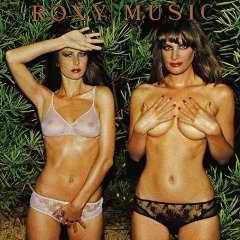 Menswear company Roger David has also been embroiled in the furore through two of its T-shirt labels. One T-shirt, by Los Angeles-based company Blood Is the New Black, shows
a woman who appears gagged and roughed up. The other, by US brand Chaser LA, has two semi-naked women with a strip across their eyes. The image used by Chaser LA was largely copied from the 1974 Country Life album cover by British rock band Roxy
Music.
Menswear company Roger David has also been embroiled in the furore through two of its T-shirt labels. One T-shirt, by Los Angeles-based company Blood Is the New Black, shows
a woman who appears gagged and roughed up. The other, by US brand Chaser LA, has two semi-naked women with a strip across their eyes. The image used by Chaser LA was largely copied from the 1974 Country Life album cover by British rock band Roxy
Music. The graphic T-shirts have angered women's groups, while a Facebook group called Roger David: NOT ok to promote violence against women! has more than 800 members. Women's advocate and co-founder of the anti-exploitation group
Collective Shout, Melinda Tankard Reist, says the T-shirts must be outlawed: [They are] mocking the serious crime of rape, she said. I don't think there has been any consideration of the message it sends sexual assault survivors. They're taking messages you would normally find in pornography or the sex industry and mainstreaming them in what was once considered conservative menswear stores.
Is this how Roger David likes its women? Is this how it thinks women should be portrayed? Chrystina Woody, a spokeswoman for Blood Is the New Black, suggested the T-shirts, as art, would spark debate. Art is meant to inspire
and educate, and the meaning and interpretation is left in the hands of the viewer, she said via email.
|
|
24th January
|
|
|
|
Swedish gay awareness advert refused by Swedish newspapers
|
From thelocal.se
|
An advertisement featuring three partially naked women was deemed inappropriate for publication by two newspapers in southern Sweden, shocking officials at the sexual health organization who created the ad. We are really surprised because
we don't think it's controversial, Mikael Andersson of the Skone-based affiliate of the Swedish Federation for Lesbian, Gay, Bisexual and Transgender Rights, told the advertising trade magazine Resumé. Andersson's comments came after
learning that two prominent newspapers in southern Sweden, Sydsvenskan and City, refused to run the advertisement, one of four in a campaign entitled 'Love has many faces'. The campaign, which includes both print and television ads, was part of an
effort by local branch RFSL to strengthen the identity of homosexual, bisexual, and transgender people living in the region. According to Sydsvenskan editor-in-chief Daniel Sandstrom, the fourth ad in the series, which featured three partially
clothed women wrapped in a seemingly passionate embrace, was unacceptable. I have no problem with printing provocative images ...BUT... the picture in question simply didn't meet standards of acceptability. I think rather that it
reproduces a cliché-filled image of lesbian love.
|
|
23rd January
|
|
|
|
VRA given Royal Assent and is back in force
|
See bill status from services.parliament.uk
|
The Video Recordings Bill was given Royal Assent as scheduled on 21st January 2010. The law comes into force immediately.
|
|
23rd January
|
|
|
|
BBC to consult over the portrayal of gay people
|
From entertainment.timesonline.co.uk
|
The BBC is to ask the nation if its comedians should be allowed to tell jokes about lesbians and gays. The issue will be part of the most wideranging piece of research on sexuality that the corporation has commissioned. Tim Davie, BBC director
of audio and music, will chair a working group on the portrayal and inclusion of lesbian, gay and bisexual people. It will examine how they are reflected in the corporation's use of language, tone, stereotyping, humour and scheduling. The report
was commissioned last August, months before the corporation received hundreds of complaints over a headline on the BBC News website relating to a debate on Ugandan government policy. It asked: Should homosexuals face execution? The corporation
apologised and amended the headline. 2CV, a research group, will conduct the project for the BBC, with a report due this summer. It will even canvass parts of the community, such as religious bodies, that are seen as anti-homosexual. Davie
said: As a public service broadcaster, we have a responsibility to serve all of our audiences and it's vital that we reflect the differences among all of the UK's diverse communities, nations and regions. Gay rights groups have long called
for the BBC to include more gay characters in its output. Ben Summerskill, chief executive of Stonewall, which lobbies for lesbian, gay and bisexual interests, said: This is long overdue. Stonewall research into BBC output found that during 168 hours
of programmes, gay lives were represented positively for just six minutes.
|
|
23rd January
|
|
|
|
New US interim film censor announced
|
Based on article from
latimesblogs.latimes.com
|
Bob Pisano, the former head of the Screen Actors Guild, has been named interim chief executive of the Motion Picture Assn. of America as Dan Glickman exits his role five months sooner than expected. The MPAA announced that Glickman was leaving
April 1 to become president of Refugees International, an advocacy group that deals with refugee crises. Our industry has been well served by Dan's efforts and advocacy worldwide, and we appreciate the job he has done on our behalf. He is a
great humanitarian and will be very effective in his new role, said Bob Iger, chief executive of Walt Disney Co. Pisano has been the MPAA's president and chief operating officer, based in Los Angeles, since 2005. Pisano takes over as interim
CEO immediately, though Glickman will remain on the job. Pisano has been mentioned as a possible permanent replacement for Glickman. The MPAA said he would serve as its interim chief while the search continues for Glickman's replacement.
|
|
23rd January
|
|
|
|
Hollywood films found to feature unsafe practices
|
From telegraph.co.uk
|
Researchers claim that the main protagonists of Hollywood movies often undermine accident prevention advice given to children. Half the scenes examined in movies aimed at children showed unsafe practices including not wearing seat belts,
breaking the green cross code and failing to wear helmets on bikes. The mistakes could give children a false sense of safety they claim which could lead to bad habits and encourage dangerous activity. Dr Jon Eric Tongren, the lead
researcher at America's Center for Disease Control and Prevention, said the industry was improving but had a long way to go: The entertainment industry has improved the depiction of selected safety practices and PG-rated movies . However,
approximately one half of scenes depict unsafe practices and the consequences of these behaviours are rarely shown. Dr Tongren picked out two examples to highlight the problem. In the 2003 Christmas movie Elf , the main character
played by actor Will Ferrell gets knocked down by a New York City taxi while crossing the street. He bounces back up without a scratch – which Dr Tongren said gave a false view of what happens. And in the 2005 comedy Yours, Mine and Ours
, about a family with 18 kids, the children are wearing life jackets during a boat trip — but not the parents played by Dennis Quaid and Rene Russo. The two films were among 67 popular movies from 2003 to 2007 examined in the study including
Harry Potter. From those movies, the researchers found 958 scenes involving potential injury-prevention practices. 55% of the scenes involved children. Twenty-two scenes involved either a fall or a crash, but just three of those scenes resulted in an
injury The study, published in the journal, Paediatrics, found 44% of people in motor vehicles failed to wear seat belts; 65% of pedestrians did not cross at zebra crossings, 75% of cyclists failed to wear a helmet and 25% of boaters failed to
wear life vests.
|
|
23rd January
|
|
|
|
Government asked about their stance on the OIC Defamation of Religion UN motion
|
From publications.parliament.uk
See also
article from mediawatchwatch.org.uk
|
House of Lords Questions
11th January 2010 Lord Patten asked the government what is their stance on the resolution promoted by the Organisation of the Islamic Conference before the United Nations General Assembly on the defamation of religion.
The Minister of State, Foreign and Commonwealth Office (Baroness Kinnock of Holyhead): The Government share the concern of the Organisation of Islamic Conference that individuals around the world are victimised
because of their religion or belief. We all need to do more to eliminate religious intolerance and to ensure that those who incite hatred or violence against individuals because of their religious beliefs are dealt with by the law. But the
Government cannot agree with an approach that promotes the concept of defamation of religions as a response. This approach severely risks diminishing the right to freedom of expression. We believe that international human rights law already
strikes the right balance between the individual's right to express themselves freely and the need for the state to limit this right in certain circumstances. International human rights law provides that only where advocacy of religious hatred
constitutes incitement to discrimination, hostility or violence should it be prohibited by law. We believe that the concept of defamation of religions puts in danger the very openness and tolerance that allows people of different faiths to
co-exist and to practise their faith without fear. It risks changing the focus of international human rights law from examining how countries promote and protect the right to freedom of expression to censoring what individuals say. If this happened,
people might feel unable to speak out against human rights abuses or hold their government to account. It is also inconsistent with the international human rights legal framework which exists to protect individuals and not concepts or specific belief
systems. For this reason the UK, along with our EU Partners and other like-minded countries, voted against the resolution put forward by the Organisation of Islamic Conference at the 64th session of the UN General Assembly on Combating Defamation
of Religions.
|
|
22nd January
|
|
|
|
Supporting the hype for Legion
|
From ncregister.com
|
In Scott Stewart's supernatural action thriller, Legion , which opens in the US on January 22, actor Paul Bettany portrays a machine-gun toting Archangel Michael who cuts off his wings and proceeds to help protect the unborn child of
actress Adrianne Palicki at a remote diner on the edge of the Mojave desert on Christmas Eve. The American Society for the Defense of Tradition, Family and Property (TFP) has described the film as blasphemous, saying that it mocks the
faith. According to TFP, in the film, Michael - a rebel angel - becomes the hero in a fight against Gabriel and his hosts who are bent on destroying humanity because of God's anger. The film presents a complete inversion of roles:
instead of defeating Satan and the rebel angels in the great heavenly battle, the movie presents Saint Michael as the fallen angel who revolts against God, said TFP: Saint Michael's downfall was caused by his wish to save humanity when God,
finding the human race no longer worthy of Him, decides to end humanity's existence. TFP has called for individuals to let Sony know that they are insulted by the film. Actor Dennis Quaid said that he liked the script because it was twisted: I don't think it is going to be on the Vatican must-see list.
Legion puts a negative spin on Christianity, said the Catholic League for Religious and Civil Rights in a press release. ... [it] promises to be an abortion of a movie.
|
|
22nd January
|
|
|
|
The arbitrary vision of censorship on eBay
|
20th January 2010. Thanks to Trog
|
I recently listed a DVD on ebay, which is readily available at on amazon, play.com, etc and my local HMV has it on the shelves. eBay have deemed this DVD unsuitable for sale, and have pulled my listing. The DVD in question was Baise Moi.
To quote eBay: Sexually orientated adult material is meant for people who are 18 years and older. Materials adult in nature are not permitted on eBay, as they breach laws in the United Kingdom and many other countries. Some items, though legal to
sell to adults outside of eBay, are still restricted on the site. So eBay, consider an 18 film to be illegal. A very dangerous precedent. What I do find strange is they allow DVDs of Lady Chatterley's Lover and copies of the Emmanuelle
books to be listed. Again to quote eBay: Any materials clearly designed to sexually arouse the viewer/reader are prohibited. I thought both of the above were designed to sexually arouse the viewer/reader. Maybe I am wrong.
Comment: eBay Censors Follow-up 21st January 2010. Thanks to Paul
I concur with Trog having come-up against this a few times, most recently trying to sell Larry Clark's Ken Park DVD, being told it was banned in Australia and therefore my listing needed changing so Australian's couldn't bid on it (I live in
the UK) plus it contained the dreaded Any materials clearly designed to sexually arouse the viewer/reader ! Crazy, considering films such as Caligula, 9 Songs , etc. etc. can be cheerfully traded on the site despite having similar levels of
sexual activity. A few years ago I tried to sell a copy of Puppetry of the Penis . Despite being rated only 15, eBay deemed this too strong and asked me to withdraw the DVD... As an aside whilst shopping in Sainsbury's recently we
used the self-scan facility. Scanning a bleach based product went through without a hitch, however we couldn't proceed with a 12 rated DVD without the intervention of an assistant to confirm we weren't children! Apparently it even requires intervention
on PG rated DVDs too - despite being discretionary. Comment: Re eBay Censors 22nd January 2010. Thanks to DarkAngel
I've had similar run-ins with Ebay myself, it seems they have a very strict policy against "strong adult content" which goes beyond pornography, however no one who works for them seems to know why this is.
I had a listing for
I Spit on Your Grave pulled, I duly complained stating that it was a legimate release, not a bootleg, and that it was the toned down UK version which had been censored and rated 18 by the BBFC and was freely available from Amazon and ordinary high
street stores like HMV and even WHSmiths and Woolworths (they were still going at the time).
They responded that the UK release still fell foul of their policies on strong adult material and the fact that it was available elsewhere made no
difference to whether they were going to allow it.
I asked why they felt the need to prohibit this material, they said because they regarded it as being unsuitable to be sold by them. I pressed them as to why they regarded it as unsuitable, they
said because their legal team had a list of films they considered in breach of this policy. So I asked why they felt the need to have such a policy, they said because they consider certain films unsuitable and round and round the answers went (in a scene
rather reminiscent of a Monty Python sketch) until they eventually stopped replying to me.
It was just one circular reason after another, you couldn't pin them down as to why, so I could only conclude that they didn't know and the decision was
down to someone higher up.
It does seem, judging by their arbitrary decision making, that the people who make up these lists of films to block don't really know which ones do and don't breach their policies as they are blissfully unaware of the
many films with similar content that continue to be happily traded, until someone tips them off about it (I bought and sold numerous different uncut VHS and DVD versions of I Spit on Your Grave back when Ebay were still relatively new on the
scene).
Also, they have been known to pull auctions solely based on a films title. A colleague of mine listed some films that had been released by the company "X-rated" (they're a German/Austrian cult movie label). Of course Ebay saw
the words X rated in the description and duly pulled the lot thinking X rated referred to the content, as opposed to the name of the distributors.
I've said this before but back in the early days, Ebay were quite liberal with the sort of stuff
you could sell on their site, as long as it wasn't porn. Now that they've cornered the market and wiped out the competition, they seem to be trying to impose their moral views on what can and cant pass through their site, which is probably why, according
to the news this morning, more and more people are defecting to Amazon marketplace.
|
|
21st January
|
|
|
|
Passes 3rd Reading in the Lords and is set to become law
|
See bill status from services.parliament.uk
See
debate transcription from publications.parliament.uk
See 1984 film classification law gets reboot from theregister.co.uk
by John Ozimek
|
The Video Recordings Bill has received its 3rd Reading in the House of Lords on 20th January 2010. The bill is scheduled to receive Royal Assent and come into immediate effect on 21st January. So once again all videos and DVDs have to be
vetted by state appointed censors and ludicrous restrictions, such as a ban on mail order porn, are restored.
|
|
21st January
|
|
|
|
Rammstein banned from playing indexed songs at concert
|
From shoutcastblog.com
|
German rock band Rammstein is having more than a bit of difficulty with German censorship authorities over what songs they can and cannot play at a couple of upcoming concerts. According to The Gauntlet, officials in the German Family Ministry
will not permit the group to play any of the songs that had already been specifically blacklisted when they perform at Dortmund's Westphalia Hall. In addition, the government agency is asking that each member of the group sign a written
explanation before the concerts that the indexed songs are not played. If Rammstein decides to call the ministry's bluff, they could face a fine of up to 10,000 €. In accordance with the country's Youth Protection Act, any fans under 18
must be accompanied by a parent or guardian of a person to attend the concert. Fans without a parent or guardian in attendance will be sent home. The concerts, part of the band's promotional tour for their album Liebe Ist Fur Alle Da, are both sold out, and organizers are expecting well over 10,000 fans to show up
|
|
20th January
|
|
|
|
Advert censor whinges at irate German stereotype
|
From asa.org.uk
Listen to the advert at
guardian.co.uk
|
A radio ad, for a recruitment website, featured a man speaking to his boss who responded angrily and loudly in German. The voice-over said Boss a bit of a tyrant? Find your perfect boss on the UK's biggest job site ... . Thirteen listeners
believed the ad was offensive to Germans, because it used an outdated stereotype and implied all Germans were tyrants. The Radio Advertising Clearance Centre (RACC) believed most listeners would regard the scenario as humorous and inoffensive and
were likely to understand that the ranting boss was a tyrant, because he responded angrily to his colleague rather than in a calm way. The RACC said the character was a generic German-sounding orator , which they believed was a well established
type in comedy culture, but they did not believe the mock angry conversation, when heard alongside the phrase Boss a bit of a tyrant? , implied that all Germans were tyrants. The RACC said they did not regard the German people as a minority group,
as defined by the CAP (Broadcast) Radio Advertising Standards Code, or that the scenario would be seen as a stereotype likely to cause general or serious offence to German people. ASA Assessment: Upheld The ASA acknowledged that the use of stereotypes was an inevitable part of establishing a character in a short radio ad, but nonetheless considered that such stereotypes should not perpetuate damaging misconceptions. We noted the ad used a German speaker, rather than someone speaking English, to portray the boss as
a bit of a tyrant and the humour derived from a stereotype at the expense of German people. We considered that the portrayal suggested that German people were more likely to be unreasonable or aggressive to others. We concluded that, given
the extreme reaction and aggressive tone of the German speaking boss, the ad reinforced a negative and outdated cultural stereotype of German people as overpowering and tyrannical and therefore the ad had the potential to cause serious offence to some
listeners. The ad must not be broadcast again in its current form.
|
|
20th January
|
|
|
|
Hitler cartoon on night club promotion winds up the authorities
|
From telegraph.co.uk
|
Polish nightclub has come under criminal investigation after it used an image of Adolf Hitler to promote an event. The Klub Muzyczny Sklot, located in Warsaw's bohemian Praga district, had hoped that the picture of a typically animated Hitler
sporting a pair of banana-yellow glasses would attract customers to the event but so far it has only caught the eye of the prosecutor's office. Polish law outlaws the use of images and symbols associated with totalitarian regimes if they are
deemed to be promoting a political system. Investigators are considering whether the disco's management intended to glorify Hitler or made an innocent mistake. Conceding that the club had made a mess , one of the organisers of the
event, a man known only as Ruff T., issued a hasty apology, and said that they had meant no offence.
|
|
20th January
|
|
|
|
Indian singer takes film censor to court
|
Based on article from
timesofindia.indiatimes.com
See also
Cuss? What's the fuss from
timesofindia.indiatimes.com
|
In a swift move that has taken the entire Indian film industry by surprise, firebrand Rakhi Sawant and singer-composer-lyricist ishQ Bector, have taken legal action against the Censor Board. Recently, the Board passed a diktat that the word kamine
(presumably 'bloody') be deleted or bleeped out from the mukhda (opening verse) of Bhoot ; Rakhi and ishQ's latest video from their album titled Jhagde . Challenging the censors' decision, the duo, who are also the producers of the
album, have sent a show cause notice to the board. The censors clearly have double standards, shoots Rakhi. When they can pass an entire film called Kaminey , what sense does it make to delete the word 'kamine' from our
video, and that too, without giving us any reason whatsoever, she fumes. The mukhda of the song goes Kamine tera bhoot chad gaya re. But after the word being bleeped out, our song looks completely disjointed. This has killed its
impact and sabotaged our album sales, says ishQ, who has also written the lyrics. Strangely, the Board has passed the promos of the number containing the mukhda, without any cuts, while censoring the word only in the video . Does the Censor Board have different norms for films, videos and promos? Or is it that we are being singled out just because we are smaller producers?
questions ishQ. Update: Bloody Hell 1st April 2010. From bollyspice.com n
a turnaround of sorts, Rakhi Sawant and IshQ Bector have emerged victorious in their battle against the Censor Board. The jhagdes finally seem to have ended (hopefully) as the Board's Revising Committee has lifted the ban on the word kamine in the
duo's controversial music video Bhoot from the album Jhagde , which they produced together.
|
|
19th January
|
|
|
|
Tanya Byron to advise the VSC, the new video game censor
|
From gamepolitics.com
|
As the UK moves to adopt the PEGI system as a sole means for rating videogames, the Video Standards Council (VSC), which will enforce and assign actual ratings, has added additional personnel to its ranks. One new addition to the VSC is an Expert
Advisory Panel reports GamesIndustry.biz, which will feature media violence expert Guy Cumberbatch, author Geoffrey Robertson and Dr. Tanya Byron, author of the Byron Report. VSC Chair Baroness Shephard commented:
The newly established VSC Expert Advisory Panel will play a key role. The VSC will have the ability to effectively ban a videogame from supply in the UK if it infringes the limits set out in the law. Any such decision will
not be taken lightly and will involve a number of legal, clinical and psychological issues.
A trio of board members was also added to the VSC, ex-Chief Constable Tony Lake, retired Director of the Family and Parenting Institute
Mary MacLeod and Chris Atkinson of the National Society for the Prevention of Cruelty to Children.
|
|
19th January
|
|
|
|
China bans the general distribution of Avatar
|
Based on article from guardian.co.uk
|
China is to pull the plug on screenings of Avatar at most cinemas and replace the Golden Globe-winning film with a 'patriotic' biopic on the life of Confucius, according to reports. Hong Kong's Apple Daily said the state-run China Film
Group has ordered cinemas across China to stop showing the 2D version of the film and to show only the 3D edition, amid concerns from China's censors that it could cause unrest. Because there are so few 3D cinemas on the mainland, the order effectively
prevents general distribution of the James Cameron blockbuster. The Central Publicity Department is said to have issued an order to the media prohibiting it from hyping up Avatar, the newspaper said. The film opened on 4 January to
queues across the country, with Imax cinemas said to be booked for weeks ahead. It was due to run until 28 February, including over Chinese new year. Instead, the reports said, the 2D version will close on 23 January.
|
|
18th January
|
|
|
|
Spanish parliament passes law banning body image adverts before the watershed
|
For all the social engineering trying to downplay the importance of beauty, it will do absolutely nothing to stop people responding to a beautiful face. ...And the teenagers know it. Based on
article from guardian.co.uk
|
Spain has stepped up its fight against what the government sees as forces that push girls into anorexia or bulimia, with the introduction of a law banning so-called cult of the body advertising on television before the Spanish watershed. Sellers of plastic surgery, slimming products and some beauty treatments will be prevented from advertising before 10pm.
The ban is extended to other advertisers who transmit a message to children that what matters most is how they look, or that their chances of success are linked to the type of body they have. The ban comes in a new broadcasting law that has been
approved by the lower chamber of parliament and is being reviewed by the upper house. It states: Broadcasters cannot carry advertisements for things that encourage the cult of the body and have a negative impact on self-image – such as slimming
products, surgical procedures and beauty treatments – which are based on ideas of social rejection as a result of one's physical image or that success is dependent on factors such as weight or looks. The beauty and hygiene sector is the third
biggest spender on TV advertising in Spain – it spent about €500m in 2008. That year, TV stations broadcast 7,000 advertisements for dieting products and special treatments for slimming, cellulitis or other body worship products, as they are known
in Spain. A further 55,000 advertising slots went to beauty products.
|
|
17th January
|
|
|
|
BBC programme about 1984 battle at Sikh temple generates personal abuse aimed at presenter
|
Thanks to Alan
Based on article from
mailonsunday.co.uk
|
A BBC News presenter has been subjected to a deluge of personal abuse after fronting a documentary about one of the most controversial events in recent Indian history. Sonia Deol was forced to delete her page on the Facebook website amid a
barrage of criticism from fellow Sikhs over her film about the Indian army storming the Golden Temple in Amritsar, one of the faith's most holy shrines, in 1984. Now protesters are planning a mass boycott of the licence fee in disgust at what they
see as a slur on the controversial religious leader Jarnail Singh Bhindranwale, who was killed in the raid. Many Sikhs consider him a saint and are furious that in Ms Deol's documentary, 1984: A Sikh Story, he was described as a militant.
They also claim he was depicted in the film in a similar way to Osama Bin Laden. Indian prime minister Indira Gandhi ordered the assault on June 4, 1984, after Bhindranwale and up to 500 armed supporters took refuge in the holy site, apparently
fearing arrest amid rising Sikh-Hindu tensions. Around 500 people died in the ensuing battle, which some Sikhs now refer to as our 9/11 . As troops moved in, Bhindranwale's followers fired missiles at Indian tanks. The BBC has received 52
complaints about the documentary, which attracted 1.3 million viewers and was billed as Ms Deol's emotional journey back to India in a bid to discover how such an attack could ever have taken place . However, community TV station The Sikh
Channel says it received more than 8,000 calls to a phone-in about the film. Channel owner Davinder Singh Bal said: The documentary contained many sweeping statements and didn't attempt to uncover the truth of what happened. Our viewers were not
happy. BT said that our exchange was going into overdrive. The BBC is not responding to the Sikh community and we are thinking about organising a campaign to invoke the non-payment of licence fees by the 700,000 Sikhs in Britain. Dr Sadhu
Singh, chairman of the Council of Sikh Temples, said many viewers were angered that the BBC showed him [Bhindranwale] looking like Bin Laden . He said: They used pictures of him wearing a turban and holding a gun. To someone who doesn't know
what Sikhism is about, it would be very misleading. A BBC source said Ms Deol's documentary was never intended to be an investigation, saying: It was her personal journey, a look at her reaction to rediscovering her faith as a Sikh. It was
for a mainstream channel, BBC1 and there's only so much you can say in an hour. A lot of the attacks on Sonia have been because people think that the documentary reflected her views on Bhindranwale, but she did not give her opinions about him at all.
|
|
17th January
|
|
|
|
Details of truck bombs emerge in plot to attack Jyllands-Posten building
|
Thanks to Alan
Based on article from cphpost.dk
|
Details of trucks filled with explosives and European terror networks emerge in Jyllands-Posten newspaper plot case. US citizen David Coleman Headley and Tahawwur Hussain Rana, a Canadian citizen and native of Pakistan, are already in police
custody for their alleged roles in the plot against the newspaper in retribution for its printing of the Mohammed cartoons. Additional conspiracy charges were recently filed against Ilyas Kashmiri, who has been identified as a leader of terrorist
organisation Harakat-ul Jihad Islami (HUJI) in Pakistan and Abdur Rehman Hashim Syed, a retired major in the Pakistani military. Neither man is in police custody. According to documents released by US authorities, Headley met Rehman and members of
the Lashkar terrorist group in Pakistan. Rehman is said to have introduced Headley to Kashmiri who allegedly came up with the idea of the truck bomb. Kashmiri is also reported to have put Headley in contact with various associates in a number of European
countries who could provide Headley with money, weapons and manpower for the newspaper attack .
|
|
17th January
|
|
|
|
Gritty Russian TV school drama winds up the politicians
|
Based on article from cbc.ca
|
A raw TV drama about the lives of students in a Russian high school has sparked condemnation from teachers and politicians. School , which premiered this week on Russia's Channel One, has painted a rough, violent picture of what students
endure in school. The series has depicted fights in school halls, classmates sharing beer and one teen boasting about making a girl pregnant, as well as references to internet porn. Communist Party deputy Vladislav Yurchik declared the show
was planned sabotage against Russian young people and called for its cancellation. Olga Larionova, head of the Moscow education department, agrees with Yurchik, urging the channel to yank the series. Valeria Gai Germanika, the young
director of the show, says she's just showing reality: School was really like that, the 25-year-old auteur told Agence France-Press. Channel One says it stands behind the series, releasing a statement that the show aims to understand the
problems of schools, not to hide them.
|
|
17th January
|
|
|
|
Google set to quit China after attempts to hack into Chinese human rights activists' emails
|
13th January 2010. Based on article from googleblog.blogspot.com
|
Google announced in their Official Google Blog: Like many other well-known organizations, we face cyber attacks of varying degrees on a regular basis. In mid-December, we detected a highly sophisticated and targeted attack on
our corporate infrastructure originating from China that resulted in the theft of intellectual property from Google. However, it soon became clear that what at first appeared to be solely a security incident--albeit a significant one--was something quite
different. First, this attack was not just on Google. As part of our investigation we have discovered that at least twenty other large companies from a wide range of businesses--including the Internet, finance,
technology, media and chemical sectors--have been similarly targeted. We are currently in the process of notifying those companies, and we are also working with the relevant U.S. authorities. Second, we have evidence
to suggest that a primary goal of the attackers was accessing the Gmail accounts of Chinese human rights activists. Based on our investigation to date we believe their attack did not achieve that objective. Only two Gmail accounts appear to have been
accessed, and that activity was limited to account information (such as the date the account was created) and subject line, rather than the content of emails themselves. Third, as part of this investigation but
independent of the attack on Google, we have discovered that the accounts of dozens of U.S.-, China- and Europe-based Gmail users who are advocates of human rights in China appear to have been routinely accessed by third parties. These accounts have not
been accessed through any security breach at Google, but most likely via phishing scams or malware placed on the users' computers. We have already used information gained from this attack to make infrastructure and
architectural improvements that enhance security for Google and for our users. In terms of individual users, we would advise people to deploy reputable anti-virus and anti-spyware programs on their computers, to install patches for their operating
systems and to update their web browsers. Always be cautious when clicking on links appearing in instant messages and emails, or when asked to share personal information like passwords online. You can read more here about our cyber-security
recommendations. People wanting to learn more about these kinds of attacks can read this U.S. government report (PDF), Nart Villeneuve's blog and this presentation on the GhostNet spying incident. We have taken the
unusual step of sharing information about these attacks with a broad audience not just because of the security and human rights implications of what we have unearthed, but also because this information goes to the heart of a much bigger global debate
about freedom of speech. In the last two decades, China's economic reform programs and its citizens' entrepreneurial flair have lifted hundreds of millions of Chinese people out of poverty. Indeed, this great nation is at the heart of much economic
progress and development in the world today. We launched Google.cn in January 2006 in the belief that the benefits of increased access to information for people in China and a more open Internet outweighed our
discomfort in agreeing to censor some results. At the time we made clear that we will carefully monitor conditions in China, including new laws and other restrictions on our services. If we determine that we are unable to achieve the objectives
outlined we will not hesitate to reconsider our approach to China. These attacks and the surveillance they have uncovered--combined with the attempts over the past year to further limit free speech on the web--have
led us to conclude that we should review the feasibility of our business operations in China. We have decided we are no longer willing to continue censoring our results on Google.cn, and so over the next few weeks we will be discussing with the Chinese
government the basis on which we could operate an unfiltered search engine within the law, if at all. We recognize that this may well mean having to shut down Google.cn, and potentially our offices in China. The
decision to review our business operations in China has been incredibly hard, and we know that it will have potentially far-reaching consequences. We want to make clear that this move was driven by our executives in the United States, without the
knowledge or involvement of our employees in China who have worked incredibly hard to make Google.cn the success it is today. We are committed to working responsibly to resolve the very difficult issues raised. Posted by David Drummond,
SVP, Corporate Development and Chief Legal Officer Update: Tank Man finally appears on Chinese Google 17th January 2010. Based on
article from canadafreepress.com
Users on Google.cn's image search can now see the iconic picture of Tank Man, among other images from the massacre in the Beijing square in 1989. Students and intellectuals protested communist rule for seven weeks in the square in 1989 in the face
of a brutal security crackdown. Roughly 100,000 people are believed to have taken part in the protests - with up to 3,000 of those killed during the demonstrations. Tank Man: One of the most iconic images of the Tiananmen Square massacre, that of
a man standing alone and defenceless in a face off against four tanks, now appears on Google.cn Update: Google Censor On 18th February 2010 Based on
article from shuttervoice.com Google will censor
pornography and some other objectionable content in China as the search engine continues to try and make head way in the Internet market. It is claimed that the company's co-founder, Sergey Brin, has admitted that pornography and other
objectionable content will be censored. However, he reportedly confirmed that Google will not politically censor searches in the Asian country.
|
|
17th January
|
|
|
|
The Notorious Bettie Page by Mary Harron
|
Thanks to Wynter
|
The Notorious Bettie Page (2005) is a smart, funny and engaging look at the life of one of the first pin-up sensations, the titular Ms Page. Well acted and flawlessly directed (Harron creates a perfect 50's woman's film feel and mixes
black and white and colour without drawing attention to it), the film tells it's story in a matter of fact way that mirrors Page's own outlook and delivers an interesting study of a society on the brink of change. From cinemascream.wordpress.com
Some time ago I wrote about Mary Harron's fantastic film The Notorious Bettie Page … well, to be honest, I spent most of the time having a moan about the rather harsh 18 cert. bestowed upon the film by the BBFC. Anyway, in true disgusted
of Tunbridge Wells style I emailed the BBFC the following… Having recently viewed The Notorious Bettie Page (Mary Harron, 2005) I was somewhat perplexed by the 18 rating. Looking on the BBFC website the
only comment I can see regarding the rating is contains sexual fetish theme . Considering that the Irish Film Classification Office (IFCO) have given the film a 15 rating ('15A in cinemas) due to moderate
violence, sex/nudity and language (The further information on their website notes just one expletive and their guidelines for the 15A rating state that mild/moderate sexual activity/nudity is acceptable, particularly when portrayed
positively .) I was wondering if you had any more information on the decision and the reasoning behind the 18 rating?
…and here is the BBFC reply… Our classification decisions are
carefully considered and made in line with published Guidelines and the available research evidence... Our Guidelines for sex at 15 state that: "Sexual activity may be portrayed but without strong detail. There
may be strong verbal references to sexual behaviour". It was recognised that THE NOTORIOUS BETTIE PAGE is an intelligent and rather sweet-natured film which stays within our '15' criteria on a number of issues (eg. nudity and sex). However, it was
ultimately judged that placing a work that dealt with S&M and other fetish activities at '15' would confound public expectations of the our classifications. Although THE NOTORIOUS BETTIE PAGE is not a 'sex work' , its detail of fetish activity just
pushed this work to the 18 category. At '18' our Guidelines state that the BBFC "will not normally override the wish that adults should be free to chose their own entertainment, within the law."
Chief Assistant (Policy)
…which seems to suggest that no matter what the 'content' the subject matter is all that matters and some things, especially country matters , are just plain taboo.
|
|
17th January
|
|
|
|
Iran bans contact with the BBC, Voice of America and more
|
7th January 2010. Based on article from timesonline.co.uk
|
Iran's international isolation deepened yesterday when the regime banned contact with more than 60 highly regarded Western organisations which it accused of conspiring against the Islamic Republic. The list includes the BBC, Voice of America and
other media organisations that beam Farsi-language programmes into Iran, as well as think-tanks, academic institutions and leading non-governmental organisations from America and Europe. Having any relation ... with those groups involved in the soft
war [against Iran] is illegal and prohibited, the intelligence ministry said. Citizens should be alert to the traps of our enemies and co-operate ... in neutralising the plots of foreigners and conspirators. The list includes Yale
University, the Soros and Ford foundations, the right-wing American Enterprise Institute, the liberal Brookings Institution, Human Rights Watch and USAid. Some, but not all of the organisations, have worked with universities or civil society institutions
in Iran — bodies that tend to be hostile to the regime. Four British organisations are named: the BBC, Wilton Park and Menas Associates, along with the British Centre for Democratic Studies — which appears not to exist. The regime
has repeatedly accused the BBC of being part of a British plot against it. It has expelled the organisation's Tehran correspondent and regularly jams the BBC Persian satellite television signal. Update:
European satellite company censors BBC's Persian TV 17th January 2010. Based on article from
guardian.co.uk Iran is facing mounting international protests about its jamming of the BBC's Persian TV service (PTV) after the channel – which has millions of viewers and
is hugely popular with opposition supporters – was taken off a satellite owned by Europe's leading operator. The BBC said today it was actively supporting a formal complaint to the International Telecommunication Union, a UN-affiliated
body, about deliberate interference from Iran. The ITU confirmed it had received representations from regulators in France, home to Eutelsat, owner of the Hotbird 6 satellite, which transmitted PTV until the end of last month. The German
state broadcaster, Deutsche Welle, said it too would protest about interference with its Persian-language radio broadcasts. Voice of America Persian TV programmes have also been jammed. The BBC said it was telling viewers how to adjust their
satellite dishes to receive programmes via two other satellites that are out of range of Iranian jamming. Eutelsat says PTV was removed from Hotbird 6 in agreement with the BBC, though sources close to the affair say the operator caved in
to commercial and legal pressures from other customers broadcasting on the same transponder. Another Eutelsat satellite, Hotbird 8, provides capacity to Iranian state media channels, including English-language Press TV, which has offices in London.
|
|
17th January
|
|
|
|
Lebanon nutters whinge about TV comedies
|
Based on article from dailystar.com.lb
|
Supposedly racy and objectionable content on local television stations continued to draw fire after government authorities promised to see outlets tone things down. The Lebanese Women's Council strongly condemned certain television shows it deemed of
a low media, cultural and moral level. The council was referring to comedy shows that depended on low levels of entertainment and immoral jokes. It said such shows were a bad influence on Lebanese society, particularly on young people.
In a statement, the group also blamed the National Audiovisual Media Council [NAMC], the Information Ministry's Censorship Committee and local television stations for the problem. The council urged government censorship bodies to step in and
ensure that audiovisual media and internet websites halt the objectionable programs and content. For its part, the International Catholic Press Union in Lebanon also condemned the phenomenon of supposedly immoral programming, singling out OTV's
weekly program LOL for censure. The union said a wide-ranging revision of the relevant legislation was required. It said the judiciary remained the proper authority for deciding whether certain programs were violating the law. The
union said that religious figures should not be outside the scope of permitted criticism, ...BUT.. added that freedom of opinion and expression didn't permit the practice of insulting others.
|
|
16th January
|
|
|
|
Bill to exempt small venues from government music censorship
|
Based on article from guardian.co.uk by Tim
Clement-Jones
|
My bill would exempt small venues from the absurdities of the Licensing Act, which is stifling emerging artists In November last year, Britain's Got Talent finalist Faryl Smith
performed a song for her fans at an album signing at HMV in Kettering, Northamptonshire. The local council immediately threatened HMV with criminal prosecution because it hadn't applied for a licence. Back in May, the
headteacher of a school in Daventry had to scrap the annual musical when he was told he risked a £20,000 fine or even imprisonment because the school hadn't got a licence for the show. And locals in
Gloucestershire were bitterly disappointed last summer when a free brass band concert was cancelled at the last minute. What links all these ridiculous situations is the Licensing Act, which stipulates that all live
music performances need a licence, whatever the venue. It is a result of these absurdities that I have introduced the live music bill which has just received a second reading in the House of Lords.
Small venues are vitally important to Britain's creative culture. Many of our most successful and popular musicians started their careers gigging in bars, student unions or cafes. The decrease in live music in small venues, as
evidenced by the DCMS's most recent substantive survey into the act, is potentially denying us a generation of new performers. The bill – which has the support of UK Music, the Musicians Union, Equity and the National
Campaign for the Arts – amends the Licensing Act in three respects. First, the bill establishes an exemption for live music in small venues. The exemption applies to a venue that has a licence for the sale of alcohol
and has a permitted capacity of not more than 200 people. The live music can also only take place between 8am and midnight on the same day. This exemption is conditional on a mechanism that can trigger a local authority review and make live music in a
venue licensable if complaints by local residents are upheld. Second, the bill reintroduces the two-in-a-bar rule so that any performance of unamplified and minimally amplified live music of up to two people is
exempt from the need for a licence. Finally, the bill contains a total exemption for hospitals, schools and colleges from the requirement to obtain a licence for live music when providing entertainment where alcohol is
not sold, and the entertainment involves no more than 200 persons. This will enable schools, colleges and hospitals to perform concerts and music therapy treatments which currently require licences. The government's
consultation on this issue is flawed. The proposed exemption for up to 100 people is inadequate. The live music bill, supported by the recommendation of the House of Commons culture, media and sport committee, proposes that a figure of 200 would result
in a more effective exemption. The timing of the consultation and the process by which an exemption can be achieved is also put in jeopardy by the imminent general election which means the bill presents the most
realistic opportunity to get a small gigs exemption in place this year. You can demonstrate your support for the bill by signing up to the No 10 Downing
Street petition in support of the bill's aims.
|
|
16th January
|
|
|
|
Kuwait bans Egyptian movie over depiction of lesbians
|
Based on article from gulfnews.com
|
Kuwait has banned the screening of a supposedly controversial Egyptian film, saying that it promoted a culture of debauchery. The film, Bedoon Rakaba (Out of Control or Uncensored), was produced in 2009 and addresses lifestyles centering on
drug uses by young people and lesbianism, a taboo subject in Arab cinema and society. According to the Kuwaiti daily Al Watan, a member of the censorship board said that some of the scenes were too hot and that the lesbianism theme was too
bold. The member stressed that the scenario was very weak and failed to address the controversial issues properly. In the film, the main character, Ahmad Fahmy, is a drug addict and an alcoholic who inherits a colossal fortune when his father
dies. Actress Ola Ghanem plays the role of a lesbian who seeks to lure young girls into her way of life. Commenting on the furore caused by the film upon its release in Egypt, Ola said that art had the responsibility to examine homosexuality
trends and behaviour and to discuss the reasons and facts for their occurrence. However, the film sought only to convey the idea of same sex relationships and purposely omitted scenes of an intimate nature, she said.
|
|
15th January
|
|
|
|
Italian parents' group whinges at unrestricted Avatar film certificate
|
Based on article from cinemablend.com
|
Some Italian parents are giving a big thumbs down to Avatar , the second highest grossing movie of all time. The MPAA gave Avatar a PG-13 rating for intense epic battle sequences and warfare, sensuality, language and some
smoking. When Avatar begins playing in 910 Italian theaters, it'll do so without restriction. As reported by Variety, the organization at the center of the debacle is Mogie. They claim, the decision represents a discrimination
against the protection of Italian children. In the UK, the cinema release was rated 12A (under 12s allowed if accompanied by an adult). The BBFC explained their decision:
 Avatar is a 3D science fiction action adventure film about a man whose genetically engineered human-alien hybrid has been grown on a planet and is intended to persuade the indigenous population to relocate and allow the
human military to drill for valuable minerals. It was passed 12A for moderate violence and intense battle scenes.
Avatar is a 3D science fiction action adventure film about a man whose genetically engineered human-alien hybrid has been grown on a planet and is intended to persuade the indigenous population to relocate and allow the
human military to drill for valuable minerals. It was passed 12A for moderate violence and intense battle scenes. At 12A , violence guidelines state that Moderate violence is allowed but should not
dwell on detail. There should be no emphasis on injuries or blood, but occasional gory moments may be permitted if justified by the context . This film contains some battle scenes where characters are killed or injured and which show arrows piercing
bodies, fight scenes where characters are occasionally heavily kicked or punched, and a fight scene between a man wearing a large metal body armour suit and repeatedly stabbing a fantastical creature. However, these scenes do not generally feature gory
images, lack stronger detail and do not emphasise injuries or blood as blows or points of impact are generally impressionistic or occur offscreen, so these scenes are allowable at 12A but exceeded PG allowances.
As for the intense battle scenes, PG guidelines note that Frightening sequences should not be prolonged or intense. Fantasy settings may be a mitigating factor . The occasional intense battle scenes towards the end of
the film are prolonged and intense and include scenes where the heroic characters are attacked or threatened. Although the context is clearly fantastical, it does not mitigate against the aggressive tone and overall impact which may disturb a child aged
around eight or older, so these scenes are not allowable at PG although such scenes are not frequent and are not the sort of sustained disturbing sequences that would exceed the 12A horror guideline. Avatar
also contains some moderate and mild language; occasional scenes showing an older character smoking, which is not promotional or glamorous; a mild and oblique verbal drug reference and a very mild sex reference when a female character states that she
and a male character are mated .
|
|
15th January
|
|
|
|
Home Office considers block on Hamas website for children
|
Based on article from theregister.co.uk
|
The Home Office is considering blocking a childrens' website run by the Palestinian group Hamas following suggestions it incites hatred of Jews. Liverpool MP Louise Ellman, chair of the Labour Jewish Movement, has called on ministers to block
access to al-Fateh.net, a webzine launched by Hamas in 2002. Alongside baking recipes and exam advice, the fortnightly publication features tributes to suicide attackers and encourages love of jihad . Ellman told The Register: It's nasty
stuff. It incites hatred of Israel and Jews - the government should remove it. An extract from April 2008, translated by IMPACT-SE, a Jewish education lobby group that has campaigned against al-Fateh.net across Europe, reads: Jerusalem will
remain as a trust in our hands and the hands of all Muslims, and they are to unite and gather for its liberation and the liberation of the land of Palestine from the impurity of the Zionists, the descendents of apes and pigs. In response to
Ellman's parliamentary question on al-Fateh.net, policing minister David Hanson said: We are currently assessing whether there is sufficient evidence to include the al-Fateh website in the list of material provided on a voluntary basis to filtering
companies for inclusion in their parental control software. There remains nothing the government can do to prevent access where filtering software is not installed. Suggestions by former Home Secretary Jacqui Smith that an ISP-level filtering
system similar to the Internet Watch Foundation child pornography blacklist might be created for extremist material appear to have been abandoned. Tim Stevens, an expert on internet radicalisation at King's College London, said Ellman's call
showed how powerless the government is online: Unpleasant as this site may be, it is not up to single-interest groups to determine what is and is not illegal, he said.
|
|
15th January
|
|
|
|
Government offer concessions about draconian control powers
|
Based on article from news.bbc.co.uk
|
Ministers have given a concession over what critics claimed were draconian powers which would enable them to crack down on online content in the name of copyright infringement. A clause in the Digital Economy Bill would have allowed
ministers to amend existing internet control laws without the need for further legislation. Google and Facebook were among firms to complain about the measure, saying it would hamper digital innovation. Officials said they were refining
the proposals after heeding concerns. Section 17 of the bill, which has attracted the most anger, would give ministers reserve powers to draft fresh laws to tackle net-based copyright infringement without needing parliamentary approval.
Ministers argued that such powers were needed to support copyright laws against future, more technically advanced forms of piracy. But Conservative and Lib Dem peers had both threatened to vote against the measure when it is considered next in the
House of Lords. In response, the government has tabled several amendments. These would mean existing copyright laws could only be amended by statute if there was a significant new threat of infringement and would provide for more
parliamentary scrutiny before this happened. The Department for Business said it was not backing away from the controversial clause and its core objectives but had listened to concerns about how it was being targeted.
|
|
15th January
|
|
|
|
New Arrow release of Jim Muro's Street Trash
|
The uncut region 2 DVD is available at UK Amazon
The uncut region 1 DVD
is available at US Amazon
|
Street Trash is 1987 US comedy horror by Jim Muro Jr Arrow have just re-released the uncut DVD. The BBFC waived their cuts for the 2000 Maingrip DVD . Previously the BBFC cut 6s from the 1987
Avatar video From cuts details on IMDb :
- edits to shots of a woman's melted breast
- edits to a close up of a severed penis.
Review from US Amazon : Lots of Fun
The ultra-low-budget exploitation flick Street Trash certainly lives up to its name in more ways than one. Not only is it rather trashy when it comes to generally poor or histrionic acting, bawdy humor, gore, and several
lingering flashes of T&A, but it is also one of the few films set in New York City's skid row that was actually filmed almost entirely in authentic skid-row venues. The centerpiece of the paper-thin plot is a case of
decades-old hooch called Tenafly Viper, discovered in the miasmic basement of a skid-row liquor store by the store's proprietor. The unscrupulous vendor decides to exploit his seemingly serendipitous find and pad his pocket by selling the stuff to local
winos for a buck per bottle. But unbeknownst to him and his unwary customers, the stuff has gone sour and has transmuted into a volatile toxin that literally melts those who consume it into a pile of day-glo goo. Though
Street Trash is blatantly and disgustingly lowbrow, it is nonetheless wildly entertaining and, from a technical standpoint, very well made. The make-up FX are skillfully and artistically executed, and never have latex appliances looked so
simultaneously gross and hilarious. The action does lag in a few spots, but most of the time there is a constant flow of either gore, skin, or bawdy gags. Also, in contrast to many near-zero-budget exploitation films, the cinematography is fabulous,
director Jim Muro shot the entire film using a rented steadicam, and he was so skilled at it that he went on to become one of Hollywood's greatest steadicam operators. The editing is near perfect, making Street Trash look like a more mainstream,
bigger-budget film. Sick? Yes. Foul? For sure. Gross? Often. But its also a lot of fun. Street Trash is definitely not for everybody, but for those who enjoy exploitation horror flicks from the 1970s and 1980s,
Street Trash is definitely one of the best.
|
|
15th January
|
|
|
|
Apple censors image viewer software
|
Based on article from xbiznewswire.com
|
Apple has yanked forChan from its app store. Apple deleted the 99-cent app from its lineup. The app specializes in viewing image boards on the web and comes preloaded with images of dogs, but with a few adjustments one can customize the app to
view nude women. Apple's censorial Steve Jobs has said that he won't allow the company to distribute porn, malicious apps, apps that invade your privacy. Based on
article from softsailor.com
I made a mistake and I am sorry. Although I expected this to happen, I feel responsible for the fact that ForChan was banned by Apple from the App Store. A couple of days ago I presented you the first full porn app available at the App Store for
the iPhone and iPod Touch. Why do I feel this guilt? Well, because this is not a porn app. We, the media, banned the app from the App Store. It's our fault. We introduced it as a porn app because it can browse galleries from the web, most of them
happening to consist of nude girls. ForChan shouldn't be banned because it's not a porn app. It met all of Apple's requirements, but the Cupertino-based company banned it because most of the guys there do not contemplate too much on things. Jesus
Diaz, Senior Editor at Gizmodo and one of my favorite tech journalists, says that Apple should ban Safari and Bing from the App Store. I wholeheartedly agree. ForChan allows iPhone users to browser galleries, while Safari and Bing allows users to browse…
everything including porn. The only difference is that Safari and Bing contains more porn than ForChan!
|
|
15th January
|
|
|
|
Journalist group to appeal Indonesian ban on the film Balibo
|
Based on article from news.smh.com.au
|
Indonesian journalists will appeal the country's decision to ban the Australian film Balibo . Indonesia's Film Censorship Agency banned Robert Connolly's acclaimed film in December due to its political content. Based on the true
story, the film depicts Indonesian soldiers brutally murdering five Australia-based newsmen in the East Timorese border town in 1975, contradicting the official explanation they were killed in crossfire. Indonesia's Independent Journalist Alliance
(AJI) has defied the ban, risking jail terms and heavy fines by staging a series of free public screenings across the country. AJI has this week decided to go one step further by formally challenging the ban in Indonesia's State Management Court,
which deals with complaints against state institutions. In a democracy, the right to create art should not be forbidden, AJI lawyer Hendrayana, said: And as we've seen from the AJI screenings, this film does not create problems. It shows
the ban is just paranoia.
|
|
14th January
|
|
|
|
Extending the VRA to Northern Ireland
|
Based on article from theyworkforyou.com
|
Transcript from Legislative Consent Motion Executive Committee Business Northern Ireland Assembly debates, 11 January 2010 Nelson McCausland (DUP): I beg to move That this Assembly
endorses the principle of the extension to Northern Ireland of the Video Recordings Bill. This is a short Bill that will repeal and revive certain provisions of the Video Recordings Act 1984. The Bill is needed because
it has recently come to light that penalties for offences under that Act are unenforceable. That is due to a failure to notify certain provisions in the 1984 Act and the labelling regulations that were made under it to the European Commission under the
European Union's technical standards directive. The aim of the Video Recordings Bill is to rectify that situation. The Video Recordings Act 1984 introduced a system of classification for video films and some video
games. It created a series of offences concerning the supply of classified videos and video games to persons under certain ages. The 1984 Act also contains offences concerning the supply of unclassified material. The Act requires that videos, DVDs and
certain boxed video games would be classified by the British Board of Film Classification. It makes it illegal to supply unclassified material and to supply age-restricted material to people below the specified age rating. It also limits distribution of
adult films material. Video and film classification is a transferred matter, because it is not listed in schedules 2 or 3 to the Northern Ireland Act 1998. The criminal law, and the creation of offences and penalties,
remains expressly reserved under paragraph 9 of schedule 3 to the 1998 Act until the devolution of policing and criminal justice matters takes place. Without the repeal and revival of the Video Recordings Act 1984, the penalties for offences under that
Act are unenforceable, and we are unable to protect the public and our children from the distribution of inappropriate and offensive material. When passed, the Video Recordings Bill will come into force and will become
the Video Recordings Act 2010. It will extend to England, Wales and Scotland, and, if the Assembly agrees to the legislative consent motion, it will extend to Northern Ireland. Consent for Northern Ireland's inclusion in the Bill has been sought from the
Committee for Culture, Arts and Leisure and from the Executive. Both have given their consent to proceed with the proposed Bill. The Assembly must now consider the principle of extending the Bill to Northern Ireland.
We need a united approach to video and film classification across the United Kingdom, including Northern Ireland, and to the matter of criminal offences and penalties, as well as the enforcement mechanism for those offences.
Our children and vulnerable adults must be protected. I hope that Members will agree and support the motion, which has been designed to allow a parallel timetable for delivery and to ensure that the legislation continues to be
consistent across the United Kingdom. Barry McElduff (Sinn Féin) The Committee for Culture, Arts and Leisure considered the legislative consent motion on the Video
Recordings Bill at its meeting on 3 December 2009. The Committee had been briefed by departmental officials on the implications of the Bill three weeks earlier on 12 November 2009. The Committee agreed, on a
without-prejudice basis, to support the motion, which will see the extension of the provisions of the Video Recordings Bill to this region. The Committee understands that the purpose of the Bill is straightforward, as the Minister outlined. Its purpose
is to repeal and revive the existing provisions of the Video Recordings Act 1984 in order to make the criminal offences in that Act enforceable. That will mean that proper public protections are in place around the supply and classification of
age-related films and video games. The Committee welcomes that move and the positive implications for protecting children and young people. The Committee welcomes the extension of the provisions of the Video Recordings
Bill to this region, and I commend the motion to the House. ..followed by supportive speeches from other parties and members... Question put and agreed to. Resolved: That this Assembly endorses the principle of the extension
to Northern Ireland of the Video Recordings Bill.
|
|
14th January
|
|
|
|
Sedgemoor council whinge at mild innuendo
|
Based on article from
bigbrotherwatch.org.uk
|
As reported at Burnham-On-Sea.com, The family of well-known local livestock owner Arthur Duckett introduced the poster over the Christmas period to wish him a happy 80th birthday. It shows Duckett and his huge steer, Field Marshall, with
the caption a little man with big bulls. Duckett received a letter from Council enforcement officer David Crowle, stating: It is the council's view that the adverts are detrimental to the amenity of the area and as such will seek their
removal. It asked whether Duckett woud be prepared to take down the hoardings without the need for formal action and warned that failure to abide by regulations could lead to a £400 fine or two years' imprisonment. Quite apart
from the appalling treatment of a well-liked 80 year-old man, in forcing him to remove the poster the council is pandering to the most wretched, humourless people who are apparently incapable of appreciating a mild joke with only the slightest hint of
anything that could be deemed offensive.
|
|
13th January
|
|
|
|
Andrew Dismore sponsors Video Recordings (Exempt from Classification) Bill
|
See Parliamentary Transcription from
publications.parliament.uk
See also
Bill Status from services.parliament.uk
|
Andrew Dismore (Hendon) (Lab): I beg to move, that leave be given to introduce a Bill to extend the criteria under which music and sports video works and documentaries lose their exemption
from classification. Although we passed-or perhaps I should say re-passed-the Video Recordings Bill last week, for technical reasons of urgency it was not practical to propose amendments at that stage. However, some
small but highly significant amendments are needed to ensure a more robust regime for child protection. As chair of the Joint Committee on Human Rights, I am an ardent supporter of the right to free speech and expression, but I acknowledge the need for a
system of regulation that protects children from harmful content in film, videos and DVDs. At the current time, we have a very effective system of classification. The British Board of Film Classification undertakes
extensive research into public opinion about what is acceptable content. The BBFC also takes account of research evidence and the advice of psychologists, health care professionals and the police, among others, to produce guidelines, which are updated
every four years, that ensure that the content that reaches children in the UK legally in the form of film, DVDs and videos is of an age-appropriate nature and is not harmful to them. However, there are gaps in the
current regime covering videos and DVDs under the Video Recordings Act 1984-the VRA-and that is what my Bill aims to address. The VRA permits a number of exemptions to the classification regime. Currently they relate not only to video games but to other
video works such as music and sports videos. When the Act was passed in 1984, the assumption was that such works were unlikely to cause any concern. My right hon. Friend the Secretary of State for Culture, Media and Sport has recognised that the regime
for video games needs to be updated, and the Digital Economy Bill, currently in the other place, is intended to do so. As an aside, it is important to note that in doing so it should in no way undermine the classification regime for
linear-non-interactive-material by confusing the responsibilities of the BBFC and those of the Video Standards Council, which is intended to be the statutory authority for classifying video games. Except in relation to
video games, exemptions are unfortunately not addressed in the Digital Economy Bill. That is a missed opportunity and the reason why I have chosen to bring forward my Bill, which would extend the criteria under section 2 of the VRA to result in specified
video works losing exemption from classification. At present, exemption can be claimed for video works such as music and sports videos, which can be very popular with children. Those videos can then be sold to children perfectly legally, even if they
contain material that is potentially harmful. My Bill is not intended to extend the VRA to all such exempted works, only to those that contain content that is potentially harmful, such as graphic violence, sexual content falling 12 Jan 2010 : Column 561
short of actual sexual activity, imitable dangerous behaviour and drug use. Harmless video works of football matches or artists from the The X Factor would remain exempt. I have seen some of the less benign
sport and music videos myself. For example, the Ultimate Fighting Championship's UFC Best of 2007 is a combat video featuring martial arts and other fighting techniques. It is available on the high street to any child because its distributor has,
quite legally, claimed exemption from BBFC classification under the VRA. It therefore carries no age rating or consumer advice. It contains close-up images of bloody and sustained head blows, which are replayed in slow motion from every conceivable angle
to ensure that the best possible view is given of the moments of impact. Another work that I have seen is Motley Cre's Greatest Video Hits , which features topless lap dancing and a George W. Bush
lookalike in a limousine with a prostitute. The packaging carries an E for exempt rating. Gorgoroth's Ad Majorem Sathanas Gloriam features bloody bodies being crucified and a sheep's head on a spike. The American band Slipknot is hugely popular
with children, some as young as 10, as well as with teenagers. As expected from the band's reputation, its 10th anniversary DVD features strong content designed to offend parents. Among the most concerning images are those of the consequences of
self-mutilation carried out by two teenage girls who have carved the name Slipknot into their arm and torso respectively, yet the video carries a letter E in a green triangle indicating that it is exempt from VRA classification.
Those are all works that parents could and should legitimately expect to be regulated, yet under the current legislation they can all be sold legally without any age restriction. Indeed, it is worth noting that some of that material
is rated and age-restricted in other countries. For example, the German film classification body rated the Slipknot DVD as suitable only for those aged 16 and above and the Gorgoroth DVD as suitable only for adults. Trading standards officers would welcome the power to prosecute the supply of such unclassified works, but believe that the current legislation exempts them because, for example, they do not contain gross violence, which is a very high threshold, or actual sexual activity. Local Authorities Co-ordinators of Regulatory Services, which represents local authorities on this matter, and the BBFC both support my Bill's minor amendments to section 2 of the VRA in order to broaden the criteria that determine when a video work loses its exemption. Such amendments would enable law enforcement agencies to prosecute the supply of video works that are currently exempted, to protect children from potentially harmful media content.
I understand that the Government believe that the enforcement authorities can already take such action. However, the view of those who actually have that responsibility is that they cannot, because of the very high bar
set by the VRA in order to lose an exemption. For example, had the Slipknot DVD shown the two girls actually in the process of mutilating themselves with a sharp blade, that may well have constituted gross violence under the VRA, but showing the scars
after the event almost certainly does not constitute violence sufficient to lose exemption from classification. Many responsible members of the home entertainment industry voluntarily seek classification certificates
for exempted video works that contain such potentially harmful material. Members of the British Video Association-the BVA-do so even though they are not legally obliged so to do. Their actions in this regard are to be commended. I understand that BVA
members support amendments to the Video Recordings Act that would make it a legal obligation on distributors to have potentially harmful material classified, as proposed in my Bill, but there are distributors who do not take the same responsible
attitude. That lack of a level playing field serves only to add to consumer confusion. A parent looking through a shelf of music or fighting videos, some of which are rated 15 or 18, but some of which are marked E for
exempt, is likely reasonably to draw the conclusion that the E video is suitable for younger children. Otherwise, the parents would assume, surely it would have been classified. Yet often, the content of E for exempt videos is virtually identical to or
worse than that of an age-restricted product. I would therefore like to urge my hon. Friend the Minister to support this Bill. To conclude, this Bill is aimed at modernising the VRA and improving consumer-and most
particularly-parental empowerment, to protect their vulnerable children from harmful video material. I commend this Bill to the House. Question put and agreed to. Ordered, that Mr. Andrew Dismore, Mike Gapes, Rob Marris, Mr. Virendra
Sharma, Mr. Edward Timpson, John Austin, Ms Karen Buck, Clive Efford, Mr. John Whittingdale, Judy Mallaber and Keith Vaz present the Bill. Mr. Andrew Dismore accordingly presented the Bill. Bill read the First time; to be read a Second time
on Friday 26 February and to be printed.
|
|
13th January
|
|
|
|
South Australia finds easy offence in 18 rated Hollywood DVD covers
|
Based on article from gizmodo.com.au
|
The South Australian government is now enforcing a law that requires all R-rated films for sale or hire to be segregated from all other movies of a lower rating. Not only that, but advertising R-rated films will also be illegal. Essentially, this
law is going to affect two types of businesses: places that sell or hire DVDs and Blu-ray films (everywhere from Target to Blockbuster), and cinemas. The first change in the law, which says that you can't display R-rated movies alongside movies of
other ratings, requires a dedicated area for all R-rated content, which needs to be clearly marked with this statement (in font at least 15mm high): R 18+ FILMS AREA—THE PUBLIC ARE WARNED THAT MATERIAL DISPLAYED
IN THIS AREA MAY CAUSE OFFENCE.
In addition to that, the item's surface area (such as a DVD cover) must not be more than 300 square centimetres (which is bigger than a DVD cover). The other alternative given is to remove
any covers or displays, other than the name of the movie (in font no larger than 1cm high) and the rating. No description, no funny quotes from Margaret Pomeranz, nothing. The second part of the new laws restricts the ability to advertise R18+
rated films. Businesses (including cinemas) can no longer show trailers for R-rated films or display promotional material such as posters, pamphlets or other printed material. Although this probably won't be too big a problem (very few theatrical
releases have been classified R18+ in recent years – most make it as MA15+) for most businesses.
|
|
13th January
|
|
|
|
Amnesty International criticises Thailand
|
Based on article from google.com
|
Thailand must halt a backward slide on freedom of expression after a sharp rise in cases of people accused of insulting the revered monarchy, a leading rights group said. Amnesty International said it welcomed a panel established by Prime
Minister Abhisit Vejjajiva in December to scrutinise the enforcement of Thailand's tough lese majeste laws, which carry a jail term of up to 15 years. But the London-based group said the government should suspend the use of the law until it has
scrapped provisions allowing any citizen to report another for alleged violations, and urged Thai authorities to stop censoring websites. Amnesty International supports the prime minister's new initiative, and encourages the Royal Thai
government to amend the lese majeste law so that it complies with international law and standards, an Amnesty statement said. The group highlighted two cases since April 2009 in which Thai nationals received heavy jail sentences for allegedly
defaming the royals and said that hundreds of other cases of alleged lese majeste remained active. It said many people charged under the law had also been charged under the computer crimes act, leading to a big increase in monitoring of the
Internet for any material that allegedly defames the royal family. Amnesty said it was also concerned that the law had been characterised by the government as a matter of national security, allowing cases to be held behind closed doors. The
group said it acknowledged the nation's considerable progress under 82-year-old King Bhumibol Adulyadej, especially in human rights, but said this made the recent roll-back in freedom of expression of even greater concern .
|
|
13th January
|
|
|
|
Re Commons debate replacement VRA
|
|
|
The Video Recordings Bill completed all Parliamentary stages in the House of Commons on 6 January 2010 without opposition and has now passed to the House of Lords for consideration. Thanks to Alan: Scarcely credible!
Is it actually compulsory to be a sanctimonious twat in order to stand for parliament? Do these deeply unsavoury see-you-next-Tuesdays ever consider that no other major European country finds it necessary to have home videos approved by a censorship
body? It confirms me in my long-held belief that there's only one person to enter parliament whose motives were beyond reproach - and we remember him on the fifth of November.
|
|
13th January
|
|
|
|
Condom porn campaign extended to Florida
|
Based on article from xbiz.com
|
The AIDS Healthcare Foundation plans to file a complaint with three Florida citizens to the state Department of Health over the lack of use of condoms in adult film productions. Michael Weinstein, president of the AHF, said the organization has
decided to ramp up its efforts beyond California, where the bulk of porn is shot: In light of the tremendous growth of adult film production in Florida, particularly in Miami and in response to repeated threats from California producers who say they
will leave California and take their productions — and jobs — to other states including Florida, AHF decided to expand our adult film worker safety campaign to include Florida. This is why we are filing 'sanitary nuisance' complaints with Florida
health officials — to press for the enforcement health statutes which we believe should require the use of condoms in all adult films produced in Florida. Florida does not have designated occupational safety and health divisions like
California, Weinstein noted. Weinstein said that AHF will back its Miami complaints with evidence from 10 adult DVDs and streamed online videos filmed or produced in the Miami area in which many performers do not wear condoms. Two of the films
cited include South Beach Cruisin' No. 2 , a double-DVD film by Josh Stone Productions, and Barely Legal: Miami Girls , produced by Hustler Video.
|
|
13th January
|
|
|
|
All enjoyable activity is already frowned upon or deemed unhealthy, so now researchers find that doing nothing is equally bad
|
Based on article from timesonline.co.uk
|
In a warning for couch potatoes everywhere, Australian research has found that relaxing in front of television for hours every day can shorten your life. Each hour [per day?] spent vegging out in front of television increases the risk of early
death by up to 18%, according to researchers from the Baker IDI Heart and Diabetes Institute in Melbourne. Even healthy people who exercise increase the chances of premature death from heart disease by 18% for each hour spent in front of
television. They have a 9% increased risk of cancer and an 11% increased risk of death from all causes claims the Australian and French team, whose findings are reported today in Circulation, the journal of the American Heart Association. However
it is not television per se that is the killer, but long periods of sitting doing nothing, said David Dunstan of the Baker IDI Heart and Diabetes Institute who led the research. Sitting for long periods at an office desk was also bad for the health, but
the research focussed on television watching as that is the most common sedentary activity The human body was designed to move, not sit for extended periods of time, said Professor Dunstan. But technological, social and economic changes
mean that people don't move their muscles as much as they used to. For many people, on a daily basis they simply shift from one chair to another - from the car to the chair in the office to the chair on front of the television. Dr Dunstan and
his colleagues tracked 8800 men and women aged 25 and over, over a period of six and a half years. The group, which did not include people already at risk of premature death from pre-existing cardiovascular disease, were tested for glucose tolerance and
provided blood samples so researchers could measure biomarkers such as cholesterol and blood sugar levels. They were divided into three groups; those who watched fewer than two hours of television a day, those who watched two to four hours, and those who
watched four or more hours a day. Compared with people who watched less than two hours of television daily, those who watched more than four hours a day had a 46 percent higher risk of death from all causes and an 80 percent increased risk for
CVD-related death, the researchers said in a statement. The next stage of the research is to test the hypothesis that taking breaks from sitting still to move around will help in the breakdown of fats and glucose.
|
|
13th January
|
|
|
|
Criticism banned as Tajikistan government prepare for elections
|
Based on article from in.reuters.com
|
The government of Tajikistan has blocked websites criticising it ahead of the 28th February parliamentary election, telecommunications industry sources have said The government has a record of stifling dissent by shutting down all critical media,
citing tax issues and other irregularities. The West has never judged elections in the poverty-stricken mainly Muslim country to be free or fair. Following the government's order, access to certain (Web) resources ... has been blocked, said
a source at an Internet service provider. A source at another provider confirmed the government was behind the move. Among blocked websites were centrasia.ru, which publishes regional news and hosts a popular political discussion board, and
ariana.su, which focuses on President Rakhmon and his family. Rakhmon wields sweeping powers and mainstream media never criticise him.
|
|
12th January
|
|
|
|
Metropolitan Museum of Art removes Mohammed images
|
Thanks to Alan
Based on article from
upi.com
|
The Metropolitan Museum of Art in New York said several images of the Prophet Mohammed were removed from a collection . The New York Post said that the removal of the images from the museum's Islamic collection comes after a number of
conservative Muslims opposed the inclusion of the Mohammed images based on their religious beliefs. The critics reportedly wanted the images removed because images of the Prophet Mohammed are not acceptable in their religion. A source with
inside knowledge of the museum told the Post the Metropolitan's decision to pull the controversial images reflects the museum's apparent policy to avoid criticism.
|
|
12th January
|
|
|
|
Proposed new repressive internet law in Belarus
|
Based on article from charter97.org
|
The international human rights organisation Reporters Without Borders have made a statement of protest expressing their concern over the plans of the Belarusian government to tighten control over Internet. The matter concerns the decree On Measures for Revising Use of the National Segment of the World Wide Web
which appeared in the press on December 14, 2009. The organisation attracts attention to the fact that the freedom of speech in Belarus is considerably limited even without that. We must emphasize our concern about this bill, which
threatens online free speech and everyone's right to express their views anonymously without fear of government repression, Reporters Without Borders said. After placing most of the traditional media under its control, the regime is pursuing an
offensive against new media. The press freedom organisation added: The president's attempts to be reassuring cannot hide the repressive nature of this bill, which is liable to make netizens censor themselves. It should be abandoned so that
Belarus is not added to the list of countries such as North Korea, China and Iran that Reporters Without Borders has identified as Enemies of the Internet. The scandalous internet law proposal mentions blocking websites by the decision of
state organs, identification of web users, responsibility for dissemination of information on the web, and state registration of online media. According to the first version of the decree, hosting of Belarusian websites is obligatory transferred
to Belarus, and in order to access internet even in dial-up mode, Belarusians would have to show passport to the provider first.
|
|
11th January
|
|
|
|
Daybreakers cut for a 15 certificate
|
Thanks to utternutterman
See article from
bbfc.co.uk
|
Daybreakers is a 2009 Australia/US horror by Michael Spierig & Peter Spierig Thanks to utternutterman The BBFC cut 6s from the 2009 cinema release:
Company made three cuts to remove shots focussing on very
strong gory violence, in order to achieve a 15 classification. Cuts made in line with BBFC Guidelines. An uncut 18 was available. During post-production, the distributor sought and was given advice on how to secure the
desired classification. Following this advice, certain changes were made prior to submission. The BBFC further explained their 15 rating: Daybreakers is a science-fiction horror film about a future world
that is populated almost entirely by vampires and where the humans are either harvested for their blood or live in secret underground resistance movements. It has been passed 15 for scenes of strong, gory and bloody violence.
The film contains several scenes where vampires are killed in extremely gory fashion, with copious bloodshed and including images of severed limbs and decapitations. The guidelines at 15 state that violence may be strong
but should not dwell on the infliction of pain and injury and that the strongest gory images are unlikely to be acceptable . Many of the violent scenes in the film show the blood as almost black and this lessens the impact of the bloodshed and
allows these scenes to be contained at 15 . The scenes at the film's climax, in particular, show both vampires and humans being torn apart but these shots are all in the distance and very rapidly edited with much of the stronger detail carefully
masked. Daybreakers also includes some strong language and a brief scene of female nudity
|
|
11th January
|
|
|
|
Commons debate replacement VRA
|
See Parliamentary Transcript from theyworkforyou.com
|
The Video Recordings Bill completed all Parliamentary stages in the House of Commons on 6 January 2010 without opposition and has now passed to the House of Lords for consideration. During the short debate Keith Vaz got a few whinges in:
Keith Vaz (Leicester East, Labour) : Does the Minister intend, in his speech, to touch on the Byron review and the Government's commitment to prevent violent video games falling into
the hands of young people? Are the Government still committed to the conclusions of Byron? Will the recommendations be implemented in full? When will the Digital Economy Bill come before the House? It deals with all the other issues that the Minister
cannot deal with in the context of the present Bill. Siôn Simon (Parliamentary Under-Secretary, Department for Culture, Media and Sport; Birmingham, Erdington, Labour): I am grateful to my right hon. Friend, who is a tireless advocate of his views on the subject. Yes, the Government are committed to Byron and to child safety. The work of the Internet Watch Foundation and the Department for Children, Schools and Families-led group that has been set up in an unprecedented way across Government to look at all child safety issues online is very important, groundbreaking and central to what the Government are doing. As my right hon. Friend knows, those are matters not for today, but for the Digital Economy Bill, which is now in another place.
Keith Vaz: I am grateful to the Minister for giving way to me a second time. He talked about the boxed games. One of the concerns is that when people buy video games, there is not sufficient notice on those
games that they have adult content, which is central to what the Video Recordings Bill hopes to do-to ensure proper enforcement. Is there anything in the proposal or in any measure that the Government propose to introduce in the near future that will
ensure that when retailers sell such games, it is clear that they have adult content-that is, by increasing the very small notification on the box that it is an adult game? Siôn Simon: As my right hon.
Friend knows, child safety, boxed games, and good information that is readily understandable by the public when adult content is included in games or DVDs are central to our approach and to the Byron recommendation that content should be clearly labelled
and that content unsuitable for children should not be made available for children. However, that is not a matter for today. None of the provisions that we are discussing today in this short two-clause Bill will affect
that in any way. The size of the rating symbols on the boxes is a subject which I know my right hon. Friend and I will discuss at length in the Committee stage of the Digital Economy Bill. I look forward to that, but it is not something that I should be
diverted into discussing today. And on the subject of exempting games and sports videos from censorship: Edward Vaizey (Shadow Minister (Arts), Culture, Media and Sport; Wantage, Conservative):
There is some concern that music and sports videos remain exempt from classification. Again, that exemption could have been removed in a draft submitted to the European Commission. There is overwhelming support for removing the
exemptions. There is not a shred of logic or intellectual credibility to keeping music and sports videos exempt. Why should something be exempt just because it is of a particular genre? As I said to the right hon. Member for Leicester, East, we are
worried about inappropriate content being distributed to minors and adults. Whether it is in a video game, DVD, film, a music video or something related to sport is irrelevant. The exemption is bizarre. I am sure that the right hon. Gentleman agrees-he
is nodding. Keith Vaz: I do not agree that we are talking about the same thing. A film with inappropriate content is not interactive. The point about video games, which is backed up by research from America, is
that the player is part of the process. Players shoot and stab people in a video game, and that is different. I accept that inappropriate content is wrong, wherever it is found, but video games are different. Edward
Vaizey: I continue to assume that the right hon. Gentleman is against hardcore pornography and offensive content. For example, a video by the band Slipknot, which includes self-mutilation by teenagers, remains unclassified. Before we get into a
debate on censorship, I am not saying that that content cannot be viewed by responsible adults, or that the video by Motley Cre, which depicts a George Bush lookalike with a prostitute, could not be viewed by responsible 18-year-olds. However, I
think that all hon. Members agree that it should not be viewed by a 10-year-old, and should therefore be classified so that parents know, if their 10 or 11-year-old comes home saying, I've got the latest Motley Cre video exactly what it
could contain. It is extraordinary that music and sports videos are exempt. We will continue to press for the removal of that exemption. However, we are where we are; the Bill has been introduced in its current form and we do not intend to stand in its
way. ... To pick up on the comments of the right hon. Member for Leicester, East about the Byron report, which focuses on keeping children safe in a digital world, I am genuinely
interested in the Under-Secretary's thoughts about how and whether content should be regulated online. As he knows, an increasing number of video distributors submit their films for classification to the BBC for an online rating, but obviously more
unscrupulous dealers do not do that. The legislation does nothing to ensure that there are any sanctions against people who distribute videos online. Keith Vaz (Leicester East, Labour):
... My second point is about the general debate concerning video games. I am keen not to stray beyond the measures of the Video Recordings Act 1984, but there were some very interesting comments
from the Front Benches about their commitment to ensuring that the thriving and innovative video games industry in the United Kingdom, and particularly in London, survives. I am not against what is being proposed, and I have never been in favour of
censorship; I have always been very clear that those who are aged 18-plus should be able to buy and watch whatever video games they want. Those who are not sufficiently old should not be able to do so, however, and those retailers who are prosecuted
under this Act must be dealt with very severely indeed. I say that because I disagree with the hon. Member for Wantage, in that I do not believe that watching a film is the same as participating in a video game. I know
that you, Mr. Deputy Speaker, have very young grandchildren, and I have children aged 14 and 12. A huge amount of research has been done on the issue, and it has been found that a half of all eight to 11-year-olds use the internet without adult
supervision. I do not know how many Members present have children or grandchildren aged between eight and 11, but it is a real worry that a half of those in that age group are not supervised by adults when using the internet.
Some parents take the home computer out of their children's rooms and put it in a room where everyone has access to it so that they can watch over what their children are doing online. Parents have different ways of dealing with
that issue, but the fact is that watching a violent film is different from participating in a video game. If a young person gets hold of Modern Warfare 2 , for example, they will be asked to participate in a terrorist attack; they will be asked to
shoot at civilians in Moscow airport as part of the game. That is why the Russian Government have banned Modern Warfare 2 ; they felt that in an age when we are trying to educate our children about the need to understand the dangers of extreme
violence, we should not place in their hands, under the guise of entertainment, games that allow them to act in a violent way. I am grateful to the Minister for what he said about the Digital Economy Bill coming before
this House soon, and it is always the hope of Ministers that such Bills will come to the House from the other place quickly, but I have counted that we have just 35 working days from now until 31 March. Nobody knows when the next general election will be
held, of course, but there are only 35 complete working days in which legislation can be addressed in this House. John Whittingdale (Maldon & East Chelmsford, Conservative): The right hon. Gentleman refers to
Call of Duty: Modern Warfare 2 . It is already rated 18 and therefore it is already illegal to sell it to somebody who is under age, without the Digital Economy Bill needing to be passed. I do not disagree with the right hon. Gentleman on the
necessity of passing that Bill, but there are already provisions in place that prevent children from playing that game. Keith Vaz: ... The
Byron recommendations must be implemented in full, as doing so will help to strengthen what the Government are trying to do enormously. As far as video recordings are concerned, I pay tribute to what the Government have done over the past few years.
There has been a huge leap forward since I first took up this issue, along with others, after young Stefan Pakeerah, from Leicester, was stabbed to death in a park in Leicester in circumstances similar to those found in a video game watched by his
killer, Warren Leblanc. I know that the judge in that case said that there was no connection, but the mother of the young boy stabbed to death felt very strongly that there was. Following subsequent meetings with two Prime Ministers and many Ministers,
the Government have pushed forward on the matter. I welcome what the Government have done, but it remains the case that any Member of the House can walk into any video store subject to the Video Recordings Act 1984,
pick up a box set and see a tiny-it is still tiny-reference to the age limit for those playing the game. Through various campaigns involving people on all sides, we increased the 18 certificate sign from about the size of a 1p piece to probably the size
of a 10p or, possibly, 50p piece. Actually, we have always said that, as with cigarette packets, splashed across the front of a violent video game should be the fact that it has adult content-and good luck to over-18s who wish to buy it! That would bring
the fact to the attention of retailers who might, sometimes inadvertently, sell the game to someone under the age of 18. I was interested to hear the statistics put forward by the hon. Member for Wantage on the number
of stores that have been prosecuted. I have been after those statistics for some time. They are good news. The last time some mystery shopping was done-Trevor McDonald on one of his ITV programmes sent in a load of under-18 mystery shoppers-they were
sold video games for over-18s, but the stores were not prosecuted. I welcome the fact that the figures are quite high. We are going through the bother of trying to get the Bill through quickly, and we should send out a message that legislation passed by
the House will be implemented and that those who break the law will be prosecuted. Don Foster (Bath, Liberal Democrat): ... I share the
concern expressed by the current shadow Secretary of State for Culture, Media and Sport, Mr. Hunt, about DVDs and videos relating to sport, religion and music that do not carry ratings but which often contain material that many of us would think
inappropriate, in particular for sale to young people. Such videos include self-mutilation, erotic dancing, sex toys, drug use and so on. The Minister's officials have made clear a point that was not picked up by the
hon. Member for Wantage. They have said: Music, sports or religious videos lose their exemption from classification if they depict sexual activity, mutilation, gross violence or other practices likely to cause
offence, and that in those circumstances, it is for the appropriate enforcement authorities to take action. The implication is that there is no need for an amendment, because other bits of legislation could
be used to prosecute people distributing such material. I would be grateful if the Minister could clarify that issue, because it is one that those in probably all parts of the House want to be resolved. My concern is to find out the means by which it is
going to be resolved, or whether the Minister believes, as his officials appear to be saying, that there is no problem and that action can be taken under existing legislation. And on the subject of online distribution:
John Whittingdale: ... I wish to make a few observations about the Video Recordings Act 1984. I always approach any such legislation with some suspicion,
as I am fundamentally opposed to censorship. I believe that in a free society it is up to adults to choose what they wish to see, but there are two important qualifications to that. The first is that there will always be some material that is so
unacceptable in its violent or explicitly sexual content that it is deemed to be damaging to people to view it. I accept that, and some examples have been given in the debate. I shall return to that matter, but perhaps
more important is the fact that while adults are free to choose, we have always accepted that children require protection. I join right hon. and hon. Members in paying tribute to the work of the BBFC. It is in the area of age classification that some of
the most difficult decisions have to be taken. The film that required perhaps more cuts than any other, some time ago now, was Teenage Mutant Ninja Turtles , because the distributor was keen that it should be given a certificate that meant
children were able to see it. The BBFC felt that it contained inappropriate material, and there was lengthy negotiation. A lot of the controversy about films such as The Dark Knight and Casino Royale is about whether they should
appropriately be a 12 or a 15. The virtue of the 1984 Act was that it extended that protection, which already existed in cinemas, to viewing in the home. The Minister gave the statistics on the extent to which viewing
in the home has taken off in the past 20 years. When the Act was originally introduced back in 1984, it was accompanied by a degree of what one can only call hysteria about video nasties, and it is worth reflecting on what has happened to some of the
most notorious examples of films that were widely cited at that time. The then Minister, Mr. David Mellor, named three films in the course of the debate. The first was The Driller Killer , which was banned after
the passage of the 1984 Act but then released uncut in 2002, and last night I checked and found that it is available on Amazon for £3.98. The second was Zombie Flesh Eaters . That, too, was banned under the Act but then released uncut in
2005 and can now be found on Amazon at £5.98. The third was I Spit On Your Grave , which was also on the list of prosecutable movies until 2001 but was then released, although with substantial cuts made by the BBFC, and is now widely
available. Perhaps the most remarkable example is a film that was on the Director of Public Prosecution's list of films that were banned, Sam Raimi's The Evil Dead , which at the time was regarded as wholly unacceptable but, indicating how tastes
change, two years ago was given away free with copies of The Sun as a promotional move. There is no question but that tastes change and that we have become more liberal, which I welcome. However, as I said, there will
always be films that go beyond what is generally regarded as acceptable. The Minister mentioned one particular film, Grotesque . Two films were banned by the BBFC in 2008. The first was Murder-Set-Pieces , described as having scenes in
which a psychopathic sexual serial killer...is seen raping, torturing and murdering his victims . The second has the unlikely title of The Texas Vibrator Massacre -I leave its contents to the imagination
of hon. Members. I shall return to those two films in a moment. My hon. Friend Mr. Vaizey made the important point that there are loopholes in the existing legislation, which existed for good reasons at the time. It
was not regarded as possible that a video concerning music or sport could be unacceptable. That loophole has undoubtedly been exploited. I hosted a dinner that the BBFC gave in the House just before Christmas, at which it showed us examples of some of
the material that is now available in music videos and sports games that does not require certification because of the loophole in the 1984 Act. I understand why the Government did not feel able to address that matter in the Bill, but I share the wish
that has been expressed that the loophole should be closed, and I hope that it will be in the Digital Economy Bill. The second main point that I wish to make is that at the time of the passage of the 1984 Act, the
world was completely different. Mr. Graham Bright, the Member who moved Second Reading, said that he defined a video recording as a video tape or video disc. It is thus a physical product. -[ Hansard, 11 November 1983; Vol. 48, c. 525.]
Of course, it is now not necessarily a physical product. More and more video is being made available through online distribution, which at the time perhaps could not even have been conceived. We are seeking to address that
through moves such as those by the BBFC to impose a voluntary system of regulation, but the films that we are concerned about are now very widely available. I return to the two that I mentioned, Murder-Set-Pieces and The Texas Vibrator Massacre
. I checked last night and found that both those films are widely available through file sharing sites. An internet search for either with the words download or bit torrent will bring up any number of sites from which one can obtain
them. Equally, they are available through cyberlockers. Both are on Megaupload and RapidShare and can be accessed without any attempt to verify the age of the person downloading them. There is serious concern about how we can continue to protect young
people when it is now so easy to obtain such films. We will debate the matter at greater length when we come to the measures against piracy through illegal file sharing that the Government are proposing to take in the
Digital Economy Bill. It is worth remembering that it is not just protection of copyright that is at stake when we consider file sharing. There is equally the concern that it is being used to circumvent the protections that the House has put in place. In
the most extreme cases, as I am sure the Minister will be aware, child pornography is being widely distributed through illegal file sharing. That is another reason why I share with other hon. Members the view that it is important that we get the Digital
Economy Bill on to the statute book. Having said that, I agree with the Minister that the majority of distribution of video content will still be through physical product for the foreseeable future, so it is certainly
important that the Bill should be passed today and that we should reinstate the protections that we thought were already in place. However, there is a danger that we will be seen to be bolting the front door when the back door is wide open, and we will
have to consider that in future. That leads me to the more general conclusion that I suspect that there is nothing that this House can do to legislate to prevent the distribution of material online from sites that may
be located on the other side of the world. When we consider what it is appropriate for people to view, we must remember that that is a matter for adults to decide. The most effective means that we can have to protect children is for parents to exercise
responsibility, watch carefully what their children are doing and ensure that they are not obtaining access to content that could be damaging to them. I support the Bill, but I fear that it is beginning to look increasingly old-fashioned and outmoded
given the extraordinary pace of development throughout the video sector. Siôn Simon: ... We have already congratulated the British
Board of Film Classification on the job that it does, by which we meant the job of classifying films, but I think I ought also to congratulate it on the job that it does in lobbying Members of Parliament and providing briefing for these debates. Rarely
can the entire participating body in a debate have been so thoroughly and extensively briefed by a single organisation. I visited the BBFC's offices fairly recently and heard its arguments about one or two aspects that we may not see in exactly the same
way, but I think we are in accord on most of the issues that Members, in their different ways, have discussed today: that is, the central issues. ... I am not sure whether I have
fully covered the question of appeals and compensation, but in the absence of further interventions, I shall proceed to answer the questions about the potential for insertion of what might be described as the PEGI clauses of the Digital Economy Bill,
which introduce the PEGI European classification system for video games in this country into this Bill. One of the fundamental reasons why the House has considered the Bill, and why Opposition parties in both Houses
have indicated that they consider it appropriate to fast-track it, is that we are not amending an existing piece of legislation which has been in force for 25 years. If the two main Opposition parties had come to us in advance and said We think it
important to include the PEGI clauses , we might have been able to discuss the matter, but I do not think that that happened. We needed to act swiftly, and, legitimately, to use the special fast-track procedure. Part of the reason for concertina-ing
the House's usual precautionary procedures was that we were making no change whatsoever. The point is that we need to get the legislation repealed and revived so that it can be amended during the passage of the Digital Economy Bill.
... John Whittingdale: Is it the Government's intention to accept the other amendment that has been tabled to the Digital Economy Bill, which would remove the exemption for sport and music
videos? Siôn Simon: As things currently stand, we are not minded to accept that amendment, although I am not averse to talking about it. I take note of the uniformity of view
on that matter, on the Labour Benches anyway. However, I know from my recent visit to the BBFC that it takes the strong view that we should make this change, and the BBFC is very influential in these matters. Edward
Vaizey: I should remind the Minister that on Tuesday one of his own Back Benchers, Mr. Dismore, is introducing a ten-minute Bill that would bring about this exemption, so there is all-party support for it.
Siôn Simon: I take that point. I do not have a strong, dogmatic view on this. I have considered it, and on balance I have come down on the side that says that given that it is about where we
draw the line, the vast majority of content in music and sport videos does not need to be classified in this way, to the extent that it would be an intolerable burden. That is a reasonable position, and that is where I stand. We are not currently minded
to accept an amendment to the Digital Economy Bill to that end, although I do not take a dogmatic view on it.
|
|
11th January
|
|
|
|
China adds IMDB to its block list
|
Based on article from phayul.com
|
Access to IMDb.com was blocked in China this week, adding the movie business Internet portal to a fast-growing list of banned Web sites featuring user-generated content, including YouTube, Facebook and Twitter. The site, fully named the Internet
Movie Database, is owned by online bookselling giant Amazon.com, and claims over 57 million monthly visitors. There's no Chinese-language edition of IMDb and industry insiders here say they can't understand why it's been shut down for since
Wednesday. Typically the government's censorship efforts focus on trying to block China's 338 million Web users from accessing online pornography and violence. The government seldom reacts to queries about blocking foreign Web sites or gives any
official notice when such action is taken. For clues to Beijing's beef with IMDb, a quick scan of the site turned up plenty of information relating to politically sensitive search terms such as Dalai Lama and Rebiya Kadeer — the
names of members of two exiled ethnic minorities considered separatists by China's one-party government. For instance, IMDb lists The Sun Behind the Clouds: Tibet's Struggle for Freedom, a 2009 documentary whose planned screening this week
at the Palm Springs International Film Festival caused the state-run China Film Group to pull two of its films from competition in protest. Likewise, typing Kadeer – persona non-grata for her alleged masterminding of recent violence in
western China's Xinjiang region — turns up the IMDb listing for China: Rebirth of an Empire, a 2009 documentary featuring Kadeer and exiled Chinese dissident Wei Jingsheng.
|
|
11th January
|
|
|
|
Redemption films on Film 24
|
Based on article from salvation-films.com
|
Redemption Films have agreed a deal with UK TV's Film 24 which is available on Sky Digital channel 157. The schedule is as follows
- January 16th Nude Vampire
- January 23rd Nude for Satan
- January 30th Satanic Sluts – The Black Order Cometh
- February 6th Cold Eyes of Fear
- February 13th Dracula's Fiancee
- February 20th Schoolgirl Hitchhikers
- February 27th Requiem for a Vampire
- March 6th Living Dead Girl (English subtitles)
- March 13th Lips of Blood (English subtitles)
Start time for them will be around midnight after a Network TV Premiere of a horror movie.
|
|
11th January
|
|
|
|
Malta to update censorship legislation
|
Based on article from indexoncensorship.org
|
Maltese laws related to freedom of expression need to be updated to reflect 21st century reality according to a draft National Cultural Policy to be launched in the first week of February. A spokesman for the Culture Ministry told The
Sunday Times the draft policy had been approved by Cabinet and included the recommendation that the ministry should start a process of updating Maltese legislation. The news comes just two days after police confirmed they will be charging a
21-year-old history postgraduate, who is also editor of student publication Realta with offences connected with distributing obscene or pornographic material after he published a graphic short story containing sexual violence. Mark Camilleri could face a
prison sentence if convicted. Camilleri said he never expected so much hassle when he chose to publish the first-person narrative about sexual violence. He said the University authorities acted irresponsibly and hypocritically , and
when he tried to contact them to discuss the issue, he was always ignored: They are meant to be working in the students' interest, but instead they are doing a disservice to students. They didn't even have the decency to meet us. The
University rector banned the newspaper Ir-Realta and reported the case to the police after it carried an article in Maltese written by Alex Vella Gera. Dr Lauri said: We are not passing judgment. But since there was a possibility he broke regulations,
it was our duty to inform the police. If it emerges that he didn't break the law, then we are fine. Camilleri's case has already been taken up in solidarity by lawyers Alex Sciberras and Lara Dimitrijevic. If they lose the case, they are
prepared to take it to the European Court of Human Rights.
|
|
10th January
|
|
|
|
Andrew Dismore MP to propose extending VRA to sports and music DVDs
|
From ft.com
|
Sport or music videos containing cage-fighting, nudity and self-mutilation are currently available to buy without a censorship certificate. MP Andrew Dismore will this week push to amend the current censorship law which allows these films to be
exempted from the usual classification system, under the House of Commons' 10-Minute Rule. At present videos and DVDs primarily concerned with sport, religion or music do not have to carry a classification. These have included the
cage-fighting DVD UFC Best of 2007 , a combat video featuring martial arts and other fighting techniques, which is available on the high street quite legally without age restrictions, having claimed exemption from classification. It means
there is no age rating or consumer advice, although it contains close-ups of bloody and sustained head blows, some of them in slow motion. Tory Culture spokesman Jeremy Hunt last month called for the law to be redrawn to remove these exceptions.
Now Dismore is to begin this process, introducing classifications for the images of 'concern'. A spokeswoman for the BBFC said: As the regulator, the BBFC has been concerned for some time about the content of some very popular music and
sports DVDs which have claimed exemption under the Video Recordings Act but which we believe should not be exempt. We do not have any powers to require these DVDs to be submitted for classification. We believe that it is important that material which
will be attractive to young audiences should be properly labelled to enable parents to know that their children are protected from inappropriate material.
|
|
10th January
|
|
|
|
Extended version of Avatar set for DVD
|
Based on article from eontarionow.com
|
James Cameron has generously prepared a little something special for the eager movie fans that watch his latest blockbuster, Avatar when it comes out on DVD. Apparently, there is going to be an extended version of the scene in which human Jake
Sully in his Na'vi body and the chief's daughter Neytiri have sex. The Na'vi are the native people of the planet Pandora. While Jake and Neytiri's romantic coupling is alluded to in the theatrical release, the extended scene is said to be more
graphic. The scene was left out of the theatrical release so that the film could maintain its PG-13 rating.
|
|
10th January
|
|
|
|
PC-mad BBC where even church bells and Teletubbies are vetted
|
See article from telegraph.co.uk by Andrew Gillilgan
|
BBC staff say they have been forced to spend hours vetting preschool children's series and classical music concerts for sex, violence and inappropriate language under idiotic compliance rules introduced after the Jonathan Ross scandal. taff have told The Sunday Telegraph that his legacy is a
burdensome bureaucracy which stifles creativity while being unlikely to prevent further incidents. Under the enhanced compliance procedures, which apply to most pre-recorded programmes, every second of material to be broadcast must
be watched or listened to check for unacceptable content, and a seven-page form must be filled out. Among the programmes subjected to the new procedures are parts of the BBC's Armistice Day coverage. All episodes of the Teletubbies must be vetted,
despite the show being aimed at under-threes and containing few or no normal words. Also being vetted are many Radio 3 concerts of works written after 1900. ...Read full article
|
|
10th January
|
|
|
|
Advert with West Indian crowd enjoying fried chicken accused of racial stereotyping
|
Based on article from news.bbc.co.uk
See
advert from youtube.com
|
The Australian arm of the fast food chain Kentucky Fried Chicken has had to withdraw an advertisement after accusations of supposed racial insensitivity. It showed a white cricket fan trying to pacify a group of rowdy West Indian fans by handing
around fried chicken. When the advertisement reached America via the internet there were complaints. It was accused of reinforcing a derogatory racial stereotype linking black people in the American deep south with a love of fried food. The
advertisement from Kentucky Fried Chicken features a white cricket fan dressed in the green and gold of the Australian team surrounded by a group of West Indian supporters, who are dancing and singing to a calypso beat. He decides to quieten them down by
handing around a bucket of fried chicken. The fast food chain's head office in America said it was withdrawing the advertisement, and apologised for what it called any misrepresentation which might have caused offense.
|
|
10th January
|
|
|
|
Apple censors Bild newspaper for display on iPhones
|
Based on article from earthtimes.org
|
German civil-liberties advocates have criticized computer company Apple over terms of use that stop a mass-circulation newspaper sending erotic photos and small ads from prostitutes to the iPhone. The newspaper Bild, which regulary features naked
females on its front page, launched an iPhone application last month which allows paying customers to read a digital version of Bild the night before publication. Bild has confirmed that it is whiting out escort service advertisements and
soft porn to satisfy Apple's terms of use. Some liberals accuse Apple of censorship, saying it has no right to stop offensive content if that content is legal in a print publication. Michael Konken, chairman of a German journalists' union, the
DJV, said, It's interference in news reporting. That isn't right. You could call it censorship. He said Apple was a mere conduit for data: The provider is like a truck that transports the content. It's not allowed to dictate the content, he
said, echoing criticisms on some liberty-minded German blogs. He said it was up to the courts to decide if content was illegal. Helmut Heinen, president of the Federation of German Newspaper Publishers, said he too felt uncomfortable with the
terms of use: Censorship is not the purpose of the platform provider, but as content sellers we worry it is the thin end of the wedge, he said. A spokesman for Apple Germany, Georg Albrecht, said the company banned apps with content that
was pornographic, illegal or in breach of privacy. But he said Apple was not making the precise guidelines public.
|
|
10th January
|
|
|
|
Tibetan film maker jailed for 6 years over documentary
|
Based on article from timesonline.co.uk
|
A film-maker has been jailed in China for six years for making a documentary in which ordinary Tibetans praised the Dalai Lama. The film, Leaving Fear Behind , was shot by Dhondup Wangchen, a Tibetan from a poor farming family in
western Qinghai province, and his friend Golog Jigme Gyatso, a monk. The two men had spent several months before the 2008 Beijing Olympics interviewing Tibetans about the upcoming games and their views of the Chinese Government. The 108 Tibetans
spoke with remarkable openness in the interviews and had agreed to show their faces on camera. The pair had finished shooting the documentary and smuggled the tapes out of Tibet when a riot erupted in the capital, Lhasa, in March 2008. They were
arrested a few days later as unrest spread rapidly through Tibetan-populated regions of China. On December 28 Wangchen, 35, was sentenced to six years in prison by a court in the western city of Xining. The trial received no publicity and his
family were not informed. News of his prison term was finally relayed out of the country to friends and relatives who had been campaigning for nearly two years for his release. Before making the documentary, Wangchen said: The idea of our film
is not to get famous or to give entertainment. It is very difficult to go to Beijing and speak out there. So that is why we decided to show the real feelings of Tibetans inside Tibet through this film. A statement on www.leavingfearbehind.com,
where footage can be downloaded, said that Mr Wangchen had not been allowed outside legal aid and that the Government had barred a lawyer hired by his family from representing him. His wife, Lhamo Tso, said: I appeal to the court in Xining to allow my
husband to have a legal representative of his own choosing.
|
|
10th January
|
|
|
|
ESA challenge Chicago Transit Authority's games advert ban
|
Based on article from gamepolitics.com
|
The Entertainment Software Association (ESA) has won a preliminary injunction in its lawsuit against the Chicago Transit Authority (CTA) over the banning of advertisements for adult-rated videogames. An ordinance that took effect in January of
2009 prohibited any advertisement that markets or identifies a video or computer game rated 'Mature 17+' (M) or 'Adults Only 18+' (AO). The ESA argued that such a ban unconstitutionally restricts speech in a public forum that is otherwise open
to all speakers without a compelling interest for doing so. The United States District Court for the Northern District of Illinois granted the ESA an injunction, with Judge Rebecca R. Pallmeyer stating: …the advertisements the CTA wishes to
ban promote expression that has constitutional value and implicates core First Amendment concerns.
|
|
10th January
|
|
|
|
Iran publishes long lists of websites that are illegal to access
|
Based on article from google.com
|
The Iranian judicial authorities have published a long list of banned Internet websites in a new crackdown on online networks, including those deemed immoral. They said the list, drawn up by a committee of experts, bans any site that
contains pornography, prostitution, sexual deviation or anything considered to be contrary to the morals of society in the Islamic republic. Websites containing material contrary to security and social peace as well as those seen by
the authorities as hostile to government officials and institutions bound to lead to crimes are also banned. According to the list published in several Tehran newspapers, anyone found guilty of using such websites could be jailed for
several years in line with a law on Internet offences passed in parliament more than a year ago. Internet users are also prohibited from posting articles that violate religious values, that insult Islam and other recognised world
religions, saints and prophets, the reports said. Any articles that insult Imam Khomeini and supreme leader Ayatollah Ali Khamenei are banned, the reports added in reference to the founder of the Islamic republic and his successor.
Articles contrary to the constitution, that support hostile political groups or are used as propaganda against the regime of the Islamic republic are also banned. The sale of software that can bypass bypass filter systems used by the
authorities is also forbidden, the reports said.
|
|
10th January
|
|
|
|
Kenya broadcasting laws come into force
|
Based on article from nation.co.ke
|
Kenya's government has gazetted new laws that will regulate the broadcast media, setting the stage for a battle with Media Owners and journalists. The government announced that the Kenya Communications (Broadcasting) regulations 2009 became law
from January 1, this year, and TV stations must now brace for hard times including possible closure. The chairman of the Kenya Editors' Guild, Macharia Gaitho, described the regulations as retrogressive and obnoxious. The Ministry of Information,
he said, had employed subterfuge and deceit in publishing the regulations despite an agreement with media partners last year mediated by Prime Minister Raila Odinga. The toughest rules include censorship of content, limiting sex talk on FM radio
stations and adult movies on television to after 10pm, banning of cross media ownership and setting rules for political coverage during general elections. Information and Communication PS Bitange Ndemo said: There is nowhere in world where
there is absolute freedom. We have to curtail some freedom for the sake of the majority, the PS said. The new rules also introduced term licences where media owners will have seven years before reapplying for frequencies unlike in the past
when the period was unlimited. Those with inactive frequencies will have to surrender them. Any person who contravenes any provision of these regulations commits an offence and on conviction shall be liable to a fine not exceeding a million
shillings or to imprisonment for a term not exceeding three years, or both. The laws state in part that a licensee shall generally ensure that no broadcasts by its station contains the use of offensive language, including profanity and blasphemy,
presents sexual matters in an explicit and offensive manner, or glorifies violence. The content should not incite or perpetuate hatred or vilify any person or section of the community on account of race, ethnicity, nationality, gender, sexual
preference, age, disability, religion or culture.
|
|
9th January
|
|
|
|
Provocative advert provokes mothers
|
Based on article from timesonline.co.uk
|
An advertising campaign that featured the message Career women make bad mothers has been pulled from about 4,000 billboards around the country after a vehement response by irate mothers. The Outdoor Advertising Association (OAA) hoped that
its £1.25 million campaign, which also included a slogan designed to provoke England football fans that read 1966 — It won't happen this year , would show the power of billboards to inspire debate at a dedicated website, but they
underestimated the potency of maternal wrath. Mothers did indeed go online in droves, but not to Britainthinks, the internet forum set up by the advertisers. Instead, they flocked to Mumsnet. In a message thread that ran to almost 1,000 posts,
they published details of the creative agency responsible for the advert, its other clients and anyone who could be used to exert pressure to have the posters withdrawn. Four days later, shell-shocked by the torrent of abuse directed at them, the
OAA apologised and promised to remove or cover up the posters as soon as possible. Beta, the agency that created the advert, also caved in to pressure. Garry Lace, Beta's co-founder, had demanded that Mumsnet compensate him and his company for
damage to their reputations, but capitulated with an apology. He denied that he was about to commence legal proceedings against Mumsnet despite admitting that he sent an e-mail to Justine Roberts, the website's managing director, in which he threatened
to engage in a process to ensure ... that we are compensated for the hurt, corporate loss and reputational damage that we have suffered . Lace said that he had relaxed his position since Mumsnet removed some of the more personal messages,
but said: If my people continue to be called fucking tossers then I will take a point of view about it.
|
|
9th January
|
|
|
|
Russia to ban adult internet content in the afternoon
|
Based on article from xbiz.com
|
Russian Parliament members are weighing legislation that would ban all online adult content during the day. The nationwide plan would black out all adult content from noon to 6 p.m. and essentially regulate the industry, although it appears any
such law would be impossible to police. Some in the Duma, or Russian Parliament, reason that latchkey kids are able to surf the web unattended while their parents are working during the day. As a result, lawmakers have chosen to ban the content
during one-quarter of the day. But Internet experts point out that filtering content through a software solution does the trick as well. Lawmakers are planning to vote on the piece of legislation at the end of the month.
|
|
9th January
|
|
|
|
Survey finds that games classifications for video games are ignored
|
Based on article from gamepolitics.com
|
A survey conducted by discount website MyVoucherCodes shows that a good chunk of UK parents allow their kids to play videogames inappropriate for their age. 39% of those surveyed allowed younger kids to play games outside of their designated age
range, with 25% admitting they had played such games alongside their children. Still, when compared to other types of media, videogames had the lowest numbers in the survey: 53% allowed their kids to watch movies outside of the recommended age
range; while 66.0% let their offspring listen to music with explicit lyrics.
|
|
9th January
|
|
|
|
Fast tracking Legislation mandating PEGI ratings for video games
|
Based on article from gamepolitics.com
|
As time winds down to the general elections, the UK government is attempting to push-through the Digital Economy Bill. MCVUK reports that, while some aspects of the bill are still hotly contested, politicians are hoping to fast track at least some
elements of the bill, including making the Pan-European Game Information PEGI ratings system enforceable by law. Don Foster, Bath MP, stated: Swiftness is the essence of why we are here today. It is vital that we get back on
to the statute book, as quickly as possible, legislation that provides protection against the sale of inappropriate material to children and counters the ability of people to sell pirate DVDs and so on. Shadow Culture Minister Ed Vaizey
added: The Digital Economy Bill will amend the 1984 Act and bring video games into a system of statutory classification using the European rating system known as PEGI—pan European game information. Broadly speaking, hon. Members of
all parties support that. Everybody recognises that video games should be classified under a statutory system.
|
|
9th January
|
|
|
|
Police shoot knife wielding islamic terrorist in Kurt Westergaard's home
|
2nd January 2010. Based on article from news.bbc.co.uk
See also Killing freedom and cartoonists
from ft.com
|
Danish police have shot and wounded a man at the home of Kurt Westergaard, whose cartoon depicting the Prophet Muhammad sparked an international row.
Westergaard was at home in Aarhus when a man broke in armed with a knife. Police arrived and
shot the man after Westergaard pressed a panic alarm. Police said he was shot in the knee and the shoulder after threatening officers who tried to arrest him. Preben Nielsen of Aarhus police, said the man was seriously hurt but his life was not in
danger.
Danish officials said the intruder was a 28-year-old Somali linked to the radical Islamist al-Shabab militia.
Police said the man had entered Westergaard's house armed with a knife and had shouted in broken English that he wanted
to kill him. Westergaard said he had grabbed his five-year-old granddaughter and run to a specially designed panic room where he raised the alarm.
He has now been taken to a safe location, but said defiantly that he would be back, the
newspaper reported. Update: Charged 3rd January 2010. See article
from news.bbc.co.uk A Somali man has been charged with trying to kill a Danish artist whose drawing of the Prophet Mohammed sparked riots around the world. The suspect,
who was shot by police outside cartoonist Kurt Westergaard's home in the city of Aarhus on Friday, was carried into court on a stretcher. Police say he broke into the house armed with an axe and a knife. The suspect, who denies the charge,
was remanded in custody. Police say he has links with Somali Islamist militants. The radical al-Shabab group in Somalia hailed the attack. Kurt Westergaard Sept 2006 I locked myself in our safe room and alerted the police. He tried to smash
the entrance door with an axe, but he didn't manage Kurt Westergaard Al-Shabab spokesman Sheikh Ali Muhamud Rage told AFP news agency: We appreciate the incident in which a Muslim Somali boy attacked the devil who abused our prophet Mohammed
and we call upon all Muslims around the world to target the people like him. Update: Mohammed Cartoons Reprinted 9th January 2010. Based on article from
theaustralian.com.au
The Norwegian newspaper Aftenposten has published reproductions of controversial cartoons of the Prophet Mohammed by Kurt Westergaard, the victim of attempted murder last week. In an article on Westergaard, the daily printed small versions of six
out of the 12 drawings by the Danish cartoonist that had infuriated Muslims around the world when Danish newspaper Jyllands-Posten first published them in 2005. Several of the drawings were seen as linking Islam and the Prophet Mohammed to
terrorism and suicide bombings, including the turban bomb cartoon. Update: Cartoon Apologist 1st February 2010. Based on
article from mediawatchwatch.org.uk
Pakistan's Daily Mail carries a story claiming that the Norwegian ambassador to Pakistan has strongly regretted the re-publication of the Turbomb Motoon in the pages of Aftenposten. Robert Kvile allegedly is of the view that the Norwegian
government would strive to reform understandings and to devise a strategy to stop such practices in future . Kvile had been summoned to the office of the Federal Minister for Religious Affairs Syed Hamid Saeed Kazmi.
|
|
9th January
|
|
|
|
Strangulation induced highs feature in YouTube videos
|
6th January 2010. Based on article from
independent.co.uk
|
Children are posting videos on the internet showing them choking other youngsters to the point of collapse, in a craze that doctors warn has led to brain damage and death. In one, a group of teenagers set out clear guidelines to the practice in an
instructional video , while in several others British voices can be heard. The problem has been increasingly acknowledged in the United States, Canada and France but campaigners warn that Britain is turning a blind eye. The craze is
spreading on the internet largely without the knowledge of adults. This is disturbing, highly dangerous, very risky and the practice should be avoided at all costs, said Professor Steve Field, chairman of the Royal College of General
Practitioners. The American Centres for Disease Control and Prevention warned recently: Parents, educators and healthcare providers should become familiar with warning signs that youths are playing the choking game. In Britain, the
Department for Children, Schools and Families said it was aware of the activity and was monitoring the situation closely. There is no authoritative research on the issue in the UK, despite campaign groups compiling 86 cases of young people in Britain who
may have died this way. Known by a variety of names from funky chicken to space monkey, the game involves hyperventilating or squeezing the carotid artery in the neck for a few seconds to achieve a high. Constricting the artery cuts blood
flow to the brain; when the pressure is released, the resulting rush of oxygen causes the high. Experts say it is most prevalent among high-achieving adolescents who do not want to get in trouble by taking drugs or drink. The practice is different to
autoerotic asphyxiation because it is not done for sexual gratification. In the troubling footage on YouTube, British teenagers can be seen losing consciousness, their eyes rolled back, as they collapse to the ground to the sound of their friends'
laughter. The videos show teenagers applying pressure to the necks of friends. Others try to create the high on their own, using a ligature, with a greater risk of killing themselves if anything goes wrong and help is not at hand. One
American entry on MySpace, to background rap lyrics of spaz if you want to , claims to be an instructional video on the different ways of playing the pass-out game and shows different teenagers collapsing among their friends. Doctors warn the choking game can lead to seizures, head injuries, strokes, heart failure and brain damage. Parents are warned to look out for unexplainable headaches, bruising round the neck, bloodshot eyes or ear pain.
A spokeswoman for the Department for Children, Schools and Families said officials were aware of the activity: Through the UK Council for Child Internet Safety, we will continue to work with the internet industry to keep young people safe
online, including through reducing the availability of harmful and inappropriate content. Update: Craze Strangled by YouTube and MySpace 9th January 2009. Based
on article from independent.co.uk
Dozens of videos of children deliberately choking each other to the point of collapse have been deleted by two popular websites. Last night, both YouTube and MySpace confirmed that all the videos breached their terms of use and had been
deleted from the websites: We're grateful to The Independent for raising these videos with us. We'd encourage anyone who sees a video that concerns them to report it to our review team straight away, using the 'flag' button found underneath every
video, said YouTube.
|
|
8th January
|
|
|
|
Complaints about Doctor Who ginger hair comment
|
Based on article from metro.co.uk
|
Matt Smith transition into the new Time Lord has already caused controversy after he was accused of insulting ginger-haired people. Around 143 viewers complained to the BBC after Matt Smith regenerated from David Tennant in the New
Year's Day special, was seen looking at his new hair and crying I'm still not ginger . Furious parents complained to the BBC that the remark would encourage bullying of ginger haired children. The fifth series of Doctor Who is
scheduled to start this spring.
|
|
8th January
|
|
|
|
UAE bans the video game Darksiders
|
Based on article from gamepolitics.com
|
The United Arab Emirates has banned THQ's game Darksiders reports gaming site GamesLatest. The site notes that such bannings are not usually accompanied by a detailed explanation; instead an explanation typically offered is that a
forbidden commodity contradicts with UAE's customs and traditions. The game, developed by Vigil games for the PlayStation 3 and Xbox 360, involves demons and has players take the role of War, one of the Four Horsemen of the Apocalypse.
In the game's setting, War is accused of breaking a scared law and inciting a war between Heaven and Hell with battling demons and angels.
|
|
8th January
|
|
|
|
Australians wound up by Indian newspaper cartoon
|
Based on article from news.bbc.co.uk
|
Australia has condemned as deeply offensive an Indian newspaper cartoon depicting the police as members of the racist Ku Klux Klan. The cartoon in the Delhi Mail Today newspaper portrayed a person in a white Ku Klux Klan hood and wearing a
Victoria state police badge and the words: We are yet to ascertain the nature of the crime. It follows the murder of Indian Nitin Garg, 21, in Melbourne and a string of other attacks on South Asians. Australian officials say the
attacks have not been racist, but random acts by opportunistic criminals. The Victoria state minister of police, Bob Cameron, condemned the cartoon: Victoria Police is a very tolerant organisation and Victoria is a very tolerant state and to
suggest that Victoria Police is racist is just plain wrong . Deputy Prime Minister Julia Gillard said she had not seen the cartoon but she said: Any suggestion of the kind is deeply offensive and I would condemn the making of such comment.
She said police in Victoria's capital Melbourne, where Garg was murdered, had increased patrols in areas where violent attacks have taken place. The state's police union said the drawing was based on nothing but a slow news day in Delhi
.
|
|
8th January
|
|
|
|
Advert censor not scared by Last House on the Left advert
|
Based on article from
asa.org.uk
|
A radio ad, for the DVD release of a horror film, included audio clips of a man screaming and a male character saying I want to hear you beg for your life . The voice-over stated What would you do if the gang that attacked your daughter
sought refuge in your home? 'Last House on the Left' out now exclusively at Blockbuster. A story of kidnapping, brutality and spine-chilling revenge ... . Issue A listener believed that the ad was unsuitable for broadcast during the day
when children could be listening. The Radio Advertising Clearance Centre (RACC) said, at the time they cleared the ad, they advised that it should not be broadcast next to news items about violent crime in order to avoid insensitive scheduling and
possible distress to some listeners. Nonetheless, although they noted the brief scream sound effect, they believed the tone of the ad was not overly threatening or frightening and the style and words of the voice-over undermined the impression of horror.
They believed that, taken as a whole, the ad was unlikely to harm or distress children and therefore did not issue additional scheduling care instructions. ASA Decision: Not upheld The ASA noted the brief
scream and the line of dialogue from the film, I want to hear you beg for your life , but also noted that the voice-over was spoken in a breezy, matter-of-fact, non-threatening way. We considered it was clear that the ad was for a film and the
tone and style of the voice-over removed any potential for horror. We concluded that the ad was unlikely to harm children and had been scheduled appropriately.
|
|
8th January
|
|
|
|
Bikini adverts banned in Goa
|
Based on article from ptinews.com
|
Fighting against the slur of turning into a sex-tourism destination, the Goa tourism department has decided to censor all advertisements showing bikini babes . Goa is a family holiday destination and not sex tourism destination. We
will make sure that bikini babes do not symbolise Goa tourism in future, state Tourism Minister Fransisco Pacheco told PTI . He said the tourism department will ask all empanelled advertisement agencies to desist from using scantily-clad women
in their campaigns. The department has already stopped such ads but I will make sure that henceforth all advertisements are scrutinised by the department before being sent for printing, Pacheco said.
|
|
7th January
|
|
|
|
Replacement video recordings law completes in the Commons
|
See status at services.parliament.uk
See also
bill at publications.parliament.uk
See
also Parliamentary Transcript from theyworkforyou.com
|
The Video Recordings Bill was presented to Parliament on 15 December 2009. There was no debate on the Bill at this stage. This Bill completed all Parliamentary stages in the House of Commons on 6 January 2010 without opposition and has now passed
to the House of Lords for consideration. Summary of the Bill: The Bill repeals and revives, without amendment, the Video Recordings Act 1984. Its purpose is to rectify a procedural error made during the
passage of the 1984 Act, thereby making the age-rated classification and supply controls contained in that Act enforceable in UK courts. The Bill would also allow the 1984 Act to be amended by the Digital Economy Bill 2009-10.
Video Recordings Bill: 1 Repeal and revival of provisions of the Video Recordings Act 1984 (1) On the commencement of this Act, sections 1 to 17, 19, 21 and 22 of the
Video Recordings Act 1984 (regulation of the distribution of video recordings)— (a) cease to be in force, and (b) having been notified to the European Commission in accordance with the Technical Standards Directive on 10
September 2009, come into force again by virtue of this subsection.
(2) In subsection (1) the Technical Standards Directive means Directive 98/34/EC of the European Parliament and of the Council of 22 June 1998 laying down a
procedure for the provision of information in the field of technical standards and regulations. (3) The Schedule to this Act contains transitional provision. 2 Short title, commencement and extent (1) This Act may be cited as the Video Recordings Act 2010.
(2) This Act comes into force on the day on which it is passed. (3) This Act extends to England and Wales, Scotland and Northern Ireland.
|
|
7th January
|
|
|
|
Berlusconi exploits assault for more internet censorship
|
Based on article from indexoncensorship.org
|
Silvio Berlusconi's government is exploiting the violent attack against him in order to restrict internet freedom. Early last month, at a political rally in Milan, Italy's prime minister Silvio Berlusconi was hit with a plaster statue by a man
with a long record of mental problems. His injuries were minor, he suffered a broken nose and lost a lot of blood. Following the violent attack, Berlusconi's opponents took to social networking sites and Kill Silvio briefly became a popular
Facebook group. Italian ministers blamed bloggers for creating a climate of hatred and made calls for tighter regulation. The government is now pushing for a bill that would restrict internet freedom by making it compulsory, even for blogs, to get
a government permission before posting political comment on the web. Such a measure was first envisaged in August when the press revealed that prominent members of the Lega Nord party — part of Berlusconi's ruling coalition — had created a
Facebook group inciting Italians to kill illegal immigrants.
|
|
7th January
|
|
|
|
Egyptian TV drama winds up the usual nutters
|
Based on article from themedialine.org
|
Conservative figures in Egypt are furious over an Egyptian moviemaker's plan to produce a drama series about a woman with several husbands. Filmmaker Mustafa Mahram told Al-Arabiyya that there was no reason he should not go ahead with the series,
Hajja Zahra and her Five Husbands , because it happens in real life. Egyptian lawyer Nabil Al-Wahsh is submitting a complaint to the public prosecutor to prevent the filming of the series on the grounds that it is an affront to
Islam. These are poisonous ideas that people are calling for and we must fight them, he told Al-Arabiyya. How can this be in accord with the law and the religion? When this matter is turned into a drama, we cannot remain silent.
The issue is feeding off religious sensitivities which were already enflamed by an Egyptian newspaper's recent publication of a Saudi writer's opinion piece regarding polyandry in Al-Masri Al-Yawm. In her article, My Four Husbands and I, author Nadine
Al-Budeir asked why Muslim men were allowed to marry several wives but Muslim women could not do the same. The series is planned to be screened during the month of Ramadan. Viewer ratings soar during this month, and it has, in recent years, become
the main season for launching new Arabic television series. Mahram said the series had nothing to do with religion and dealt with a new concept prompting discussion about the dangers involved rather than promoting it.
|
|
7th January
|
|
|
|
|
North Wales Police missed Frosties connection See article from theregister.co.uk
|
|
6th January
|
|
|
|
Manic Street Preachers album cover praised by fans
|
Based on article from
walesonline.co.uk
|
The controversial sleeve to the Manic Street Preachers' latest album has come second in a best cover art poll. Tesco, Asda, Morrisons and Sainsbury's all ordered the sleeve off their shelves in May amidst supposed concerns the image on Journal for Plague Lovers
showed a beaten-up girl with a blood-spattered face. Cambridge-born artist Jenny Saville's painting actually depicts a child with a port-wine stain birthmark. Now, in a national poll of 4,000 people, fans decided only Muse's The
Resistance had better artwork. The poll was conducted by sleeve framing company Art Vinyl. Director Andrew Heeps said: It's interesting they (the supermarkets) put emphasis on shielding the image. I'm sure in many independent record stores
where it was on display it did not cause any controversy whatsoever. Peter Black, AM and Wales Liberal Democrat health spokesman, condemned the supermarkets for their decision at the time: The award is well deserved because the cover is
excellent and also portrays a very important message that people with facial disfigurement are normal human beings who should not be treated as different. It shows that the supermarkets who opted to ban this cover from their shelves were wrong.
|
|
6th January
|
|
|
|
Advert censor whinges at nightclub advert
|
Based on article from asa.org.uk
|
A flyer, distributed in Leeds city centre for a night club, featured a collage of images including naked women and a sex toy. It was headlined Filth THE SLUT PARTY SAT OCTOBER 10TH @ THE MINT CLUB, LEEDS . The reverse included text that stated £8 ENTRY TO THE FIRST 50 SLUTS
. Issue 1. Four complainants, three of whom believed that it degraded and demeaned women objected that the ad was offensive. Issue 2. Two complainants felt that the ad was irresponsible, because it could be seen by children. The
Mint Club said they operated the venue which had been hired to the promotional company, Filth UK, for the event. They said the flyer in question was for a regular event called Filth, which had an individual theme for each monthly event, the flyers theme
was a Slut Party . They maintained that they had received no complaints and pointed out that the event was a house music dance night with a party atmosphere where over half of customers were female, many wearing fancy dress. The Mint Club
maintained that the flyers were distributed very carefully and were strictly regulated by Leeds City Council in that respect. They said the flyers were only given out to potential customers and maintained that distribution staff were instructed carefully
in what they had to do. The Mint Club did not accept that children would have seen them. ASA Assessment: 1. & 2. Upheld The ASA noted the ad featured imagery of female nudity in a collage which centred on
an image of a sex toy. Although the leaflet was intended to be in keeping with the nature of the event, we considered that the imagery, in conjunction with the title of the event, The Slut Party, and text that stated £8 ENTRY TO THE FIRST 50 SLUTS
, was likely to cause serious offence to those who believed it was sexually explicit and degrading to women. We also noted several of the complainants had seen the leaflets in Leeds city centre, some of which appeared to have been discarded and were
visible to people who had not been specifically selected as potential customers by the distribution staff. Consequently, we considered that there was a reasonable possibility that such material could be seen by the general public, including children. We
considered that such material was unsuitable to be viewed by children and concluded that the ad was irresponsible and was likely to cause serious or widespread offence.
|
|
6th January
|
|
|
|
Algeria starts censoring the internet
|
Based on article from advocacy.globalvoicesonline.org
|
Algeria is the latest Arab country to join the ranks of Internet filterers, leaving only Iraq, Egypt, Libya, and Lebanon without widespread filtering. The first report of a blocked site came about a week ago, when users on Twitter reported
www.rachad.org, the site of political movement Mouvement Rachad to be blocked. The sites have since been reported to Herdict. The blog Algerian Review outlines the filtering and calls on Algerian Internet users to sign a petition against the
creation of a filtering regime
|
|
5th January
|
|
|
|
Tom Watson MP interviewed about his support of gamers
|
Based on article from nowgamer.com
|
NowGamer have interviewed Tom Watson. The MP for West Bromwich East notable for starting a Facebook group called Gamer's Voice. This takes a more mature pro-gaming approach than the usual knee jerk blame bollox that we have come to expect from most
politicians. NowGamer: It's rare to hear a political voice, let alone an MP, speak out on the side of the games industry, so how have you got involved? Tom Watson: Well, I love games and I'm inspired by the world of games that my kids are going to grow up in. The debate in Westminster is skewed against gamers. They need their voice heard. That's why I set up Gamers' Voice.
NowGamer: You seem to feel strongly that videogames are being misrepresented in parliament. Why do you think that is? Tom Watson: There's a toxic mix of tabloid
sensationalism and busy MPs who are too busy to plug in a console and enjoy themselves. NowGamer: The gaming audience is getting older and the content of videogames seems to be following this trend by tackling
darker and more adult topics, but in your opinion can a game go too far? Tom Watson: It's about choice. There are games that repulse me. And as a parent, there are games that I won't let me kids get anywhere
near. But as long as people know what the content is like, I don't have a problem. NowGamer: The interactivity of games is often felt to make the way in which adult content is experienced in them significantly
different from when seen in films or on TV. Do you agree with this position? Tom Watson: I've never wept or screwed up my eyes in fear at a videogame. I have for plenty of films. The people who make the argument
that games are more immersive and therefore dangerous should calm down.
|
|
5th January
|
|
|
|
Kuwait to restrict bloggers in the name of 'national unity'
|
Based on article from
zawya.com
|
A number of Kuwaiti bloggers said that government's attempt to impose censorship on blogs is unacceptable and unrealistic. The comments were made amidst expectations of the government's plan to amend the audio-visual Law after a TV show on the
Al-Soor channel caused a wave of outrage amongst Kuwaiti tribes. It was only a matter of time before these restrictions were imposed on bloggers, said Amer Al-Mutairy, a Kuwaiti blogger. He added that the government has been waiting for the
right excuse to strengthen its grip on the blogging community. The minister of information is using the instability caused by the programs aired on those two TV channels, and the whole issue of national unity, as means to impose restrictions on
bloggers, said Al-Mutairy. While he agreed that there is a group of MPs who support freedom of expression Al-Mutairy noted that some Parliamentarians have double standards about this issue. I think that, unfortunately, a large group of MPs
support the media when it speaks favorably of them and discard the media when it criticizes them, he said. Muhammad Al-Yousifi, another Kuwaiti blogger, said that the government has been wanting to place restrictions on bloggers for some time
now. They have been wanting to do this since the scandal of changing the electoral districts in 2006, he said. They only got the chance to do it now with this Parliament which is mostly governmental. Especially since a number of
bloggers are now attacking MPs. Al-Yousifi said that the law is more laughable than it is scary both because of the motive to monitor blogs, and the process of monitoring blogs itself. How do they want to conduct this censorship? They
can't do it, they physically can't do this, he said. Abdul Aziz Al-Atygy, Kuwaiti blogger and a co-founder of the biggest blogging aggregation website in the Middle East, KuwaitBlogs.com, said that it will be very difficult for the
government to censor or block blogs because most of the servers that contain these blogs are outside Kuwait. They don't fall under the jurisdiction of Kuwaiti law. Even if they are willing to block them, people can still access them via proxies.
Governments cannot stop that and cannot identify those who access them, he said.
|
|
4th January
|
|
|
|
Campaigning against Australian internet censorship
|
Based on article from gizmodo.com.au
Download the game at www.banthisgame.com
See also Interview with Conor O'Kane
from blogs.smh.com.au
|
Independent developer Conor O'Kane has decided to use his powers of coding to help fight the government's current regime of video game censorship and planned internet filtering. Dubned Ban This Game , it's a free download for both
Windows and Macs, and lets you play out your fantasies of controlling a draconian censorship regime by banning games and websites.
|
|
4th January
|
|
|
|
Internet censorship unlikely to be implemented before Australian election
|
Based on article from
inquisitr.com
See also Filtering the facts:
Conroy slips up when hitting back from crikey.com.au
|
In one of its most cynical moves yet, the Australian Government will delay the implementation of Internet censorship until after the next Australian Election. In a letter to an opponent of internet censorship, Minister for Censorship, Stephen
Conroy, wrote that the Government would introduce legislative amendments into Parliament to require all ISPs, starting twelve months from the passage of the legislation, to filter RC material hosted on overseas servers. The Australian
Parliament next sits on February 2, 2010. Even if the legislation were presented to the House of Representatives on February 2 (and there is no indication at this stage that it will be,) the legislation must pass the Senate (which isn't assured) and
eventually return for a third reading in the House of Representatives before it passes. Given the contentious nature of the legislation, it would be fair to presume that there will be proposed amendments and/or strong opposition in the Senate for the
bill. Even if it passes the Senate quickly, by the time it is passed and gains royal assent, at the very earliest the bill would be law in late February 2010, for implementation in late February 2011. The next Australian election must be held no
later than the April 16, 2011. Under the unlikely scenario that the bill passes in February 2010, internet censorship would come into law in Australia in February 2011, which even if the election hadn't been formally called, would none the less fall a
week or two before the formal campaign (and the unofficial campaign would be in full swing.) There's no way in hell that Rudd will risk implementing internet censorship in the middle of an election campaign, because it risks distracting from the
Government message. It could easily become a wedge point against the Government, particularly when voters start asking why their internet connections have magically become slower all of a sudden. More likely is that Senator Conroy is looking for
the legislation to pass before Winter recess, with implementation a couple of months clear of the election. It's the height of cynicism that the Australian Government, seeking to implement draconian internet censorship in Australia, would be so
afraid of what the reaction might be they'd delay it until after the next election. Weasels of the first degree.
|
|
3rd January
|
|
|
|
MTV show winds up the nutters over the use of the word 'guido'
|
Based on article from guardian.co.uk
|
Snooki, the Situation, Vinny, DJ Pauly D, Ronnie, Angelina, Sammi and J-WOWW – the stars of MTV's new reality show, Jersey Shore – are distinguished by a common factor that has provoked controversy unusual even by the standards of the genre: they
are Italian-American. Worse, they are self-styled guidos and guidettes . I love guidos! I love Italian boys with muscles, screeched Angelina soon after the start of the first episode of a series that has gained notoriety
almost overnight. The problem is that guido – slang for a working-class urban Italian-American – is widely perceived by Italian-Americans as a pejorative word, like spic or wop , and the stereotype is unflattering. In its
promotion for the series, which went on air last month, MTV said it had gathered the hottest, tannest, craziest guidos and assembled them in Seaside Heights, a popular beach resort. But if the channel expected applause from the
Italian-American community, it had a rude awakening. Three Italian-American groups cried foul, including Unico National, the largest Italian community organisation in New Jersey. Its president, Andrew DiMino, said: It's a term used to insult us,
implying we are all uneducated people without social graces. New Jersey state senator Joseph Vitale has called on MTV's parent corporation, Viacom, to take the show off the air. It promotes hatred and insults women of this state, he said. If this were the same with African-American or Hispanic or Polish kids, there would be hell to pay.
DiMino accepted that Guido is used by some Italian-Americans – not least the eight cast members of Jersey Shore – as a self-description, but he said that didn't make such self-loathing right and likened it to black Americans
calling themselves nigger. MTV has been showered with complaints. The New York Post's Linda Stasi waded in with a fiery column in which she accused MTV of stereotyping her ethnic group as gel-haired, thuggish ignoramuses with fake tans,
no manners, no diction, no taste, no education, no sexual discretion, no hairdressers (for sure), no real knowledge of Italian culture and no ambition . MTV responded with a statement insisting that the show depicts just one slice of youth
culture. Our intention was never to stereotype, discriminate or offend, it said.
|
|
3rd January
|
|
|
|
Censorship stats: BBFC cut 19% of R18s in December 2009
|
Thanks to Sergio on the Melon Farmers Forum
|
BBFC R18 cuts for December 2009 Number of items=58
No. Cuts=11
Cuts ratio=19% The R18 cuts stats 2009:
- January: 12 R18s cut out of 62 (19%)
- February 16 R18s cut out of 59 (27%)
- March: 27 R18s cut out of 101 (26%)
- April: 19 R18s cut out of 76 (25%)
- May: 22 R18s cut out of 60 (36%)
- June: 26 R18s cut out of 78
(33%)
- July: 14 R18s cut out of 51 (27%)
- August: 14 R18s cut out of 67 (21%)
- September: 11 R18s cut out of 65 (17%)
- October: 15 R18s cut out of 70 (21%)
- November: 12 R18s cut out of 89 (13%)
- December:
11 R18s cut out of 58 (19%)
2009: 199 R18s cut out of 836 (24%) Cuts of interest: Ghetto Down Low
Distributor removed verbal references to `gagging` during deep throat fellatio in line with
BBFC policy, Guidelines and the Video Recordings Act 1984.
|
|
3rd January
|
|
|
|
Joke tiger porn victim found not guilty
|
1st January 2010. Thanks to eMark
Based on article from telegraph.co.uk
|

|
|
Thrown to the Tigers
|
A North Wales man has been cleared of possessing an extreme pornographic image involving a tiger having sex with a woman. The prosecution offered no evidence when it was accepted that the tiger in the clip was not real, and that it was all a
joke. It emerged in court that police and prosecutors had not previously listened to the film with the sound on. Following the act, the tiger turned to the camera and roared: That beats the Frosties advert! . Defendant Andrew Holland
appeared at Mold Crown Court today and pleaded not guilty. Prosecutor Elizabeth Bell said that the prosecution had decided to offer no evidence against him. When asked by Judge John Rogers QC why that was being done, she said that when the
case was previously reviewed the film had no sound track. It had been further reviewed, the sound track could be heard, and it was clear that the film had been produced for the purposes of a joke rather than for sexual gratification. The sound
track confirmed that the person watching the image would realise that it was not actually a real tiger that was involved in the fact, she said. The judge recorded a formal not guilty verdict. The court heard how the film had been blue toothed
to the defendant as a joke. Following the hearing, defending barrister David Potter said that the prosecution now accepted that any reasonable person viewing the video would not consider it to be real and that it was produced for the purposes
of a joke. The sound track showed the tiger describing himself as Tony the Tiger, the Frosties advert character, who roars and says 'that beats the Frosties advert', he explained. The joke meant that Holland had found himself accused
in court - and on various Internet sites - of possessing an extreme pornographic image which portrayed a person performing an act of intercourse with a tiger which was grossly offensive, disgusting or otherwise of an obscene character. Unfortunately the persecution is not an an end, Holland faces another charge under the Dangerous Pictures Act involving the 'serious injury' clause. This will be heard in court on 17th March.
Offsite: Tiger has its day in court 3rd January 2010. See
article from heresycorner.blogspot.com It's
oddly appropriate that the last day of a year notable for its stories about police powers, questionable prosecutions and state intrusion should have seen what must be one of the strangest cases on record come to court. ...Read full
article
|
|
2nd January
|
|
|
|
Atheist Ireland challenge blasphemy as it comes into force on 1st January 2010
|
Based on article from blasphemy.ie
See
also Get an 'outrage-o-meter' to measure blasphemy from sfgate.com
|
Atheist Ireland write: From 1 January 2010 the new Irish blasphemy law becomes operational, and we begin our campaign to have it repealed. Blasphemy is now a crime punishable by a €25,000 fine. The new law defines
blasphemy as publishing or uttering matter that is grossly abusive or insulting in relation to matters held sacred by any religion, thereby intentionally causing outrage among a substantial number of adherents of that religion, with some defences
permitted. This new law is both silly and dangerous. It is silly because medieval religious laws have no place in a modern secular republic, where the criminal law should protect people and not ideas. And it is
dangerous because it incentives religious outrage, and because Islamic States led by Pakistan are already using the wording of this Irish law to promote new blasphemy laws at UN level. We believe in the golden rule:
that we have a right to be treated justly, and that we have a responsibility to treat other people justly. Blasphemy laws are unjust: they silence people in order to protect ideas. In a civilised society, people have a right to to express and to hear
ideas about religion even if other people find those ideas to be outrageous. In this context we now publish a list of 25 blasphemous quotes, which have previously been published by or uttered by or attributed to Jesus
Christ, Muhammad, Mark Twain, Tom Lehrer, Randy Newman, James Kirkup, Monty Python, Rev Ian Paisley, Conor Cruise O'Brien, Frank Zappa, Salman Rushdie, Bjork, Amanda Donohoe, George Carlin, Paul Woodfull, Jerry Springer the Opera, Tim Minchin, Richard
Dawkins, Pope Benedict XVI, Christopher Hitchens, PZ Myers, Ian O'Doherty, Cardinal Cormac Murphy-O'Connor and Dermot Ahern. Despite these quotes being abusive and insulting in relation to matters held sacred by
various religions, we unreservedly support the right of these people to have published or uttered them, and we unreservedly support the right of any Irish citizen to make comparable statements about matters held sacred by any religion without fear of
being criminalised, and without having to prove to a court that a reasonable person would find any particular value in the statement. We ask Fianna Fail and the Green Party to repeal their anachronistic blasphemy law,
as part of the revision of the Defamation Act that is included within the Act. We ask them to hold a referendum to remove the reference to blasphemy from the Irish Constitution. We also ask all TDs and Senators to
support a referendum to remove references to God from the Irish Constitution, including the clauses that prevent atheists from being appointed as President of Ireland or as a Judge without swearing a religious oath asking God to direct them in their
work. If you run a website, blog or other media publication, please feel free to republish this statement and the list of quotes yourself, in order to show your support for the campaign to repeal the Irish blasphemy
law and to promote a rational, ethical, secular Ireland. A few of my favourites Tom Lehrer, The Vatican Rag, 1963: Get in line in that processional, step into that small confessional. There, the guy
who's got religion'll tell you if your sin's original. If it is, try playing it safer, drink the wine and chew the wafer. Two, four, six, eight, time to transubstantiate! James Kirkup, The Love That Dares to
Speak its Name, 1976: While they prepared the tomb I kept guard over him. His mother and the Magdalen had gone to fetch clean linen to shroud his nakedness. I was alone with him… I laid my lips around the tip of that great cock, the instrument of our
salvation, our eternal joy. The shaft, still throbbed, anointed with death's final ejaculation. This extract is from a poem that led to the last successful blasphemy prosecution in Britain, when Denis Lemon was given a suspended prison sentence after
he published it in the now-defunct magazine Gay News. In 2002, a public reading of the poem, on the steps of St. Martin-in-the-Fields church in Trafalgar Square, failed to lead to any prosecution. In 2008, the British Parliament abolished the common law
offences of blasphemy and blasphemous libel. Conor Cruise O'Brien, 1989: In the last century the Arab thinker Jamal al-Afghani wrote: 'Every Muslim is sick and his only remedy is in the Koran.' Unfortunately
the sickness gets worse the more the remedy is taken. Frank Zappa, 1989: If you want to get together in any exclusive situation and have people love you, fine - but to hang all this desperate sociology on
the idea of The Cloud-Guy who has The Big Book, who knows if you've been bad or good - and cares about any of it - to hang it all on that, folks, is the chimpanzee part of the brain working. Salman Rushdie, 1990:
The idea of the sacred is quite simply one of the most conservative notions in any culture, because it seeks to turn other ideas - uncertainty, progress, change - into crimes. In 1989, Ayatollah Khomeini of Iran issued a fatwa ordering Muslims to
kill Rushdie because of blasphemous passages in Rushdie's novel The Satanic Verses. Amanda Donohoe on her role in the Ken Russell movie Lair of the White Worm, 1995: Spitting on Christ was a great deal of
fun. I can't embrace a male god who has persecuted female sexuality throughout the ages, and that persecution still goes on today all over the world. George Carlin , 1999: Religion easily has the greatest
bullshit story ever told. Think about it. Religion has actually convinced people that there's an invisible man living in the sky who watches everything you do, every minute of every day. And the invisible man has a special list of ten things he does not
want you to do. And if you do any of these ten things, he has a special place, full of fire and smoke and burning and torture and anguish, where he will send you to live and suffer and burn and choke and scream and cry forever and ever 'til the end of
time! But He loves you. He loves you, and He needs money! He always needs money! He's all-powerful, all-perfect, all-knowing, and all-wise, somehow just can't handle money! Religion takes in billions of dollars, they pay no taxes, and they always need a
little more. Now, talk about a good bullshit story. Holy Shit! Jesus Christ, in Jerry Springer The Opera , 2003: Actually, I'm a bit gay. In 2005, the Christian Institute tried to bring a prosecution
against the BBC for screening Jerry Springer the Opera, but the UK courts refused to issue a summons. Richard Dawkins in The God Delusion, 2006: The God of the Old Testament is arguably the most unpleasant
character in all fiction: jealous and proud of it; a petty, unjust, unforgiving control-freak; a vindictive, bloodthirsty ethnic cleanser; a misogynistic, homophobic, racist, infanticidal, genocidal, filicidal, pestilential, megalomaniacal,
sadomasochistic, capriciously malevolent bully. In 2007 Turkish publisher Erol Karaaslan was charged with the crime of insulting believers for publishing a Turkish translation of The God Delusion. He was acquitted in 2008, but another charge was
brought in 2009. Karaaslan told the court that it is a right to criticise religions and beliefs as part of the freedom of thought and expression. Pope Benedict XVI quoting a 14th century Byzantine
emperor, 2006: Show me just what Muhammad brought that was new and there you will find things only evil and inhuman, such as his command to spread by the sword the faith he preached. This statement has already led to both outrage and condemnation
of the outrage. The Organisation of the Islamic Conference, the world's largest Muslim body, said it was a character assassination of the prophet Muhammad . The Malaysian Prime Minister said that the Pope must not take lightly the spread of
outrage that has been created. Pakistan's foreign Ministry spokesperson said that anyone who describes Islam as a religion as intolerant encourages violence . The European Commission said that reactions which are disproportionate and which
are tantamount to rejecting freedom of speech are unacceptable. Finally, as a bonus, Micheal Martin, Irish Minister for Foreign Affairs, opposing attempts by Islamic States to make defamation of religion a crime at
UN level, 2009: We believe that the concept of defamation of religion is not consistent with the promotion and protection of human rights. It can be used to justify arbitrary limitations on, or the denial of, freedom of expression. Indeed, Ireland
considers that freedom of expression is a key and inherent element in the manifestation of freedom of thought and conscience and as such is complementary to freedom of religion or belief. Just months after Minister Martin made this comment, his
colleague Dermot Ahern introduced Ireland's new blasphemy law.
|
|
2nd January
|
|
|
|
Reporters Without Borders report on international arrests of bloggers
|
Based on article from
advocacy.globalvoicesonline.org
|
Reporters Without Borders has released its 2009 year-end round-up on. There are 151 bloggers and cyber-dissidents arrested, 61 physically assaulted and one died in prison in 2009. When compared with 2008, the number of bloggers arrested increased 155%.
The report pointed out that China continued to be the leading internet censor in 2009 and RSF will launch a new campaign against the enemy of the Internet in coming March. Below is the summary on blogger and cyber dissidents section:
For the first time since the Internet's emergence, Reporters Without Borders is aware of more than 100 bloggers and cyber-dissidents being imprisoned worldwide for posting their opinions online. This figure is indicative above all
of the scale of the crackdown being carried out in around ten countries. Several countries have turned online expression into a criminal offence, dashing hopes of a censorship-free Internet. The Internet has been the
driving force for pro-democracy campaigns in Iran, China and elsewhere. It is above all for this reason that authoritarian governments have shown themselves so determined to severely punish Internet users. This is the case with two Azerbaijani bloggers,
who were sentenced to two years in prison for making a film mocking the political elite. Although China continued to be the leading Internet censor in 2009, Iran, Tunisia, Thailand, Saudi Arabia, Vietnam and Uzbekistan
have also resorted to frequent blocking of websites and blogs and surveillance of online expression. The Turkmen Internet remains under total state control. This year, bloggers and ordinary citizens expressing
themselves online have been assaulted, threatened or arrested as the popularity of social-networking and interactive websites has soared. Egyptian blogger Kareem Amer is still in jail, while the famous Burmese comedian Zarganar still has 34 years of his
prison sentence to serve. The approximately 120 victims of Internet policing also include such leading figures in the defence of online free expression as China's Hu Jia and Liu Xiaobo and Vietnam's Nguyen Trung and Dieu Cay.
The financial crisis has joined the list of subjects likely to provoke censorship, particularly online. In South Korea, a blogger was wrongfully detained for commenting on the country's disastrous economic situation. Around six
netizens in Thailand were arrested or harassed just for making a connection between the king's health and a fall in the Bangkok stock exchange. Censorship was slapped on the media in Dubai when it came for them to report on the country's debt repayment
problems. Democratic countries have not lagged far behind. Several European countries are working on new steps to control the Internet in the name of the battle against child porn and illegal downloads. Australia has
said it will set up a compulsory filtering system that poses a threat to freedom of expression. Turkey's courts have increased the number of websites, including YouTube, that are blocked for criticising the republic's
founder, Mustafa Kemal Ataturk. The number of countries affected by online censorship has doubled from one year to the next – a disturbing tendency that shows an increase in control over new media as millions of
netizens get active online, said Lucie Morillon, head of the Internet and Freedoms Desk. That is why Reporters Without Borders will launch a new campaign against the Enemies of the Internet on 12 March.
|
|
2nd January
|
|
|
|
Malta's censors reveal their guidelines
|
Based on article from maltatoday.com.mt
|
Malta's Board of Film and Stage Classification submitted in court a list of policy guidelines used by local censors to decide on ratings for films and theatre productions. This was at the request of Mr Justice Joseph Zammit McKeon in the ongoing
Constitutional case regarding this year's ban on Stitching . This is the first time that the board's internal policy guidelines have ever been made public, and what immediately leaps to the eye is an apparent contradiction between the
directions given to classifiers with regard to theatrical performances, and the way these same performances are classified in practice. In the section subtitled Stage Performances , the final sentence reads: As with films, the classifier must
take a decision after considering each work globally, as much for its visual impact, as for the message the work tries to put across. But members of the same board never watch a performance before deciding what rating to give a stage play. The reason
for this is that the classifiers' rating has to be issued before any play can be performed in a Maltese theatre: a fact which makes it physically impossible to rate any play on the basis of its visual impact. Instead, the censors limit themselves to
reading the script: which as a rule gives little or no indication of the play's effect on a visual level. In fact, individual members of the censorship board have testified in court that they had not watched Andrew Nielsen's Stitching before deciding to ban it altogether. In justifying the ban, the Film and Stage Classification Board chairperson Theresa Friggiri cited four
taboo topics that led to the decision: blasphemy; obscene contempt for the victims of Auschwitz ; dangerous sexual perversions leading to sexual servitude ; and reference to the abduction, sexual assault and murder of children
... the latter including a eulogy to the child murderers, Fred and Rosemary West. However, it remains difficult to grasp how the censors could have reached this decision after considering the work globally, as much for its visual impact as for
the message it tried to get across . The cinema section therefore features a number of specific criteria by which to rate a film. The criteria for film are: theme; language; violence; nudity; sex; horror; drugs; faith and religion. For each of
the five possible film ratings – U, PG, 12, 16, 18 – the application each criterion is re-evaluated for the age-group concerned. Language, for instance, is taken into consideration before giving as U certificate, but not for 18, and so on. No such
detail is provided in the theatre section, which by way of contrast occupies only the final few paragraphs of the entire document. This section, which loosely refers to film and theatre being different media which require different approaches, appears to
allow the Board maximum discretion in the absence of any clear guidelines whatsoever. A typical example concerns the guidelines for nudity on stage, which consist in a single sentence: While nudity may be permissible on film, this is not normally
accepted on stage. But the guidelines offer no indication of what circumstances may make nudity acceptable on stage.
|
|
1st January
|
|
|
|
China arrests 5394 for internet porn during 2009
|
Based on article from reuters.com
|
Chinese police have said that their crackdown on Internet pornography has brought 5,394 arrests and 4,186 criminal case investigations in 2009 -- a fourfold increase in the number of such cases compared with 2008. The announcement on the Ministry
of Public Security's website (www.mps.gov.cn) said the drive would deepen in 2010. Police would intensify punishments for Internet operations that violate laws and regulations , said the statement from the ministry's Internet security
section. Strengthen monitoring of information, it urged, Press Internet service providers to put in place preventive technology. The ministry did not say how many of the 5,394 suspects arrested were later charged, released or
prosecuted.
|
|
1st January
|
|
|
|
Campaigning against Australian internet censorship
|
See www.internetblackout.com.au
|
The Great Australian Internet Blackout.
January 25-29th Join us and take action! The Great Australian Internet Blackout is a combined online and offline demonstration against imposed online
censorship. We're collaborating with Electronic Frontiers Australia to make sure every Australian knows why this draconian policy is unacceptable. Contact your MP ? The most important thing you can do! Bernard Keane explains how to write a great
letter to your MP or Minister, and Electronic Frontiers Australia has all the contact details ? Black out your online profile picture ? Change your profile picture now to spread the word and encourage your friends to join the blackout. Over 1500
Twitter users are participating already! Need a hand? ? Black out your website during Blackout Week ? For one week – January 25-29th – Aussie websites will black out to inform an even wider audience about the threat of imposed censorship. Here's
how to do it ? Celebrate Australia Day with us! ? We will launch a nation-wide demonstration – to celebrate the freedoms Australians enjoy! – on Australia Day, January 26th 2010. Join your fellow campaigners for a positive opportunity to inform
our fellow citizens and put an end to this terrible policy. Attend or organise an Australia Day party ?
|
|
|