|
29th February
|
|
|
|
Mediawatch commission poll in support of BBFC Accountability Bill
|
From Press Dispensary
|
Mediawatch-UK have commissioned a poll to show support for Julian Braziers BBFC Accountability Bill to be debated in Parliament today. They asked:
|
|
Agree %
|
Disagree %
|
|
The amount of violence permitted in films, games and on television should be more tightly regulated?
|
76
|
23
|
|
There is an established link between the level of violence shown in films, games and on television, and the rate of violent crime in society?
|
68
|
29
|
|
The system of classification for films and games should reflect broad public opinion?
|
85
|
14
|
|
The BBFC process for approving films and games with a violent or sexual content should be fully transparent and accountable to parliament?
|
80
|
18
|
Anyway the press release reads: British Public Demands Accountability for Film Censors.
Mediawatch UK, the UK broadcasting watchdog, today publishes an important survey showing that 80% of the British public wants the
BBFC to be fully transparent and accountable to Parliament.
The results of the survey, carried out by ComRes, coincide with a Private Members Bill introduced by Julian Brazier MP (Canterbury), which is receiving a second reading in the House of
Commons today. The Bill attracted publicity earlier this month when the Board classified a number of video works, banned by the Director of Public Prosecutions, such as ‘SS Experiment Camp'.
John Beyer, director of Mediawatch-uk, comments: “The
results confirm what we have always believed. The British public continues to retain a high degree of common sense and is not impressed by the self interested demands of the film industry. We again call upon the BBFC to review its guidelines on violence,
call upon the games industry to act more responsibly on violence and call upon the Office of Communications to enforce the terms of the Broadcasting Code much more vigorously, particularly with regard television programmes that condone and glamorise
seriously antisocial behaviour and violence.”
With 76% of respondents wanting the amount of violence permitted in films, games and on television to be more tightly regulated, and 68% believing there are links between violent crime and the level
of violence in films and on television, there is great public concern that the BBFC's classification decisions should reflect broad public opinion and suggests that the general public is dissatisfied with the current system.
Beyer continues: We believe that the Prime Minister, who has expressed personal concern about all the violence and pornography that children can so easily see, was wrong to exclude film and television from the remit given to psychologist Dr Tanya Byron whose report is due next month. Film is a very powerful global influence and it is astonishing that the Board has escaped proper scrutiny for almost 100 years. It is right that Parliament should represent public concerns and we hope very much that Mr Brazier's Bill will go through unopposed.
|
|
29th February
|
|
|
|
Showing a bit of muscle before being discussed in parliament?
|
From the BBFC
The region 0 Director's Cut DVD is available via
US Amazon
|
Murder Set Pieces is a 2004 US horror film by Nick Palumbo (TLA Releasing) The BBFC has rejected the DVD Murder Set Pieces . This means that it cannot be legally supplied anywhere in the UK. The decision was
taken by the Director, David Cooke and the Presidential Team of Sir Quentin Thomas, Lord Taylor of Warwick and Janet Lewis-Jones.
Murder Set Pieces is a feature with a single-minded focus on the activities of a psychopathic sexual serial
killer, who, throughout the film, is seen raping, torturing and murdering his victims. Young children are among those terrorised and killed, and their inclusion in this abusive context is an added concern. In relation to the adult victims, there is a
clear focus on sex or sexual behaviour accompanied by non-consensual pain, injury and humiliation.
David Cooke, Director of the BBFC said:
It is the Board's carefully considered view that to issue a certificate to Murder Set Pieces, even
if statutorily confined to adults, would involve risk of harm within the terms of the Video Recordings Act, would be inconsistent with the Board's Guidelines, and would be unacceptable to the public.
Rejecting a work outright is a serious matter
and the Board considered whether the issue could be dealt with through cuts. However, given the unacceptable content featured throughout, and that what remains is essentially preparatory and set-up material for the unacceptable scenes, cutting the work
is not a viable option in this case and the work is therefore refused a classification.
Under the terms of the Video Recordings Act distributors have the right to appeal the Board's decision. Murder Set Pieces also raises potential legal
questions, for instance in relation to the Protection of Children Act 1978, as well as possible breaches of other legislation such as that on obscenity. Having concluded that the work would in any case have to be rejected on grounds of harm and
unacceptability to the public, the Board did not think it necessary at this stage to reach a final view on these legal issues, but they would have to be considered in the event of any appeal. See
full article from Reuters Richard Ross, TLA's executive
director sales for North America and the UK, said the company was "shocked" by the ban, and was considering whether to appeal: We wanted to retain the director's original version. When we bought it, we hoped to release it unedited and
thought we'd be able to do that in the UK We don't want to release the same version that Lionsgate released (in the US).
The film was released in North America in January 2007 by Lionsgate with an "R" rating. It was, however, an
extremely truncated version, Palumbo said on his MySpace page : They cut 23 minutes from the film, rendering it incomprehensible.
Palumbo said the uncut version has been released in Scandinavia, Spain and the Netherlands.
His
film revolves around a Las Vegas serial killer who dispatches 30 or so victims in a variety of sadistic ways. According to the publicity materials, it was banned from every film festival in North America. Comment:
Gobstruck Thanks to Alan, March 1st 2008 Reading about Beyer's dodgy poll and the ban on Murder Set Pieces , I wonder whether there is any mileage in simply
campaigning on the basis that censorship is wrong and that the state should not abrogate to itself to control what we watch in our own homes. I am sure that Nick Palumbo knows rather more about film-making than BBFC jobsworths like Sir Quentin
Posh, Lord Muck and Janet Double-Barrel.
I don't even LIKE bloody horror films, but the arrogance of these pillocks leaves me gobstruck.
|
|
29th February
|
|
|
|
Berlin gallery closed after muslim threats
|
See full article from Reuters
|
A Berlin gallery has temporarily closed an exhibition of satirical works by a group of Danish artists after six Muslim youths threatened violence unless one of the posters depicting the Kaaba shrine in Mecca was removed. The Galerie Nord in
central Berlin said it had closed its Zionist Occupied Government show of works by Surrend, a group of artists who say they poke fun at powerful people and ideological conflicts.
Four days after the exhibition opened, a group of angry
Muslims stormed into the gallery, shouting demands that one of the 21 posters should be removed, said the gallery. They were very aggressive and shouted at an employee that the poster should be taken down otherwise they would throw stones and use
violence, the gallery's artistic director Ralf Hartmann told Reuters.
Hartmann said the gallery was working with German authorities to improve security and he hoped to re-open the show as soon as possible. The offending poster on display showed the Kaaba - the black granite cube-shaped building in Mecca. The words "stupid stone" in German were superimposed on it. It is toward the Kaaba that Muslims must pray.
|
|
29th February
|
|
|
|
Early release for editor jailed for publishing Mohammed cartoons
|
From CPJ see full article
|
The Belarusian Supreme Court has ordered the early release of Aleksandr Sdvizhkov, former deputy editor of the now-shuttered independent newspaper Zgoda, who was sentenced in January to three years in a high-security prison for reprinting controversial
Danish cartoons of the Prophet Muhammad in 2006.
We're relieved at the Belarusian Supreme Court's decision to grant early release to Aleksandr Sdvizhkov, but he should not have been jailed in the first place, CPJ Executive Director Joel
Simon said. We remain concerned that the court did not overturn this politically motivated conviction.
Sdvizhkov's lawyer, Maya Aleksandrova, told CPJ that the court cut the sentence to three months after reviewing the journalist's appeal
on Friday. The journalist, arrested in November, had already served that length of time. Aleksandrova said the court reduced Sdvizhkov's sentence due to “exceptional circumstances,” citing the journalist's deteriorating health, his good behavior in
prison, and his elderly mother's poor health.
Sdvizhkov's paper reprinted the controversial cartoons in Zgoda in February 2006, prompting authorities to begin an investigation into possible incitement to religious hatred. But journalists
said the prosecution was motivated less by religious sensitivity than a desire to silence a critical newspaper in the weeks before a presidential election.
|
|
29th February
|
|
|
|
The forbidden bookshelf for New Zealand's youngsters
|
From tvnz.co.nz
|
The New Zealand Society of Authors says children are getting a diluted version of the world because publishers don't want to rock the boat.
The group have joined up with Wellington's 15 libraries to highlight the issue this week. The
organisations say a growing number of works are being banned, restricted or sanitised.
Out of Reach - the forbidden bookshelf is a new event organised by Wellington City Libraries and the Wellington Branch of the New Zealand Society of Authors
(NZSA). A week-long series of readings, displays and a celebrity debate at Wellington libraries will focus on the theme of banned, restricted or sanitised children's books.
Spokesman and author Dom Long says subtle censorship is rife in New
Zealand. Long says it's widely rumoured that work that includes taboo topics like fast food will not be touched by some publishers.
He says many writers are also having to bend over backwards to make their work politically correct enough for the
US market.
Many NZSA members have reported increasing pressure from publishers to adjust their work for overseas markets. Long says the American edition of his book Fishing Off the Wharf had elements such as its separated and mixed-race parents
removed.
Many high-profile children's book titles have been subject to bans. The Harry Potter series was in the news after being banned in many schools and libraries overseas, and public opinion on books such as Little Black Sambo, where an
Indian boy outwits some tigers, has changed over time as cultural attitudes have shifted.
|
|
28th February
|
|
|
|
BBFC vs PEGI consumer advice: Medium aggression and intensifying
|
From GamesIndustry.biz
|
The BBFC has hit back at suggestions that it doesn't provide a more effective ratings system than the PEGI version, as suggested by Microsoft's UK head of corporate affairs Matt Lambert, at a CMS Select Committee hearing yesterday.
Speaking to
GamesIndustry.biz the BBFC has rejected those claims, and stated that while the body uses the same symbols as for films in order to enable a greater understand of the level of content to be expected in games, it doesn't classify games in the same way
that we classify films, because we physically play the game.
The fact is, we provide consumer advice about the content - and extended information - on our Parents website about exactly the sort of things you can expect to encounter in the
game, in all of the games we classify - and we do it in words, which people understand, they don't understand the pictograms.
We know this - in January we did research and the public really couldn't get their heads around what a spider meant.
That is not sufficient information for them to make a decision.
What people think about the PEGI system is that it's a difficulty rating, said the spokesperson. One of the parents in our research groups was complaining that she had
bought a game with a 3+ on thinking it was suitable for her child, and it turned out to be a complicated sports game - whereas if they see a PG12, they know it's going to have the sort of content (and here you can argue that the system is similar) as
they would expect from a 12-rated film.
Just like when they get a film that's an 18, and says 'Strong bloody violence' they have an idea of what that is, because they've seen it in 18-rated films…The fact is, sticking a spider on the back
of a box is not going to help a person make the kind of decision that they ought to be making about games.
The BBFC also underlined that during its review process it employs people that actually plays through the games, and noted the contrast
with the PEGI methodology.
Unlike the PEGI system, which is purely a tick-box system filled in by the distributor themselves, the BBFC has very well-qualified games examiners - who are games fans themselves - to play the games right through
all the levels, with the cheat codes, and spend a lot of time playing them so that they know what the content is.
|
|
28th February
|
|
|
|
Supporting the hype for Untraceable
|
See full article from 4rfv
|
An 'alternate reality game' (ARG) on video blogging community Seesmic , was brought to a premature close last week after one of the site's moderators mistook the staged torture of
a community member for the real thing and threatened to involve the police.
Marketing agency The Picture Production Company (PPC) launched the ARG for Universal Pictures to promote the UK theatrical release of Untraceable on 29th February.
The ARG depicted the abduction and killing of a member of the invite-only community, mirroring the storyline of Untraceable, in which a serial killer creates an "untraceable" website where he conducts violent and painful murders live on
the net.
A series of clips were filmed live by webcam and posted to the site at regular intervals, over a 48-hour period. They showed a community member, nicknamed Sharpeshooter, being subdued and violently electrocuted.
The ARG used a
related Twitter feed to create a digital 'paper-trail' leading back to www.killwithme.com , the film's official website.
The ARG was closed after Seesmic contacted PPC to make them aware that a member of staff had been on the brink of involving
the authorities. The similar promotional page on Facebook called Kill With Me was also pulled
|
|
28th February
|
|
|
|
Undercover Mosque team to sue police and CPS
|
See full article from the Guardian
|
Channel 4's Dispatches editor Kevin Sutcliffe and the programme makers behind Undercover Mosque are pursuing a libel claim against West Midlands Police and the Crown Prosecution Service.
The documentary makers were cleared last
November by media regulator Ofcom of allegations of misleadingly editing the Channel 4 programme about extreme Islamic preachers.
Undercover Mosque aired in January last year and featured footage filmed undercover in several mosques in the
Midlands. The documentary featured footage of preachers calling for homosexuals to be killed, espousing male supremacy, condemning non-Muslims and predicting jihad.
Channel 4 announced today that Sutcliffe, and production company Hardcash
Productions, have now initiated libel proceedings: The statements made by both the West Midlands Police and the CPS were completely unfounded and seriously damaging to the reputation of the programme makers.
The broadcaster also released a
statement on behalf of co-claimants - David Henshaw, Andrew Smith and John Moratiel - from Hardcash Production: The statements made by both the West Midlands Police and the CPS were completely unfounded and seriously damaging to our reputation. We
feel the only way to set the record straight once and for all is to pursue this matter through a libel action.
In August last year West Midlands police complained to regulator Ofcom about the editing of the Dispatches documentary. But Ofcom
said the programme was a legitimate investigation uncovering matters of important public interest in a subsequent ruling in November.
The regulator also said there was No evidence that [Channel 4] had misled the audience and the
broadcaster had accurately represented the material and dealt with the subject matter responsibly and in context.
Channel 4 said any payment of damages will go to charity.
|
|
28th February
|
|
|
|
Jodhaa Akbar unbanned in Pradesh
|
From India Glitz
|
Ashutosh Gowariker's epic picture Jodhaa Akbar is free to be screened in Madhya Pradesh after UTV Motion Pictures, the producers of the film won a case against a court order in the state's high court.
The CEO of UTV Ronnie Screwvala said
that they had started screening the film from yesterday night, and that it was very unfortunate that he had to go to the court for getting it done.
The existing BJP government in the state had stopped the screening of the Ashutosh Gowarikar
flamboyance Jodhaa Akbar hardly a week after this film hit the theatres. The reason they had given was that they feared that the screening of this film would cause a law and order situation in the state.
The film received a ban in Rajastan
because a part of the community claimed that the facts mentioned in the film were twisted.
The community claimed that, Jodha Bai was not the daughter of Raja Bharmal of Amber as portrayed in the film, but the daughter of Motaraja Udai Singh of
Marwar. And she was married to Akbar's son Salim a.k.a. Jehangir. The theatre owners of Rajastan had feared to screen the film suspecting problem to the ordinary film goers from the miscreants.
|
|
27th February
|
|
|
|
Australia shows signs of SLOWLY growing up
|
From News.com.au
|
Adult classification for games will be raised at the next Standing Committee of Attorneys-General (SCAG) on March 28th. But a spokesperson for Michael Atkinson, the South Australian Attorney General, has confirmed that he will maintain his
long-running opposition to the proposed system.
The attorney-general remains very firmly opposed to introducing an R rating for computer games in Australia, the spokesperson said.
Minister Atkinson would not consider an 18+ rating
even if there were measures to protect children from being exposed to adult content, the spokesperson said: He doubts whether any safeguards could be put in place to deter young people, who after all (are) the most computer literate and savvy in our
society, from being able to access material. F rom CNET News While various Australian media outlets are reporting today that a change is soon to come, a decision to introduce an R18+ rating down under
still looks like it is months to years away from actually happening.
For an R18+ rating to be introduced, all of Australia's State Attorneys-General and the Federal Minister for Home Affairs would have to agree on the change before it can be
passed into law. But a spokesperson for the Home Affairs Minister, Bob Debus, said no decision should be expected to come from the March 28 meeting.
According to the Minister's spokesperson, in a 2005 SCAG meeting it was agreed that the Victorian
Government would research the issue of an R18+ rating in Australia further. The SCAG meeting on the March 28, 2008 is simply a chance for that research to be tabled, the spokesperson said.
Usually those things move pretty slowly at those
meetings. It can take years for things to get through. I would imagine Victoria would just present these materials and the states would go away and have another think about it until the next meeting, the spokesperson said
|
|
27th February
|
|
|
|
Obscene Machines too adult for Australian TV
|
From News.com.au
|
The Australian Communications and Media Authority (ACMA) found SBS breached its codes of practice by showing British documentary Obscene Machines in April last year.
The broadcasting regulator, which investigated the program after
receiving a complaint from a viewer, found the show was too extreme for its MA15+ classification.
One 2-½-minute segment features close-up shots of a naked woman apparently being penetrated by a mechanical dildo.
Another segment focuses
on an elderly man's use of a life-like sex doll called Emma, modelled on his 18-year-old ex-wife.
ACMA rejected SBS's argument that a large proportion of the program dealt with the sexual activities of the old and disabled and was informational:
ACMA considers that the treatment of the subject matter in Obscene Machines is adult in nature and is therefore unsuitable for ordinary 15-year-old audience members, the watchdog said in its report.
SBS said it would not screen the program
again.
|
|
27th February
|
|
|
|
Pakistan restores YouTube and warns about Geert Wilders video
|
From the Contra Costa Times
|
Pakistan's telecommunications regulator said that it had lifted restrictions imposed on YouTube over an anti-Islamic video clip, but rejected blame for a cut in access to the Web site in many countries over the weekend.
The authority told
Pakistani Internet service providers to restore access to the site on Tuesday afternoon after the removal of a video featuring a Dutch lawmaker who has said he plans to release a movie portraying Islam as fascist and prone to inciting violence against
women and homosexuals.
Officials here have described the YouTube clip as "very blasphemous" and warned that it could fan religious fanaticism and hatred of the West in Pakistan, where the government already faces a growing Islamic
insurgency.
Geert Wilders, said his film criticizing the Quran will be completed this week and criticized Pakistan for its moves to block the clip: It's far from a true democracy. A real democracy must be able to bear some criticism.
|
|
26th February
|
|
|
|
Ofcom whinge at EastEnders
|
See full article from the Guardian
|
Ofcom has criticised an episode of EastEnders in which a pregnant woman went into premature labour after a gang attacked the Queen Vic pub.
The media regulator said the BBC1 soap breached broadcasting regulations with a sustained,
intense and high level of violence that was inappropriate for a pre-watershed programme.
Ofcom, which received 78 complaints about the episode, rejected the BBC's defence that viewers had been warned about the scene by an on-air announcement
immediately before the show.
At the start of the episode the channel's continuity announcer told viewers: And first a powerful EastEnders as a peaceful night is shattered. Things are about to turn very ugly at the Vic.
The BBC said
the high level of complaints was down to viewers' fears that Honey had lost her baby, rather than the violent scenes themselves.
But Ofcom said that only 13 out of the 78 complaints about the episode had referred to Honey's baby.
Although EastEnders is not made specifically for children it does attract a significant child audience, and any portrayal of violence needs to be carefully considered,
the regulator added.
The programme started with the gang attack on the Queen Vic. This involved a sustained, intense and high level of violence, destroying parts of the pub with hammers and bottles and glasses smashing into the furniture,
to intimidate the locals, some of whom were injured.
Regular viewers of EastEnders are aware that this soap deals, on occasions, with tough social issues. This is balanced, however, with the expectation that it will be suitable for children to
view, who form a significant minority of the audience.
|
|
26th February
|
|
|
|
800 more URLs adding to Australia's website blocking list
|
See full article from Online Casinos
|
Without a public fuss, an Australian federal government agency is quietly blacklisting web pages
Australian IT reports that an Australian federal government agency has built a blacklist of illegal online gambling sites that has caught some
industry players off guard.
The Australian Communications and Media Authority has produced a blacklist of around 800 hundred web pages, not websites, deemed 'unsuitable for public consumption.'
ACMA sends the list to internet service
providers and content filtering companies so they can update their list of banned URLs.
About three months ago service providers received a list from ACMA containing illegal gambling pages they should block: We asked ACMA what was going on and
were told that these were illegal gambling websites that had been identified by the federal Government as inappropriate .
ACMA clarified that it is normal practice to distribute a single list that included prohibited online gambling pages.
However, the anomaly was due to a high number of complaints about illegal online gambling sites in October 2007 that were resolved months later.
|
|
26th February
|
|
|
|
Odeon 'ban' Rambo for undisclosed reasons
|
Thanks to Byron F
See full article from Variety
|
Odeon, the UK's biggest cinema chain, will not show Rambo at its theaters citing undisclosed “commercial reasons.”
News has sent shockwaves around the local industry as Rambo is the most significant new release in the UK. News has
also enraged online Sylvester Stallone fans, especially those who live in rural areas where their only local cinema is an Odeon.
Odeon is tight-lipped on the decision not to play the franchise sequel. Owing to commercial reasons, Odeon has
made the decision not to scree the film Rambo across its cinemas in the UK, said a statement.
An source told Variety that Odeon's decision to pull Rambo must be “over a disagreement over the terms. But to us, the film
rentals rate seems reasonable enough for a release such as Rambo .
There has to be a time when neither player steps down. Both companies have their budgets and both are playing the game, commented Andrew Turner, Cineworld
director of film booking, adding that: I can't remember the last time this happened in the multiplex era. Update: Body Count Down 27th
February And indeed Rambo failed to capture the top box office takings slot. It ended up 3rd to Jumper and Be Kind Rewind
|
|
26th February
|
|
|
|
Human rights tomes return to Tunisia's book shops
|
From Magharebia
|
In a decision welcomed by Tunisian researchers and novelists, the Ministry of Culture announced that several works previously banned by the Censorship Department will be freed for publication.
President Zine El Abidine Ben Ali, to mark the
twentieth anniversary of his ascension to the presidency, announced the cancellation of administrative censorship on books and publications three months ago. Ben Ali's measure granted the right to deny publication of books to the Tunisian judiciary,
where previously that censorship power had been vested in the Ministry of Culture. The decision also enabled publishers to withdraw their books from printing houses directly without obtaining a license from the ministry.
Most of the just-released
titles deal with human rights in the Arab region, such as Human Rights in Arab Educational Institutions and Right to a Fair Trial in Arab World . Another book, Analysis of Discourse on Human Rights in Maghreb Countries , has been
waiting for distribution approval since 1999. Other studies, such as the 2003 Political Participation Guide for Democratic Women , focus exclusively on issues in Tunisia.
Historian Abdejlil Temimi, who had been waiting to obtain
distribution approval for five books from the Censorship Department, said the Ministry of Culture advised him that the works would be released. One of Temimi's studies is titled Intellectual Censorship in Arab Countries.
Academic and
researcher Saloua Charfi confirmed to Magharebia that the release decision included some of her own works. Finally, they released my book entitled Islamists and Democracy , which has been banned since 2000. However, there is now only one copy
of that book. As to the remaining copies, they have been damaged in warehouses as a result of floods and rat bites, she said.
The Censorship Department released three additional studies conducted by Charfi: Human Rights in Tunisian Press
, Monograph of the Tunisian Association for the Defence of Human Rights , and the Discourse of Tunisian Association for the Defence of Human Rights . Charfi said she would rush to distribute them to the public.
|
|
25th February
|
|
|
|
Australia shows signs of growing up
|
Based on an article from
The Age
|
Adult rated video games could soon be sold in Australia after the Federal Government said it was considering updating the classification system for games to include an R18+ rating.
Unlike films, magazines and other publications, there is no adult
classification for games in Australia, so any titles that do not meet the MA15+ standard are banned from sale by the Classification Board. Any changes to the censorship regime must be agreed to by the Commonwealth and all state and territory
attorneys-general.
A spokeswoman for the Minister for Home Affairs, Bob Debus, confirmed the issue of whether or not to allow an R18+ classification for games would be discussed at the next Standing Committee of Attorneys-General meeting
on March 28.
The games industry has long argued that the censorship regime is unnecessarily draconian and prevents adults from making their own decisions about the type of content they consume.
Research conducted by Bond University in
Queensland for the industry body, the Interactive Entertainment Association of Australia (IEAA), found that the average age of Australian gamers is 28 and more than 50% of gamers are over 18. Another survey of 1601 Australian households, conducted by the
university in 2005, found 88% of Australians supported an R18+ classification for games.
Bond University associate professor Jeffrey Brand, who wrote the research report, said Australia was the "only developed democracy" that did not
have an adult classification for games.
He said the lack of an R18+ rating meant some games deserving of adult classification were being let through by the Classification Board as MA15+, and people who wanted to obtain banned games could easily
get them from the internet or overseas.
|
|
25th February
|
|
|
|
Brazier gets his moment on TV
|
See full article from the BBC
|
The Politics Show for the South East on Sunday 24 February at 12:00 on BBC One. Film censorship is hitting the big screen again, as Canterbury MP, Julian Brazier, believes violent films and video games could be responsible for acts of
violence.
The Bogey Man, Death Trap, The Evil Dead and Zombie Flesh Eaters . Just a few films that over the years have been called 'video nasties'.
The Canterbury MP Julian Brazier believes films like these, and also violent
video games could be responsible for people committing acts of violence.
He quotes the case of Warren Leblanc who admitted murdering his 14-year-old friend Stephan Pakeerah with repeated blows from a claw hammer and knife.
Stephan's
mother has publicly attributed the murder to Leblanc's obsession with playing the video game Manhunt, although the trial judge did not confirm her view.
Brazier also talks about the film Eastern Promises . This, he says, includes graphic
scenes of throat slitting, child prostitution and a man having an eye gouged out.
So next week Julian Brazier's Private Member's Bill to make the BBFC accountable to Parliament will get its second reading. He claims that in the last few years the
BBFC has followed a policy of allowing increasingly violent and sexual material onto the market.
There are several points to Brazier' s Bill:
- He wants Parliament to choose the four main officers of the BBFC. At present the BBFC makes all it appointments internally.
- He believes Parliament should have powers to force the BBFC to tighten its guidelines
- He wants MPs to have
the right to appeal against a classification. At present only the industry can appeal a decision - either to restore cut material or to lower a classification, but not to raise it or to have it banned.
So on Sunday we hear from Julian Brazier himself, and we get the views of a leading academic on whether there is any link between violence and the movies. Update: No
Accountability for BBFC Accountability Bill 25th February 2008 Thanks to DarkAngel on the Melon Farmers Forum
See
Brazier on The Politics Show on YouTube
John Beyer was on there spouting the usual bollox. For those who haven't seen it I uploaded it to YouTube. I also tacked on the email replies at the end of the programme which, if they are anything to go buy, shows who is in touch with public opinion
(and it ain't Brazier or Beyer).
Regarding public accountability, if I write to Brazier in opposition of his bill he would simply reply that I am not one of his constituents and I should write to my own MP about it.
So I write to my own
MP and he tells me that he's not even going to be in Parliament on the day its being discussed.
So how exactly are MPs accountable to their public who's freedoms they are trying to restrict?
|
|
24th February
|
|
|
|
Meanwhile get Manhunt 2 via eBay
|
From the Times by Alex Pell
|
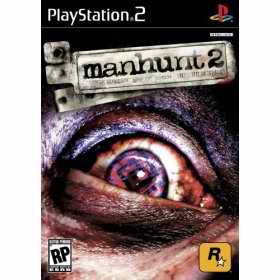 The VAC is due to begin reconsidering its Manhunt 2 decision on March 11
 Censors are trying to ban a violent video game, but flouting the law is easy. A few clicks of a mouse was all it took to buy one of the most
unpleasant, gruesome video games that has ever been released.
It is so grim that the title has been banned by the BBFC, despite which it's readily available to purchase on the internet. I found it on eBay for £32 including delivery.
For
what it's worth, the game is dreadful, with bad graphics, jittery camera work and simplistic gameplay. However, the unrelenting, sadistic violence and the fact that it is so easy to buy (despite it currently being illegal to sell the game in the UK),
raises disturbing questions about the process by which video games are classified. Last month a High Court judge ordered the VAC to rethink its verdict on the premise that the committee had misinterpreted the law. The VAC is due to begin
reconsidering on March 11, but there's no guarantee it will change its mind. If it sticks by its decision, you can expect to see Manhunt 2 on sale legally shortly afterwards.
|
|
24th February
|
|
|
|
Jodhaa Akbar banned in Pradesh
|
From Apunka Choice
|
UTV Motion Pictures, producers of Jodhaa Akbar , said they have moved the Madhya Pradesh High Court to lift the ban on screening of the film in the state.
We will take the matter to the Supreme Court if need be, a UTV official said
in a statement.
The entire film industry, including producers, distributors and exhibitors are up in arms against the state government's order for suspension of the screening of the film, it said.
In fact, the MP exhibitors association
has threatened to go on an indefinite strike if this arbitrary ruling is not reversed, it added.
The authorities cannot let a small group of individuals dictate what is or is not acceptable for the consumption of the general public, the
official said: If we allow our creative freedom to be dictated by every potentially aggrieved party, then I am afraid we will not have as vibrant and creative industry in the future. We will fight till the end.
The film was banned in
Madhya Pradesh on February 22 after demonstrations against it by the Rajput community. The film relates the tale of a Rajput princess converting to Islam to marry Mughal emperor Akbar.
Meanwhile, the film was banned in Sonepat city and elsewhere
in the district on Saturday after demonstrations against it by the workers of the Nationalist Congress Party (NCP) at cinema theatres. Earlier the Ambala district administration had banned the screening of the movie.
|
|
23rd February
|
|
|
|
London Underground panders to the easily offended
|
From the Freethinker
|
London Underground have rejected the advert for Fat Christ , a black comedy starring topless model Abi Titmuss, on the grounds that it was likely to offend ethnic, religious or other major groups.
The poster depicts a portly man on
a cross. He is wearing pink striped boxes and a crown of thorns. It was banned from Angel Tube station, where the Upper Street theatre had booked an advertising spot.
The ban has been criticised by the Rev Stephen Coles, of St Thomas's Church in
Finsbury Park, according to the Islington Tribune. He is quoted as saying: The itch to censor is something one should resist. I can't quite see how this could cause offence. We're grown-ups and Jesus can defend himself. One has to be a little wary of
indulging the super-sensitive.
Gavin Davis, the author of Fat Christ who also features as the man on the cross, insisted he had not set out to offend: The play is a comedy and the poster accurately reflects its content and themes –
the central character stages his own mock crucifixion for an art project. We don't believe it to be blasphemous and can't understand London Underground's censorious position. I am, however, prepared to apologise for my choice of boxer shorts.
A London Underground spokesman said the Fat Christ poster was “declined” because it contravened a commitment not to display adverts likely to offend ethnic, religious or other major groups: Millions of people travel on the London Underground
each day and they have no choice but to view whatever adverts are posted there. We have to take account of every passenger and endeavour not to cause offence in the advertising we display.
|
|
23rd February
|
|
|
|
Pixellation not enough for tits at the FCC
|
From CBN News
|
The US TV censor has fined 13 Fox TV stations $7,000 each for a 2003 episode of Married by America that included offending scenes from bachelor and bachelorette parties.
The Federal Communications Commission, FCC, had
initially proposed a $1.2 million fine against 169 affiliates of Fox that aired the since-canceled reality show. But, under a new policy, the agency said it would only fine stations in markets where viewers complained.
Fox strongly disagrees
with the commission's conclusions in the notice and we will be actively considering our options, Scott Grogin, the company's senior vice president of corporate communications said in a statement.
The six-episode Married by America introduced a cast of single men and women and allowed viewers to match them up by popular vote. Five matched couples then went through some rituals of dating but none married.
Fox also said some images found to be offensive appeared on-screen for 10.5 seconds. The hour-long episode in question featured explicitly sexual scenes from bachelor and bachelorette parties.
In its order released Friday, the agency said
by any reasonable definition many of the activities at the parties constitute sexual activities and the scenes also depict sexual organs.
While it is true that the nude female breasts and buttocks shown were pixilated, the commission
has never held that the full exposure of sexual or excretory organs is required to satisfy the first prong of the broadcast indecency standard, according to the FCC order.
|
|
23rd February
|
|
|
|
Scottish MPs support campaign to get lads mags top shelved
|
From Greenock Telegraph
|
A nutter's campaign against lads mags has won the support of an influential group of MSPs.
MSP Gil Paterson this week lodged a motion in the Scottish Parliament congratulating the efforts of Margaret Forbes who launched a one-woman
campaign demanding men's mags such as Loaded and Nuts be tucked away on top shelves.
She argues the magazines' front covers are in the same league as soft porn, and objects to them being displayed in lower shelves alongside more
family-friendly lifestyle magazines in sight of children.
Now she has won support from politicians from the three main parties in the Scottish Parliament after they heard supermarket chain Morrison's has chosen to stock the magazines more
discreetly.
Paterson, vice convener of a parliamentary group on violence against women and children, has also written to justice secretary Kenny McAskill over the issue.
The motion has been backed by 16 MSPs. As well as congratulating
Margaret, it argued that Parliament should support her campaign to encourage other supermarket chains and vendors to follow the example set by Morrisons.
Paterson said: It's the general attitude towards porn, and the fact children are
exposed to it and the normalisation of it that I'm concerned about.
Ms Forbes said: I'm very much encouraged because I feel like I've been doing it on my own. I've been feeling very isolated and a lot of times I get doors slammed in my
face when I go round with my petition. But there is still more to go, because we need to get other supermarkets to do the same.
|
|
22nd February
|
|
|
|
Salter concerned that Dangerous Pictures law is being ejected from Criminal Injustice Bill
|
From Crawley Observer
|
During questions on future Commons business, Martin Salter and David Lepper sought assurances that the Government would include restrictions in access to violent online pornography in the Criminal Justice and Immigration Bill, which is going through the
House of Lords, ..
Salter (Reading West) referred to the long-standing support of three Home Secretaries, 180 MPs of all parties as well as Amnesty International and thousands of individuals, women's organisations and faith groups and others
who supported the Jane Longhurst campaign against violent internet pornography.
He asked Deputy Leader of the House, Helen Goodman to confirm that the Government intends to deliver quickly on the assurances given at that despatch box by
the Justice Secretary (Jack Straw) to include these promised measures within the forthcoming Criminal Justice and Immigration Bill that is currently in the House of Lords.
Ms Goodman said she was aware of the issue, stating: The Criminal
Justice and Immigration Bill contains many important and good measures. As you know, it's vital that the Bill secures support in both Houses to a reasonable timetable. This means that sometimes difficult decisions have to be taken.
She added:
However, I'm sure that my colleagues in the Ministry of Justice (MoJ) are aware of the public support for the measures which you have mentioned and I will refer the matters to the Secretary of State.
|
|
22nd February
|
|
|
|
Sharon Osbourne has fun whilst nutters whinge
|
|
|
Ofcom have received 43 complaints about Wednesday night's Brit Awards.
Most viewers who contacted the body about ITV1's live broadcast were upset by strong language.
Host Sharon Osbourne turned the air blue when comedian Vic Reeves
took to the stage. Reeves appeared to forget which award he was there to present.
Osbourne accused him of being drunk, and yelled a string of obscenities. Reeves later blamed his confusion on a faulty autocue.
Most celebrities wasted no
time getting stuck into the free alcohol at London's Earls Court. Comic Alan Carr admitted he was a bit worse for wear as he presented an award to Take That.
Double winners Arctic Monkeys also seemed well-refreshed and organisers cut them off
mid-speech when they began poking fun at the Brits School.
|
|
22nd February
|
|
|
|
Award winning software to route around website filters
|
From University of Toronto
|
Psiphon, an Internet censorship evading software project developed by the University of Toronto's Citizen Lab has been deemed the world's most original, significant and exemplary Net and Digital Initiative by a panel of French and international
government, media and business experts. P siphon was chosen first among 100 technology projects from around the world that were nominated for the Netxplorateur of the Year Grand Prix award.
Psiphon aims to restore
the original promise the Internet once held out as a forum for free expression and access to information, said Professor Ron Deibert, director of the Citizen Lab and the psiphon project. We are honoured to receive such a prestigious award.
Internet censorship has become a major global problem, with dozens of governments blocking access to news, human rights, and political opposition websites as well as new media of self expression, such as blogs and streaming video.
Psiphon
works by leveraging the Internet and social networks of trust that span censored and uncensored jurisdictions. Those with friends, family or colleagues in censored countries download the small psiphon application on their home computers and then give the
unique connection information to their psiphon node to those living behind firewalled jurisdictions. Instead of attempting to access banned content directly, users of psiphon connect to the psiphon nodes over an encrypted channel and use them to surf the
Web instead. As each psiphon node is private, encrypted, and separate from each other, the system as a whole is virtually impossible for authorities to discover and block.
While the psiphon software is free and open source, the Citizen Lab's
developers have recently launched a start-up company, called Psiphon Inc., to provide professional services for businesses, media, and organizations that face increasingly difficult challenges operating in a carved up Internet environment.
|
|
22nd February
|
|
|
|
Wikipedia defies muslim protests over Mohammed images
|
See full article from the Guardian
|
More than 180,000 worldwide have joined an online protest claiming the images, shown on European-language pages and taken from Persian and Ottoman miniatures dating from the 14th, 15th and 16th centuries, are offensive to Islam, which prohibits any
representation of Muhammad.
The images at the centre of the protest appear on most of the European versions of the web encyclopaedia, though not on Arabic sites. On two of the images, Muhammad's face is veiled, a practice followed in Islamic art
since the 16th century. But on two others, one from 1315, which is the earliest surviving depiction of the prophet, and the other from the 15th century, his face is shown. Some protesters are claiming the pictures have been posted simply to 'bait' and
'insult' Muslims and argue the least Wikipedia can do is blur or blank out the faces.
In a robust statement on the site, Wikipedia's editors state: Wikipedia recognises that there are cultural traditions among some Muslim groups that prohibit
depictions of Muhammad and other prophets and that some Muslims are offended when those traditions are violated. However, the prohibitions are not universal among Muslim communities, particularly with the Shia who, while prohibiting the images, are less
strict about it.
Since Wikipedia is an encyclopedia with the goal of representing all topics from a neutral point of view, Wikipedia is not censored for the benefit of any particular group.
So long as they are relevant to the article and
do not violate any of Wikipedia's existing policies, nor the law of the US state of Florida where Wikipedia's servers are hosted, no content or images will be removed because people find them objectionable or offensive.
|
|
21st February
|
|
|
|
Brown and Brazier at Prime Ministers Question Time
|
See full article from TheyWorkForYou
|
Julian Brazier returned to the stage in Prime Minister's Question Time and asked about reform of the BBFC and implicitly for support of his BBFC Accountability bill. Julian Brazier (Canterbury, Conservative):
Following the Prime Minister's reply to the right hon. Member for Leicester, East (Keith Vaz) a few weeks ago, does he now accept that there is an urgent need for reform of the British Board of Film Classification? What possible justification can there be for the board's decision to release into British high street outlets videos and DVDs such as
SS Experiment Camp , which shows in voyeuristic detail women being tortured to death by SS camp guards? Gordon Brown (Prime Minister):
I share the hon. Gentleman's concerns. I think it is true to say, as
I have looked at it, that the British Board of Film Classification has put a higher category on many films in a different way from that recommended by the distributor, but it is also true to say that he expresses the concerns of many people among the
general public. That is why I have agreed to meet him and my right hon. Friend the Member for Leicester, East (Keith Vaz) to talk about the issues, and why we set up the review headed by Dr. Tanya Byron. It will report very soon, and on the basis of that
we can make recommendations for the future. As for the Conservatives who say it is wrong to review the issues, I say that the right thing to do is to review them and then make a decision. I interpret Gordon Brown's
reply as telling Brazier that he is jumping the gun and should wait on the Government commissioned Byron report. But the Daily Mail interpreted this somewhat differently and present Brown's support for the Byron Review
as if it were support for Braziers effort See full article from the Daily Mail
Gordon Brown yesterday signalled his support for a crackdown on the sale of films, DVDs and video games containing appalling scenes of violence.
The Prime Minister said he shared the concern of MPs from all parties who want new controls on
increasingly violent and sexual material.
A bid to impose new legal curbs is to be launched in the Commons next week amid concerns that they could trigger attacks by impressionable teenagers and adults.
A review ordered by Brown is
expected to lead to reform of the BBFC, which is responsible for classifying films and games.
Critics say that in recent years, it has adopted a policy of allowing virtually anything to be shown to adults and increasingly offensive material to be
shown to adults.
|
|
21st February
|
|
|
|
Home Office plan to tackle violence
|
|
|
The Home Office have issued a paper entitled Saving Lives. Reducing Harm. Protecting the Public. An Action Plan for Tackling Violence 2008-11. This paper inevitably touches on the subject of violence in the media:
We will continue to identify and respond to new challenges in violence as they occur. For example, improvements in technology and a changing population in the UK, while bringing many benefits, are changing the nature of the
challenge we face with respect to violence.
There are concerns that the way in which violence can be presented in popular culture, for example in music, television, films, videos, computer games and on the internet, may attribute towards a
general atmosphere in which violence is tolerated and even glorified. Some individuals may be more influenced by this than others and we are considering this issue in particular with respect to children and young children. We will work with relevant
industries and regulators to ensure that any response is proportionate and evidence-based.
We are working with the internet industry to assess how to respond to the growing public concern about violent and offensive content being posted on
popular websites. The Byron Review will report to the Secretaries of State for Children, Schools and Families and Culture, Media and Sport on how best to support children and young people to enjoy the benefits of video games and the internet while
managing the risks from harmful or inappropriate material.
|
|
21st February
|
|
|
|
Banning Aborigines from 18 rated pay TV
|
Based on an article from ABC
|
The Australian Federal Government has taken another step in discriminating against the Northern Territory's Aboriginal communities.
The Government has introduced a bill to amend the Broadcasting Services Act with a view to preventing pay
television licensees providing channels containing R-rated programs to areas prescribed under the Commonwealth intervention.
The Indigenous Affairs Minister Jenny Macklin says it addresses concerns raised by Aboriginal people in the Little
Children Are Sacred report about the exposure of children to pornography.
The Minister says there'll be consultation with communities that want R-rated material restricted before action is taken.
The possession, control and supply of
pornography is already banned in Aboriginal communities and town camps under the emergency response legislation passed last year.
|
|
20th February
|
|
|
|
Japanese Supreme Court finds book not obscene
|
See full article from FACT Thai
|
Japan's Supreme Court has ruled that a collection of erotic photographs by the late Robert Mapplethorpe does not violate obscenity laws, a decision that should allow the sale of the book for the first time in eight years.
The decision
overturns a 2003 Tokyo High Court ruling that the book Mapplethorpe was indecent, court spokesman Takashi Ando said. It was believed to be the first time the top court has overruled a lower court ruling on obscenity.
The court, however,
rejected publisher Takashi Asai's demands for government compensation of 2.2 million yen (US$20,370).
In the ruling, justice Kohei Nasu said the book of black-and-white portraits compiles works from the artistic point of view, and is not
obscene as a whole.
The decision, a majority opinion of the five-judge bench, also recognized Mapplethorpe as an artist who has won high appreciation as a leading figure in contemporary art.
Japanese customs have a long history
of applying conservative obscenity standard, by targeting all clear genital images in prints and films across the board, forcing film distributors and publishers to alter the parts, prompting criticisms by artists who said such measures insult their
works.
Publisher Asai called the ruling “groundbreaking” and said it could change the obscenity standard used for banning foreign films that show nudity and censoring photographs in books.
In a commentary Tuesday, the Yomiuri
newspaper said that the Supreme Court ruling reflected a change in the concept of what constitutes obscenity: Obscene images have spread on the Internet and are accessible to anyone. The supreme court must have decided that calling a highly acclaimed
photographer's book ‘obscenity' does not fit today's social norm.
Asai had sold about 900 copies the Japanese version of “Mapplethorpe,” which was originally published by Random House, in Japan starting in 1994 without objection from
authorities. But airport customs officials in Japan confiscated a copy he had with him when he returned from a trip to the U.S. in 1999. The 384-page book contained 20 close-up photos of male genitalia, and authorities considered it obscene.
|
|
20th February
|
|
|
|
Looking up a bit of background about a law case
|
See full article from the BBC
|
Articles relating to high-profile court cases should be removed from online news archives, the former Lord Chancellor has told the BBC.
Lord Falconer believes the action is necessary to avoid news stories written before a case influencing its
outcome.
Action would be necessary for around 20 cases a year, he said, in trials which attract a lot of pre-trial coverage.
The Attorney-General would have to be responsible for identifying cases that could be affected, he said: I
think the state needs to be better at identifying those cases in which they think there's a contempt risk, he told BBC Radio 4's Law in Action programme.
The rules would only apply to cases, such as the Soham murders, which generate intense
media interest. News organisations would have to remove stories from their archives that were written before an arrest was made and a case became active.
If they refused to comply it would be very strong evidence they'd committed contempt , he said.
Under the Contempt of Court Act 1981, reporters must be careful not to publish or broadcast anything which poses a substantial risk of serious prejudice to a fair trial, such as a defendant's previous convictions unless they are mentioned
in open court.
The restrictions apply when a case becomes "active", that is when a warrant is issued for a suspect, an arrest is made or charges are brought.
But a journalist may have legitimately reported this information
before the individual was arrested and faced trial, and that article could lie in vast online archives that are easy to access.
Lord Falconer says articles should only be removed for a temporary period, in the run-up to and during a court case,
and that search engines should also be asked to ensure prejudicial material doesn't come up at the top of search results lists.
Judges do warn juries against doing their own research on the internet, but media barrister Rupert Elliott said there
was concrete evidence that the temptation is difficult to resist:
|
|
20th February
|
|
|
|
Pants campaign doubles its support to two
|
From Derry Journal
|
A one-woman protest against raunchy advertising outside the Peacocks clothing store in Waterloo Place last week has secured the support of Derry's Sacred Heart of Jesus Pro Life Group. Christian campaigner Mary Doherty, from Donegal, staged a lone
protest outside the shop, condemning their lingerie advertising and its alleged portrayal of women as "objects".
Bernadette Doyle, spokesperson for the Sacred Heart of Jesus Pro Life Group, told the 'Journal': Our stance on this
issue is that Mary Doherty was quite right to protest last week at what we would also view as soft porn in underwear advertising at what is a family shop.
She went on: These adverts are immoral, very cheap and very anti-women and
anti-children. It takes courage to go out and do what Mary Doherty has done. The woman portrayed in the Peacocks' advert is lying with her legs open.
Doyle said the display was totally unsuitable for viewing by children passing the shop. In general, advertising standards have morally dropped and a large amount of advertising has become soft porn. It's high time that women speak out against it and we call upon all women to stand up and speak out and make their feelings known.
|
|
19th February
|
|
|
|
Trailers reveal a censored US version of the new Indy film
|
Thanks to Wynter
See full article from Ain't It Cool News
|
It seems that the US version of the trailer for the new Indiana Jones and the Kingdom of the Crystal Skull is being censored
At :40 seconds in, all those soldiers come running into frame. WITH MACHINE GUNS. How do we
know? Well, because we can SEE THEM, and because we hear the sound of all of the guns being cocked at the same time. Guns established, MPAA. We now know they are there.
Then a few shots later, we see the guns again. THEY ARE STILL THERE.
And at :56 seconds, just to make sure we get the point, there's the sound of a gun being cocked AGAIN. So we are reminded, “Hey, there are guns pointed at them!”
Except... there aren't. Not in the US version. There are certainly guns appearing in the international version. It was also noted that there is another difference. There is a US flag plastered over the US version.
|
|
19th February
|
|
|
|
BBFC vs PEGI
|
See full article from Pocket Gamer
|
The mainstream media has been pretty rife over the past week with speculation that an upcoming study into violent video games will lead to all games requiring classification from the BBFC
Last weekend, The Guardian newspaper reported the
government is likely to subsequently rule all games are rated using the uniform 'cinema style' method as opposed to the current BBFC/PEGI shared system.
A PEGI spokesperson from the Interactive Software Federation of Europe has spoken out about
the possible ruling, telling industry website MCV that any move to back the dropping of the PEGI ratings would be a 'mistake' and a 'backwards step' for the UK.
Director general Patrice Chazerand said the body's research shows that the current
PEGI/BBFC shared system is trusted and understood by parents and also voiced concerns the UK would regret the decision if games distribution evolves online. He added: I would resent that idea of equating games to movies – it's not the same experience.
Naturally, the BBFC sees things differently. It says it would back any move that makes it responsible for rating every game and that it recognises flaws in the PEGI system. Its own research shows parents can be confused by some of PEGI's
ratings. BBFC is a rating people understand from film and DVD, so it might give parents a bit more piece of mind, said spokesperson Sue Clark.
|
|
19th February
|
|
|
|
For not censoring religiously sensitive film
|
From IBOS
|
Critics of Jodha Akbar believe the Congress government's Islamist political ideology drove its appointed chairman of the Censor Board, Sharmila [Khan], to clear the highly controversial film Jodha Akbar without cuts. And as such, they
believe they need to be targetted also.
On Monday in Chandigarh, a lawsuit was filed in the district court by combined Rajput and Hindu organisations against this government's Board, Ronnie Screwvala, Ashutosh Gowarikar and UTV, for manipulating
history on behalf of Islamists and 'waging war against the state' using cinema.
Among the things they are pointing to is the depiction of Hemu and the subsequent beheading. The film centers around the romance between the Muslim Mughal Emperor
Akbar, played by Hrithik Roshan and his Hindu wife,
|
|
19th February
|
|
|
|
ABC TV companies appeal FCC nudity fine
|
From AVN
|
The 50 ABC television affiliates slapped with fines for airing an "indecent" episode of 'NYPD Blue' in 2003 have filed an appeal with the FCC.
On Jan. 25, the FCC ordered the stations to pay a total of $1.4 million in fines for
broadcasting the episode containing a seven-second glimpse of a woman's bare buttocks.
Lawyers for the ABC stations argued in their appeal that the FCC should reverse the decision because the “simple depiction of nonsexual nudity” is not indecent
by law or community standards.
According to Broadcast & Cable, the appeal states that the FCC's action is rife with procedural infirmities; is predicated on form complaints that do not satisfy the commission's own policies; proscribes material
outside the scope of the commission's indecency-enforcement authority; misapplies the commission's own multifactor test for patent offensiveness; is inconsistent with the commission's governing precedent at the time of broadcast; and reaches a result
that is plainly unconstitutional.
Central to the FCC's definition of the 'NYPD Blue' scene as "indecent" is the idea that the buttocks are "a sexual or excretory organ." The affiliates' appeal helpfully provides a detailed
medical description of the buttocks, proving for the record that the butt is neither a sexual nor an excretory organ.
The appeal further notes that the FCC failed to measure the scene's alleged "indecency" by community standards
in any of the 50 broadcast markets, making the fines arbitrary and unconstitutional.
|
|
18th February
|
|
|
|
Burma military doesn't like being portrayed as the bad guys
|
|
|
Police in military-run Myanmar have banned DVD vendors from selling the new Rambo film about a Vietnam war veteran fighting the junta's soldiers, but that hasn't stopped people from trying to buy it.
Many customers keep asking about Rambo 4
but I dare not to sell it. Police have warned me I could go to jail for up to seven years if I sell the latest Rambo film, said one vendor.
Starring Sylvester Stallone, the blood-splattering follow-up to the classic 1980s film trilogy
sees war veteran John Rambo fighting Myanmar forces to rescue captured Christian missionaries helping ethnic Karen villagers.
The film, which portrays Myanmar's military as sadistic and depraved, opened recently in the United States and Singapore
against a backdrop of the junta's ongoing persecution of Karen minorities.
Vendors said there were some Rambo copies smuggled from Singapore, but said the audio and video quality was not good. They advise eager Myanmar customers to wait for
pirated DVDs from China. Once this movie hits China, I think there will be a way for us to see it with much better quality, one vendor said.
|
|
18th February
|
|
|
|
But his followers call for violence and death
|
From Index on Censorship see full article
|
Muslim leaders have issued fatwas calling for the death of the female author of a controversial new book, Love and Sex in the Prophet's Life , which was circulated at the Cairo International Book Fair last month.
In a statement to
AlArabiya.net, Egyptian writer Passant Rashad said the book tackles sex as a branch of science, deemed as important in Islam for its role in preserving the human race: I wanted to explain sex from the real Islamic perspective and to make it the
reference for having a healthy sexual life .
When I mentioned the prophet I meant to demonstrate how his relationship with his wives was the perfect example of a healthy sexual life that is devoid of the complications Arabs try to impose
on it these days.
But the book has drawn sharp criticism. Independent Egyptian MP Mustafa al-Gindi complained to the Minister of Culture, Farouk Hosny, earlier this month saying the book insults the Prophet and his wives, especially his third
wife Ayesha: The book contains parts about positions and orgasms, which is totally inappropriate for a book that had the prophet's name in its title.
A religious TV channel in Egypt denounced the publication and hosted a series of sheikhs
– Islamic leaders – who accused her of apostasy and called for her killing, even if she were to repent.
At the same time, Islamic thinker Gamal al-Banna called for an end to the fatwas on writers: This is a backward way of understanding Islam.
We have to eliminate this torrent of fatwas through reasoning and refutation of these lies. It is only then that those bloodshed Sheiks will find no audience. He called upon Arab information ministers to ban televised fatwas that wreak havoc in
society and make intellectuals live in constant fear.
|
|
18th February
|
|
|
|
Scope of Dangerous Pictures clause criticised by Justice
|
|
|
JUSTICE is a UK-based human rights and law reform organisation. Its mission is to advance justice, human rights and the rule of law. They produced a briefing paper for the House of Lords 2nd Reading of the Criminal Injustice and Immigration Bill
and are critical of the scope of the Dangerous Pictures clauses: We agree that the possession of ‘extreme pornographic material' as defined in clause 113 may be both extremely distasteful and, in some cases, the rightful
subject of criminal sanction. We acknowledge that the right to freedom of expression under Article 10 of the European Convention on Human Rights allows for regulation of such material, including to protect public health or morals, and to protect the
rights of others. In particular, we note that the proposed definition of ‘extreme pornographic material' includes a great deal of material whose manufacture and distribution is already prohibited by the criminal law, e.g. the production of a snuff film
(involving ‘an act which threatens … a person's life' within the meaning of clause 113(6)(a)) would already constitute a criminal offence. However, to the extent that clause 113 goes beyond the possession of material
whose production and distribution is already unlawful, we question the empirical foundation for the government's proposal to criminalize such material. The basis for the proposal appears to be a speculative causal connection between the possession of
such material and a propensity to commit violent crime, particularly sexual offences. In our view, such a claim is not supported by evidence sufficient to justify the sanction of the criminal law. We are, moreover, concerned that the breadth of the
definition of an ‘extreme image' in clause 113(6) – while legitimately covering much that is already illegal – also includes much that is arguably innocuous (e.g. the simulated depiction of an act ‘likely to result … in serious injury' (clause
113(6)(b)). Accordingly, we are concerned that such an over-inclusive definition may constitute a disproportionate interference with the right to free expression under Article 10 ECHR.
|
|
18th February
|
|
|
|
Bitches smacked, Chop Shop shopped and Smallville stabbed in the back
|
From Ofcom
|
Top Minx, video for Smack My Bitch Up by The Prodigy
Chart Show TV, 30 December 2007, 13:45 Chart Show TV is a pop music video channel. Two viewers complained about the inappropriate scheduling
of this music video, which showed scenes of alcohol abuse, nudity and a simulated sex scene. Chart Show TV stated that the pre watershed scheduling of the video has simply been an error. Ofcom concluded that the content of this music video
- with scenes of alcohol abuse, nudity and simulated sexual activity - was clearly unsuitable to be broadcast at lunchtime on a pop music video channel when it is likely that a number of children could be watching. Ofcom welcomes the broadcaster's
apology and its assurances of improved compliance. Chart Show TV has, to date, a good compliance record, but in view of the explicit nature of some of the scenes, we consider it appropriate to record a breach of the Code.
Chop Shop: London Garage
Discovery Channel, 18 November 2007, 16:00 Chop Shop: London Garage was a series which followed two individuals as they designed and manufactured cars. Ofcom received a
complaint from a viewer concerning the broadcast of the word “fuck” during the episode broadcast on 18 November 2007. Discovery Channel said that it apologised to the viewer for any distress caused. The problem arose because the producer had not
identified all incidents of swearing in the initial viewing and had not reviewed the programme after edits had been made, to bleep out the remaining very strong language. Ofcom concluded that the language broadcast in this episode of Chop Shop:
London Garage was the most offensive and should not have been broadcast before the watershed. Ofcom also notes that UK's Toughest Jobs, broadcast on Discovery+1 was recently found in breach of the watershed Rule 1.14. Ofcom is therefore
concerned about this second similar failure to ensure compliance with the Code. Breach of Rule 1.14. Smallville
TV3 Sweden, 4 November 2007, 16:15 Smallville is a well-established US
series about the exploits of the superhero Superman. In this episode, the villain Lex Luthor is creating an army of ‘super demons'. These demons try to possess human beings. Together with Clark Kent, Lois Lane investigates where these creatures are being
bred. A viewer was concerned about scenes in which the demons appeared to take organs from human beings and Lois Lane is stabbed in her efforts to find these creatures. He felt that these scenes were not suitable at this time of the afternoon when many
children would be watching television. TV3 Sweden is a Swedish language channel. The broadcaster Viasat explained that TV3 does not aim its Sunday afternoon programming towards children. The broadcaster believed that the scenes showing the removal
of body parts were acceptable within the context of programme and the general fantasy genre of this series. The series is well-established and, in its view, the broadcaster did not believe the scenes were excessively graphic. TV3 apologised for
any distress that may have been caused and this episode now carries a post-21:00 restriction. Ofcom acknowledged TV3's apology and noted the action taken to restrict this episode to post-21:00 broadcast. Smallville is a fantasy series with the
main characters possessing supernatural powers. Against this background, most viewers would not be surprised or disturbed at the more bizarre elements of the violent scenes. However, this series does appeal to some children, even though the majority of
viewers are young adults. Therefore, broadcasters need to take care in scheduling this series at a time when children are available to view in large numbers as some scenes may be unsuitable.
|
|
17th February
|
|
|
|
Low take up so Australia looks to compulsion
|
See full article from The Sydney Morning Herald
|
The Rudd Government has branded as a failure the $85 million software filter scheme to protect young Australians from online pornography and will review its future.
Federal Communications Minister Stephen Conroy is assessing the NetAlert program,
which will come under scrutiny at the Senate estimates hearings tomorrow.
The filter scheme was a central feature of the Howard Government's $189 million NetAlert program launched last August to address the perceived threat of online sexual
predators and unsavoury content to young internet users. A multimillion dollar advertising blitz followed, including a booklet delivered to every household across the nation.
It was expected 2.5 million households would take up the free
porn-blocking filters within 12 months but only 144,088 filter products have been downloaded or ordered on CD-ROM since August last year.
The Department of Broadband, Communications and the Digital Economy has estimated about 29,000 of these
accessed filter products were still being used - less than 2% of the set target.
The program has clearly failed, despite over $15 million being spent in advertising to support it, Conroy said: Labor has always said that PC filtering is
not a stand-alone solution to protecting children from online dangers. The Government has a comprehensive cyber-safety plan that includes the implementation of mandatory ISP-based filtering to deliver a filtered feed to all homes, schools and public
internet points.
Conroy said the Australian Communications and Media Authority (ACMA) would examine all aspects of ISP-level filtering, with a laboratory trial completed by the end of June 2008, followed by a pilot test in a real world
environment.
Opposition communications spokesman Bruce Billson said the Rudd Government was rushing to criticise the NetAlert program to set the scene for a "harebrained, half-baked policy dreamt up in the lead-up to an election": NetAlert is a program which is relatively new, as is the minister in his role, and I'm sure he would like a little more than six months or so before the public decide if he has been a failure or not.
|
|
17th February
|
|
|
|
Domain Name Registrar attacked to restrict WikiLeaks
|
From Spy Blog
|
It looks as if the interesting and controversial, Wikileaks website, which promises anonymous, untraceable, uncensorable publication of leaked documents from whistleblowers, and which recently published the devastating No2ID Campaign annotated
leaked UK National Identity Scheme document, is weathering some technical hitches and legal litigation attacks.
It seems that there has been a fire in an Uninterruptible Power Supply, which took the WikiLeaks web servers offline for much of
Saturday, at their Swedish co-location hosting company.
More seriously and for the longer term, the brand name of WikiLeakS.org is no longer online, due to a Temporary Restraining Order issued by the California Northern District Court in San
Francisco, aimed at a Domain Name Registrar, rather than just the actual publishers of controversial material, who happen to be outside of US legal jurisdiction..
Spy Blog has provided a list of alternative URLs for WikiLeaks which have not yet
been censored.
The plaintiffs in the California case are a Swiss Bank bank - Bank Julius Baer and its associated Cayman Islands tax avoidance subsidiaries, egged on by their expensive Hollywood media celebrity shyster lawyers Lavely & Singer.
Julius Baer have been pursuing a Swiss whistleblower, some of whose leaked documents have been allegedly published on WikiLeaks.org. Why this is a problem when the world's financial monitoring and tax authorities appear to have already had access to
them, is a mystery.
It is interesting that the first threats to this supposedly "uncensorable, anonymous, mass whistleblowing" project, do not come from Government Big Brother authorities, but from the private sector, and from equipment
failures at a Single Point of Failure.
|
|
17th February
|
|
|
|
Ofcom ban Amores Perres from a 9pm slot
|
From Ofcom
|
Amores Perros
TCM, 23 October 2007, 21:00 The film channel TCM is available as part of the general entertainment packages on both satellite and cable. The film Amores Perros was classified as an 18-rated film by the
BBFC in 2001 as it contained strong violence, sex and coarse language . A viewer was concerned about dog fighting scenes at the beginning of the film and believed that dogs must have been harmed in the making of the film. On viewing the
film, Ofcom noted that it opened with a highly-charged car chase involving guns and a badly injured dog bleeding profusely on the back seat of one of the cars. At the end of this car chase, a badly injured woman is seen trapped in her car. The next scene
shows an illegal dog-fight gathering, with shots of injured dogs; a brutal dog fight then follows. Seriously offensive language is used from the start of the film. There was no visual or audio warning before the film started about its content.
Ofcom asked Turner Broadcasting for its comments in relation to the following Rules of the Code:
- Rule 1.6: The transition to more adult material must not be unduly abrupt at the watershed .... For television, the strongest material should appear later in the schedule.
- Rule 1.21: BBFC 18-rated films or their equivalent must not
be broadcast before 2100 … and even then they may be unsuitable for broadcast at that time.
- Rule 2.3: In applying generally accepted standards broadcasters must ensure that material which may cause offence is justified by the context.
Such material may include, but is not limited to, offensive language, violence….. Appropriate information should also be broadcast where it would assist in avoiding or minimising offence.
Ofcom accepted that TCM attracts a mainly adult audience. However, this is not a premium subscription film service and is available to many multi-channel homes which purchase a general entertainment package. 18-rated films are, therefore, not
protected by a mandatory PIN. Given the graphic violence and offensive language in the opening scenes, the transition immediately after the watershed to more adult material was unduly abrupt. For this reason, this 18-rated film was not suitable for
broadcast at 21:00. The scheduling of the film was therefore in breach Rules 1.6 and 1.21 of the Code. Given the content of the film, including the graphic violence, seriously offensive language and savage dog fights, Ofcom considered that
information about this content would have been of great help to viewers when making a decision to watch this film. In this case, in particular the lack of clear information before the film was shown about its content, was the most significant factor in
Ofcom's decision overall that the potentially offensive material was not justified by the context. There was therefore a breach of Rule 2.3. The original complaint concerned the treatment of the dogs in the film. When classifying this film, the
BBFC had investigated the staging of the dog fights. It had been satisfied that no harm had come to any of the dogs in the making of the film.
|
|
16th February
|
|
|
|
Distributors of Dark Sector consider appealing censor's ban
|
See full article from Next
Generation
Available at UK Amazon for a release on 28th March 2008
|
A statement issued by D3Publisher has confirmed the Australian ban on the Dark Sector video game. It also said that the game's distributor may appeal the cemsor's ruling.
AFA Interactive, the publisher's exclusive distributor in Australia, is
considering an appeal on the decision and will not rule out the eventual launch of the title with the censor's approval.
|
|
16th February
|
|
|
|
First step in the footsteps of Mary Whitehouse is pants
|
From Derry Journal
|
A Christian campaigner is protesting against the provocative message one Valentine's ad campaign is sending out to young lovers on the most romantic day of the year.
Christian Solidarity Party member Mary Doherty, from Donegal, is protesting
against the Valentine's ad in Peacocks shop, Derry. The ad shows a glam brunette wearing sexy red and black underwear.
Mary - who set up the National Campaign against Pornography and Obscenity in the wake of strip shows in Donegal said: It is
the way the model is reclining, with her chest sticking out and legs akimbo. This image is not about love on Valentine's Day. It depicts a woman as an object. Valentine's Day is about spreading love, it's not about raw sex.
She added: I
demand Peacocks remove this advertisement. Underwear is an intimate part of our lives, not something that should be on show to the world. Some people may not see anything wrong with it, but this model is lying in a provocative pose in her underwear. Fair
enough, show women in a feminine pose, but not as objects.
Peacocks defended its Valentine's lingerie poster campaign: We are sorry that this lady has offended by it - it was not meant to cause her discomfort. But this is an isolated
complaint.
|
|
15th February
|
|
|
|
Australia's censorship board bans Dark Sector
|
From IGN
Available at
UK Amazon for a release on 28th March 2008
|
IGN Australia has just been informed that Dark Sector , the third-person action game from Digital Extremes, has been banned by Australia's censorship board. In the game, players assume the role of Hayden Tenno, an elite black-ops agent
who has been infected by a brutal bio-weapon virus, giving him explosive combat capabilities.
In its report, the Board describe Dark Sector as a violent and sometimes gruesome game with a sinister storyline and ominous outcome. The
violence and aggression inflicted upon the protagonist is of a high level, naturalistic and not stylised at all. The game contains violence that is high in impact and the game is therefore unsuitable for persons aged under 18 years to play.
In the unanimous view of the Board, the impact of the game exceeds strong and as such cannot be accommodated in a MAI5+ classification.
|
|
15th February
|
|
|
|
Vatican nutters pressure film actors not to do erotic scenes
|
Fom the Times
|
A row has erupted over “Vatican interference” after the Italian Synod of Bishops appealed to actors to exercise their consciences and refuse to take part in “vulgar and destructive” erotic scenes in films.
The appeal follows public condemnation
by the bishops of an explicit sex scene in Caos Calmo , starring the Italian actor and director Nanni Moretti, which has just been released. In the film, directed by Antonello Grimaldi, Moretti plays a television executive who experiences a
mid-life crisis after the death of his wife in the course of which he has a torrid affair with a woman he saves from drowning.
Father Nicolò Anselmi, head of the youth section of the Italian Bishops Conference, said that Moretti was normally
noted for his “idealistic and sensitive” films. But the “gratuitous” sex scene with Isabella Ferrari, his co-star, would have an undesirable effect on the “impressionable young” since it was shown without any context involving love or tenderness.
Franco Zeffirelli, the film and opera director, said: The Church is full of pedants who have lost all sense of proportion.
|
|
15th February
|
|
|
|
Censors feed on the carcass of Chinese media freedom
|
See full article from the Telegraph
|
In a new twist in the Chinese censors' campaign to clean up the country's viewing habits, aliens, ghosts and all other aspects of horror and the supernatural are to be banned from videos.
Video and audio products often involve
alien-looking characters and fictional storytelling, both specifically plotted for the sole purpose of terror, the General Administration of Press and Publications, one of two main censorship bodies, said. According to a statement, offending
content includes, wronged spirits and violent ghosts, monsters, demons, and other inhuman portrayals, strange and supernatural storytelling for the sole purpose of seeking terror and horror.
The purpose of the new regulations is to control and cleanse the negative effect these items have on society, and to prevent horror, violent, cruel publications from entering the market through official channels and to protect adolescents' psychological health.
The move seems largely aimed at a wave of Korean and Japanese horror movies that are sweeping the countries voluminous pirate DVD shops and stalls.
But it also covers any films currently under production in China itself. It follows a
much-mocked sensitivity by GAPP's sister organisation, the State Administration of Radio, Film and Television, over the Pirates of the Caribbean series. The first film was not shown in Chinese cinemas, because it contained ghosts, and while the
third was shown, scenes involving the Chinese actor Chow Yun-fat were cut.
|
|
15th February
|
|
|
|
|
BBC News speculate about Manhunt 2 See article from news.bbc.co.uk
|
|
14th February
|
|
|
|
Reading extremist literature is not a crime
|
From the Telegraph
|
The country's top judge has overturned the convictions of five Muslim men jailed last year for downloading and sharing extremist terror-related material. The Lord Chief Justice ruled that unless there was clear evidence of "terrorist intent" it
was not illegal to read or study such literature.
The prosecution of the five young Muslim men was regarded as a test case, and is likely to lead to other convictions being overturned. These include that of 23-year-old Samina Malik - the
so-called "lyrical terrorist". She was the first woman to be convicted under the Terrorism Act and was given a nine-month suspended sentence in December after being found guilty of possessing terrorist manuals.
Irfan Raja, Awaab Iqbal,
Aitzaz Zafar, Usman Malik and Akbar Butt were all convicted last year after becoming "intoxicated" with jihadi websites and literature.
Under the Terrorism Act 2000, a person commits an offence if he possesses an article in
circumstances which give rise to a reasonable suspicion that his possession is for a purpose connected with the commission, preparation or instigation of an act of terrorism.
Prosecution lawyers have argued that simply obtaining and sharing
extremist literature was an offence under the law. However, Lord Phillips ruled against this interpretation and said there had to be a direct connection between the object possessed and the act of terrorism. He added: Difficult questions of
interpretation have been raised in this case by the attempt by the prosecution to use section 57 for a purpose for which it was not intended.
The ruling was welcomed by human-rights lawyers who said it safeguarded the right to freedom of
speech and thought.
Imran Khan, solicitor for Mr Zafar, said: My client is over the moon. He says it is surreal and he cannot see why he has spent the last two years in prison for looking at material which he had no intention of using for
terrorism. Young people should not be frightened of exploring their world. There will always be people out there with wrong intentions, but we must not criminalise people for simply looking at material, whether it is good or bad.
Prosecutors
have seven days to appeal against the ruling.
|
|
14th February
|
|
|
|
SAW IV advert cleared by the ASA
|
See full article from the Guardian
The uncut region 2 DVD is available at UK Amazon for a 3rd March 2008 release
|
An advert for the horror film Saw IV featuring a man's severed head has been cleared by the advertising watchdog, despite 57 complaints from members of the public that it was likely to disturb children.
The print, online and outdoor ad was
run by film distributor Lions Gate and featured a side view of a man's head sitting in a metal dish.
Lions Gate's outdoor ad appeared on the side of buses last October and ran with the headline You Think It Is Over But The Games Have Just
Begun.
Lions Gate argued that most of the advertising campaign was targeted at people aged 18 years and over as the film had an 18 certificate, but acknowledged that younger readers might be able to see them. The film distributor admitted
that a minority of people might find the film and the campaign distasteful, but the ads were intended to be "tongue in cheek".
Lions Gate also said that it had taken advice from media owner CBS Outdoor on whether the image was likely to
cause offence. CBS had cleaned up most of the blood in the ad to make the poster more acceptable.
In its ruling, the ASA said that the ad was likely to be distasteful to some members of the public but dismissed the idea that it was likely to
cause widespread offence to children or adults. The regulator also ruled that the ad did not contain more blood or gore than was usual for a horror film poster. From the BBFC
SAW IV is the latest in a series of horror films about a man called Jigsaw who, even after his death, can play terrifying games with his victims, leading them to gory deaths.
The film was passed '18' for strong horror, bloody violence and gory
images. One scene at the very start of the film shows the autopsy of a man in close- up images and was considered too strong for the '15' category as the Guidelines at '15' state: 'the strongest gory images are unlikely to be acceptable'.
The
film also has frequent uses of strong language, containable at the '18' required for the violence, gore and horror.
|
|
14th February
|
|
|
|
London Underground ban historical nude
|
Thanks to Nick
See full article from the Guardian
|
Venus has been delighting connoisseurs for almost 500 years - but she has been banned from London Underground, as they decided she is likely to offend rather than enchant the capital's weary commuters.
She was intended as the main poster for
the Royal Academy's show on the German artist Lucas Cranach the Elder, noted for his sensuous nudes.
Millions of people travel on the London Underground each day and they have no choice but to view whatever adverts are posted there. We have to
take account of the full range of travellers and endeavour not to cause offence in the advertising we display, a spokesman said. [You just have to know who they are alluding to!]
London Underground advertising is vetted by a firm called CBS Outdoor, and Venus seems to have fallen foul of the guideline that advertising should not
depict men, women or children in a sexual manner, or display nude or semi-nude figures in an overtly sexual context.
|
|
14th February
|
|
|
|
Julian Brazier explains his bill
|
Thanks to Dan who wrote to Julian Brazier about his BBFC Accountability Bill
|
Dear Mr Brazier,
I understand that you and several other MPs are seeking tougher legislation against violent video games. As a video games enthusiast I would like to ask you a few questions on your stance on this matter if I may and also offer
you my views on the matter.
- Do you support the government being given the power to BAN violent video games?
- Do you not believe adult video game players should have some choice over what games they play?
- Much of the hysteria over violent
video games is based on knee jerk tabloid scaremongering which is eagerly exploited by certain pressure groups and politicians for their own ends. Is it really fair for legislation to be brought in restricting adults freedom of choice based not on facts
but on hysteria, scaremongering and half truths?
- One newspaper reported that the government could get the power to ban violent games that it thinks is to blame for certain violent murders. I question whether this is either fair or
democratic. Effectively this is saying whether or not there is evidence of a link between a real life murder and a violent video game the mere fact that politicians have blamed that particular game is enough to get it banned.
I would make the point to you that in the Manhunt /Warren Le Blanc/Stefan Pakeerah case there was no actual evidence that game was in anyway to blame for the murder. The game was in the possession of the victim and not the killer. Both Stefan's
parents blamed the game for their son's murder but this was merely their opinion and not evidence.
I back legislation to stop children playing games and also viewing films which is not suitable for them. But I question whether ultra tough knee
jerk measures are really fair. Reply: Out of step with the realities of modern life
From Julian Brazier MP Thank you for your e-mail regarding my Private Member's Bill and its effect on the supply of computer games. I understand your concerns on this matter - I am as concerned as you are about the creation of a
"nanny-knows-best" state and have devoted the last four years (and my last Private Member's Bill) to fighting the health-and-safety culture in adventure and risk-based activities. To answer your first question directly, no I don't think
the Government should have the power to ban video games (or films), but I am in favour of the BBFC continuing to have the discretion to do so.
For it would be foolish to ignore the impact of violent and sexually violent media on people's
behaviour. Violent crime - particularly violence against women - is increasing steadily in the UK. A recent study [pdf] by the universities of Glasgow and North London showed that half of young British males thought it acceptable, in one circumstance or
another, to force a woman to have sex.
The links to the media are also becoming increasingly apparent. In September, for example, the Ministry of Justice published
a research paper (research series 11/07) which concludes that there is clear and consistent [evidence that] exposure to pornography puts one at increased risk for
... committing sex offences... and accepting rape myths. In December the University of Columbia brought out a fascinating study into the effect of violent films on the brain, which showed that watching such films reduced the activity of the brain
network responsible for suppressing aggression.
The BBFC, and its appeals committee, are getting increasingly out of step with the realities of modern life. The Bill seeks to bring Parliamentary scrutiny both to the process of selecting the
principal officers of the Board and of determining changes to the guidelines used by BBFC examiners. The bill would also abolish the current appeals committee, which has consistently taken a much laxer line than even the BBFC, and replace it with a jury,
drawn at random from a list of volunteers. Appeals, which currently can only be launched by the industry, could also be triggered by 50 MPs who feel a classification is too low. (In Australia anyone can appeal.)
In short the Bill will make the
BBFC more accountable for the decisions they make. It does not seek to lay down the guidelines which the BBFC would make, nor does it prescribe which films should or shouldn't be shown. All it does is ensure that the Board has to defend its decisions and
general direction, and opens up the ultimate appeal to a broader ranger of people.
Thank you for writing to me and allowing me the opportunity to explain my objectives.
|
|
14th February
|
|
|
|
Bloodshot tagline removed from video game title
|
The uncut UK version is available at UK Amazon
|
The UK release of the video game, Condemned 2 , has lost the tagline Bloodshot . It was speculated that this may have been self censorship but Sega claimed it simply sounds better without. (But the Sega in America disagree and are going
with the Bloodshot tagline). The BBFC have now passed the game uncut with an 18 certificate and have kindly provided an extended classification explanation. It looks like the Bloodshot tagline has just been removed from the box cover and still
exists within. From the BBFC : CONDEMNED 2 is a gritty, urban horror game in which the action takes place in first person, as if from the player's
point of view. Playing as a washed- up alcoholic cop named Ethan Thomas, the object of the game is to unravel a sinister conspiracy whilst at the same time defending oneself from repeated attack by a whole host of psychotic killers. It was passed ‘18'
for strong bloody violence.
 The BBFC Guidelines at ‘15' state that ‘violence may be strong but may not dwell on the infliction of pain or injury'. In CONDEMNED 2 – BLOODSHOT however, players are encouraged to string together brutal combinations of
attacking moves in order to kill enemies, with these moves seen to inflict realistic bloody injury on the enemies' faces. Players are also given the ability to inflict violent repeated injury on their victims once they have already killed them, with
blood splashing up onto the camera lens as they do so. This focus on violent bloody injury was therefore considered too strong for ‘15' and better placed at the adult ‘18' category. Additionally, BBFC Guidelines at ‘15' state that ‘the strongest gory
images are unlikely to be acceptable' and with the game also providing players with the ability to shoot enemies' heads off, resulting in large explosive blood splats, this emphasis on strong gore was also considered better placed at ‘18'. Fantastical
elements in the game's narrative and the actual physical complexity of the game- playing experience did mean however that the game was suitably placed at the adult ‘18' category.
The BBFC Guidelines at ‘15' state that ‘violence may be strong but may not dwell on the infliction of pain or injury'. In CONDEMNED 2 – BLOODSHOT however, players are encouraged to string together brutal combinations of
attacking moves in order to kill enemies, with these moves seen to inflict realistic bloody injury on the enemies' faces. Players are also given the ability to inflict violent repeated injury on their victims once they have already killed them, with
blood splashing up onto the camera lens as they do so. This focus on violent bloody injury was therefore considered too strong for ‘15' and better placed at the adult ‘18' category. Additionally, BBFC Guidelines at ‘15' state that ‘the strongest gory
images are unlikely to be acceptable' and with the game also providing players with the ability to shoot enemies' heads off, resulting in large explosive blood splats, this emphasis on strong gore was also considered better placed at ‘18'. Fantastical
elements in the game's narrative and the actual physical complexity of the game- playing experience did mean however that the game was suitably placed at the adult ‘18' category.
CONDEMNED 2 also contains frequent use of strong language and a
drug theme, with many of the game's enemies depicted as crazed addicts.
|
|
14th February
|
|
|
|
Tennessee nutter specifies violent media study and its result
|
See full article from Game Politics
|
The Tennessee State Senate will consider a measure which seeks a legislative study into the ”adverse societal impact” of violent electronic media.
Such a study would likely encompass video games as well as television, movies and the Internet. In
fact, games and TV are specifically mentioned in the resolution, SJR 613. The legislation was proposed by Senator Roy Herron, a Democrat.
While calling for a study, the language of Senator Herron's resolution seems to suggest that, at least in
his mind, the matter has already been decided: ...decades of social science research reveal the strong influence of televised violence on the aggressive behavior of children and youth; and…there appears to be evidence that exposure to violent media
increases feelings of hostility, thoughts about aggression, and suspicions about the motives of others, and… It is also noteworthy that Senator Herron's proposal appears to have both its outcome and subsequent course of action pre-determined:
Be it further resolved that as part of its study, the committee should identify ways and means to impress upon the entertainment industry that the depiction of the consequences of violent behavior in the electronic media should be associated with
negative social consequences.
SJR 613 has been referred to committee. If approved, its called-for “study” is due by February 1, 2009.
|
|
13th February
|
|
|
|
Arab countries sign agreement to keep satellite TV under control
|
See full article from the BBC
|
Arab countries have agreed to allow punishment of satellite channels deemed to have offended Arab leaders or national or religious symbols.
At a meeting in Cairo called by Egypt and Saudi Arabia, a charter was adopted allowing authorities to
withdraw permits from offending channels.
The only country to refuse to endorse the charter was Qatar, the home of leading satellite station al-Jazeera.
Correspondents say the satellite channels have thrived on controversy. The often
privately financed stations give airtime to government critics and viewers, and discuss issues which state channels would never dare approach
At the meeting of information ministers from the 22-nation Arab League in Cairo, the charter was agreed
by a vote. The document calls on stations not to offend the leaders or national and religious symbols of Arab countries . They should not damage social harmony, national unity, public order or traditional values, the charter says.
The charter also calls on broadcasters to avoid erotic content, or content which promotes smoking or the consumption of alcohol, and to protect Arab identity from the harmful effects of globalisation.
Signatory countries may withdraw,
freeze or not renew the work permits of media which break the regulations.
|
|
13th February
|
|
|
|
Police make an arse of themselves in Virginia Beach
|
See full article from the BBC
|
Posters of scantily clad youths that were seized by police at an Abercrombie & Fitch store in a Virginia mall this weekend may be inappropriate for young children, but they are not obscene, according to legal experts.
Virginia Beach police
apparently have agreed. They have dropped charges against the clothing company that markets to chic teens.
The window displays went up in 363 stores across the country in mid-January, including the Lynnhaven Mall in Virginia Beach.
 One of the posters showed three shirtless young men, one with his upper buttocks revealed. The second one revealed a woman's breast — with all but the nipples.
Was the police response to the store an overreaction? Yes, according to legal experts.
Though local laws can vary, courts require that the image show sexual activity or a "lewd display" of genitals, says Lawrence Walters, an Orlando lawyer and First Amendment specialist: There is not a chance any jury in America would find the
photo obscene under these standards.
Virginia police had referred to City Code Section 22.31, which says it is a crime to display obscene materials in a business that is open to juveniles, said police spokesman Adam Bernstein.
The manager of the store could have faced a fine of up to $2,000 and a year in jail.
Walters said police may have misread the standards for obscenity, as is often the case. He also said they improperly seized the posters without a search warrant, which constitutes prior restraint, which is barred by the Constitution.
|
|
12th February
|
|
|
|
Wal-Mart to cover up covers of 'M' rated video games
|
See full article from FileFront
|
t seems that Wal-Mart will soon be making another step in it's ongoing endeavors to censor its own stock. Stores will soon begin displaying “M” rated games in a black sleeve that obscures 3/4 of the game's cover, much like adult magazines in many news
shops.
It is the responsibility of Wal-Mart to protect our children from potentially damaging content, such as the covers of some video games, said a company spokesperson.
It's still pretty ridiculous though, especially since I
can't think of a single “M” rated title that has anything too offensive on its cover. Not to mention the fact that the games are encased in glass, so children can't even inspect the back. And if they're so concerned about the games' content, then why are
they stocking them at all? Update: Spoofed See full article from Game Politics , 15th February 2008 There's also a story out there claiming
that Wal-Mart will be shrouding M-rated games in a black cover. The original story is from Scrape TV, a faux news site. However, it's been repeated in some legit sites and a GP reader even mentioned it in our forums.
GP heard from a game-savvy
Wal-Mart exec Tuesday night who denied any knowledge of such a plan.
|
|
12th February
|
|
|
|
Operas and circuses to return to Turkmenistan
|
See full article from FACT Thai
|
Turkmenistan will end its seven-year ban on opera and the circus introduced by the Caspian nation's former eccentric leader, state media reported.
President-for-life Saparmurat Niyazov died in late 2006 of a heart attack. He banned opera, ballet
and the circus in 2001, saying they are “alien” to Turkmen culture and allowed funding for state-sponsored circuses to dry up.
The new leader, Kurbanguly Berdymukhamedov, has sought to promote a softer image for the gas-rich nation bordering Iran
— and reversed some of Niyazov's most eccentric policies. He plans to reopen an opera house, resume circus shows and build a cinema in the capital Ashgabat.
Today a new period is starting in our country which we have called an era of great
renaissance, Berdymukhamedov said in televised remarks. Berdymukhamedov says his country is becoming increasingly developed and should, therefore, welcome such artistic performances. Our flourishing nation should not stand separate from the world.
It absolutely should have a worthy operatic theatre and a worthy state circus.
|
|
11th February
|
|
|
|
Irish Nutter likens herself to Mary Whitehouse
|
From the Irish News
|
A County Donegal woman behind an island-wide campaign to ban pornography plans to be a “successful” Irish version of the late Mary Whitehouse.
Mary Doherty,59, is to establish a ‘National Campaign to Ban Pornography' on both sides of the border.
The move follows her success last week in having strip shows at a bar at Moville on the Inishowen Peninsula stopped. Doherty said initial support for the new campaign had been huge with anti-abortion groups in virtually every county
rallying to her call.
The Buncrana woman is a member of the Christian Solidarity Party (CSP). She contested last year's general election in the Republic but only received 339 votes. Established in 1997 CSP stands for ‘family values' and is
opposed to gay marriage, gay adoption, abortion and euthanasia. But has not won any seats yet.
She says the new campaign will target strip shows, prostitution, top-shelf magazines, magazines aimed at young girls and pornography from any
broadcaster available in Ireland.
Doherty acknowledged that she could be compared to the late Mary Whitehouse who led a campaign against pornography in Britain: I hope I'll be more successful than she was.
Comment: Bible Bashing Failure From Dan, 13th February 2008 So this Mary Doherty woman wants to be as "successful" as Mary Whitehouse?
Successful
in doing what exactly. If Whitehouse had been successful we would have laws allowing homosexuals and blasphemers to be locked in the tower and porn viewers probably being burned at the stake.
On a serious note the only legislation she ever got
brought in was Channel 4 putting up red triangles as a warning before they showed dirty movies. Oh yes she really was a pioneer!
What is this woman aspiring to? A failure of a bible bashing Christian that's what.
|
|
11th February
|
|
|
|
Iranian women's magazine banned
|
See full article from Index on Censorship
|
Iran's Commission for Press Authorisation and Surveillance has suspended feminist monthly Zanan (Women) for publishing information detrimental to society's psychological tranquillity. Zanan has been published regularly over
the last 19 years in Tehran. In the past, Zanan has always shown support to other magazines and newspapers which have been shut down. What has upset Iranian journalists is the fact that Zanan was not only closed, but its authorisation for
publishing has been revoked, meaning it is very unlikely it will reopen in the future.
This short statement was made on writer Asieh Amini's blog a few hours after the closure of Zanan magazine: I have worked for many newspapers that
have been closed down by the authorities but none of these closures angered me as much as the closure of Zanan magazine.
|
|
10th February
|
|
|
|
Discovery Channel drops plans to show torture documentary
|
Ffrom Think Progress
|
Taxi to the Dark Side , a documentary about an innocent Afghan taxi driver tortured to death by US officials at Bagram Air Base, has received wide critical acclaim since its debut in April at the Tribeca Film Festival.
Director Alex
Gibney agreed to sell the rights of Taxi to the Discovery Channel because executives convinced him they would give the film a prominent broadcast. Now, however, Discovery has dropped its plans to air the documentary because the film is too
controversial. Gibney responded to the news in a press release this week:
Now, I am told that ‘it doesn't fit into Discovery's plans,' and that the film's controversial content might damage Discovery's public offering.
Having directed
Enron , very little about this kind of corporate behavior shocks me, but I am surprised that a network that touts itself as a supporter of documentaries would be so shamelessly craven. This is a film that, in an election year, is of critical
interest to the viewing public. What Discovery is doing is tantamount to political censorship. It's ironic that Taxi's content is too “controversial,” considering it depicts real acts perpetrated by the current Bush administration. In an
interview with the Center for American Progress, Gibney noted that Americans are excited about dramatizations of torture, such as in the show 24 , but uncomfortable “with the reality of torture.”
|
|
9th February
|
|
|
|
Outcomes of the Byron Report
|
Of course an interesting question is who will do rationalised games rating, BBFC or PEGI?
See full article from the
Guardian
|
A legally enforceable cinema-style classification system is to be introduced for video games in an effort to keep children from playing damaging games unsuitable for their age, the Guardian has learned. Under the proposals, it would be illegal for shops
to sell classified games to a child below the recommended age.
Ministers are also expected to advise parents to keep computers and games consoles away from children's bedrooms as much as possible, and ask them to play games in living rooms or
kitchens facing outward so carers can see what is being played.
Ministers are also expected to recommend blocking mechanisms to protect children from seeing unsuitable games, emails or internet sites. Discussions have already been held with
internet service providers to see if an agreement on a standardised filter can be reached.
Tanya Byron is officially due to report next month, but education and culture ministers have a sense of the report's direction. The report's contents,
which include a lengthy review of the literature on the impact of video games on children, has been discussed between the Department for Children, Schools and Families and the Department for Culture, Media and Sport. Ministers are anxious to strike a
balance between the entertainment, knowledge and pleasure children gain from highly profitable internet and computer games, as well as the dangers inherent in the unregulated world of the net and its overuse by children.
A new British Standards
Institution specification proposed by Ofcom, the communications regulator, and the industry is expected to allow the developers of filtering products to test them against the standard designed to protect children and other users from illegal or
unsuitable content. Companies that pass the test will be able to display a child safety online kitemark.
Ministers hope the Byron review will act as a way of calming the debate about video games which has become increasingly polarised and based
on prejudice. They say they are also willing to examine proposals made by a Tory MP earlier this week for an internet standards authority to be set up to ensure that service providers offer a two-tier system with users able to pick content suitable for
adults or children. Hugo Swire, a former shadow culture secretary, has suggested that the default setting for internet content would be for children, with a password or pin needed for unfiltered material.
|
|
9th February
|
|
|
|
Philippines bans porn, sex shows and the words 'christian' or 'muslim'
|
See full article from Broadcasting & Cable
|
The Philippines House of Representatives has approved a bill that seeks to prohibit both print and broadcast media from using the words "Muslim" and "Christian" as a means of describing a person suspected of committing a crime.
The bill's main authors said the measure's objective is to penalize media practitioners by imposing a fine of at least P50,000 whenever the words Muslim and Christian are used: It is hereby declared unlawful for any person to use in mass media,
the words Muslim or Christian or any other words that would denote religious or ethnic affiliation to describe any person suspected of or convicted for having committed criminal or unlawful acts."
Hataman, a human rights advocate, said
the bill would go a long way as this would reduce connotations of discrimination in the practice of religion.
The bill provides, however, that only editors of newspapers and broadcast stations will be penalized.
Four other measures were
approved on third and final reading at the House, including House Bill 2420 amending the Family Code of the Philippines, HB 2811 penalizing those exploiting women and glorifying sexual violence in advertisements, HB 3305 banning obscene porn materials
and live sex shows.
|
|
9th February
|
|
|
|
Barack Obama speaks on media censorship
|
See full article from Broadcasting & Cable
|
Democratic presidential hopeful Barack Obama has said that he is concerned about TV content and that he believes as president, it would appropriate to "work with the industry" to address issues of sex and violence, including the marketing of
violent films in TV shows, but he believes parental control, not government control, is the best response.
He also said he was concerned about the Internet, as well as TV.
When asked by Doyle McManus of the Los Angeles Times, whether
there was too much sex and violence coming out of Hollywood, he said that as a parent, as well as a presidential candidate, he was concerned, in the process managing to cite both cable and broadcast.
While Obama said he rejected the idea of
censorship and felt that parents had the primary responsibility for controlling content, he also warned the TV industry to be careful how it markets movies on TV.
I'm also concerned [about] some of the violent, slasher, horror films that come
out, he added. You see a trailer, and I'm thinking, I don't want my six-year-old or nine-year-old seeing that trailer while she's watching American Idol.'
|
|
8th February
|
|
|
|
Afghan president promises justice for Pervez Kambaksh
|
See full article from the
Independent
Sign the petition to
Save Pervez!
|
Afghanistan's President has promised justice for Sayed Pervez Kambaksh, raising hopes that the condemned student journalist will be freed.
At a joint press conference with the British Foreign Secretary, David Miliband, and the US Secretary of
State, Condoleezza Rice, who arrived in Afghanistan on a previously unannounced visit, President Hamid Karzai vowed: Justice will be done. It was the first time that the President has spoken publicly about the 23-year-old's plight, which sparked
outrage around the world, after The Independent launched a petition to save him last week. Kambaksh was sentenced to death by an Islamic court for downloading an article about women's rights, which poked fun at Islam by questioning why men are allowed
four spouses, but women are not.
Asked about the case by The Independent, Karzai said he had talked it over with the US and British officials, who have both expressed concerns over Kambaksh's fate.
Karzai insisted it was a matter for his
country's courts to deal with. He said: This is an issue that our judicial system is handling. I can assure you, that at the end of the day, justice will be done in the right way.
His remarks suggest he is not planning to use his executive
powers to intervene at this stage, but that he may yet pardon Kambaksh if the sentence is upheld by Afghanistan's supreme court. Under Afghan law the President has to sign off on a death sentence before it can be carried out.
Conservative clerics
and tribal elders have urged the government not to overturn the death penalty. More than 100 religious and tribal leaders attended a rally in Gardez, the capital of Paktia province, in support of the verdict. The province, in eastern Afghanistan, borders
Pakistan's tribal belt, which nurtured many of Afghanistan's hardline mullahs.
Khaliq Daad, head of the Islamic council of Paktia, said Kambaksh had "humiliated" Islam. He said: Kambaksh made the Afghan people very upset. It was
against the clerics and Islam. He has humiliated Islam. We want the Afghan President to support the court's decision.
If the verdict is upheld Mr Karzai may be forced to choose between the mullahs, who passed the sentence, and the
international community, which opposes it.
Zia Bumia, president of the Committee to Protect Afghan Journalists, said the courts had been hijacked by Mr Karzai's enemies to split him between the religious conservatives and his American backers.
|
|
8th February
|
|
|
|
Art images of Mohammed criticised on Wikipedia
|
See full article from the New York Times
|
An article about the Prophet Muhammad in the English-language Wikipedia has become the subject of an online protest in the last few weeks because of its representations
of Muhammad, taken from medieval manuscripts.
In addition to numerous e-mail messages sent to Wikipedia.org, an online petition cites a prohibition in Islam on images of people.
The petition has more than 80,000 “signatures,” though many
who submitted them to ThePetitionSite.com, remained anonymous.
A Frequently Asked Questions page explains the site's polite but firm refusal to remove the images: Since Wikipedia is an encyclopedia with the goal of representing all topics from
a neutral point of view, Wikipedia is not censored for the benefit of any particular group.
The notes left on the petition site come from all over the world. It's totally unacceptable to print the Prophet's picture, Saadia Bukhari from
Pakistan wrote in a message. It shows insensitivity towards Muslim feelings and should be removed immediately.
The site considered but rejected a compromise that would allow visitors to choose whether to view the page with images.
Paul M. Cobb, who teaches Islamic history at Notre Dame, said:
Islamic teaching has traditionally discouraged representation of humans, particularly Muhammad, but that doesn't mean it's nonexistent. Some of the most beautiful images in Islamic art are manuscript images of Muhammad.
The idea of
imposing a ban on all depictions of people, particularly Muhammad, dates to the 20th century, he said. With the Wikipedia entry, he added, what you are dealing with is not medieval illustrations, you are dealing with modern media and getting a modern
response.
|
|
8th February
|
|
|
|
Fitness center advert winds up the Catholic League
|
See full article from WCBS TV
|
A photo showing models dressed as nuns sketching a buff, naked man -- for an Equinox Fitness Center in Boston -- is raising eyebrows all over.
The Boston Archdiocese thinks the ad is a slam against the Catholic Church and wants an apology.
Keira McCaffrey is with the Catholic League in New York. It's gratuitous, McCaffrey said: it's a slap at nuns, but you know what? It's trite. It's not even clever. This is an old cliché... let's make fun of nuns.
Is it the
worst thing in the world? No, McCaffrey said. It's a sophomoric ad. It doesn't speak well of Equinox.
In a statement, Judy Taylor, a spokesperson for Equinox, said: The ads capture the energy and artistry of the well-conditioned
body in a thought-provoking fashion, blending fantasy and impact. Equinox reps also said there will be no apology for the ad, which can soon be seen in five other cities, including New York.
|
|
8th February
|
|
|
|
India petitioned to block website selling pre-natal gender identification
|
Culturally dictated gender imbalance is surely a danger for some societies. Maybe it even justifies censorship. Preference for boys may be good for Thailand's Asian sex tourist business though. See
full article from FACT Thai
|
The Indian Supreme Court will hear on February 15 an application seeking directions to the Union of India for blocking access to a website promoting pre-natal gender identification kits from abroad. The Voluntary Health Association of Punjab
is petitioning to seek strict implementation of the Pre-Conception and Pre-natal Diagnostic Techniques (Prohibition on Sex Selection) Act, 1994.
The application said that a website promoting sale of gender identification kits was reported in the
media.
The website, according to the applicant, says the test seeks to identify the presence of male or female foetal genetic materials in the mother's blood. The website provided the methods by which the test was conducted, the process
of ordering the test kit, safeguards to be taken, etc.
Since the website was accessible anywhere in the country, a blanket blocking of this website was essential to prevent the misuse of technology and violation of the law, the application
said and sought a direction in this regard.
|
|
7th February
|
|
|
|
Private Eye pokes fun at the Sunday Express
|
Thanks to Wynter
|
From issue 1203 (8 Feb - 21 Feb, 2008) of Private Eye (page 8)...
Shocked that once-banned video nasties are available on the high street (as, indeed, they have been for some years now), the Sunday Express launched a
front-page attack on the increasingly lax standards of Britain's film censors.
Censors admit these grotesque movies are 'tasteless' but they say they do not deserve to be banned because they are neither illegal or harmful, the paper
thundered. The Sunday Express today demands action to sweep this filth off our shelves.
And, the highlights from the Sunday Express's sister TV channel, Television X, this week? Fetish Whores, Big Tit Vixens, Anal Teens, Hosiery Heels and
Holes and the unforgettable Ick y Sticky Mucky Mingers...
Comment: Next! From Wynter I wonder if the proprietor of the
Sunday Express (Richard Desmond) will be so supportive of Mr Brazier and company when they turn their attention to the output of Television X's big name stars such as Ben Dover?
|
|
7th February
|
|
|
|
MP suggests more internet censorship
|
Thanks to ofconWATCH on the Melon Farmers Forum
See full transcript from
Parliament
|
|
|
Hugo Swire MP
going nowhere fast
|
Hugo Swire, Conservative MP for East Devon, initiated an adjournment debate last night in parliament entitled Internet (Child Protection) He went on to suggest: We need to set up a new co-regulatory
structure, an internet standards authority, to fight illegal and harmful content, promote a safer environment and raise awareness. ISPs should deliver an acceptable service for children whereby they would be able safely to access the internet while
adults could access all other content through a PIN or similar device. We should ensure that internet companies that advertise carry responsibility messages, such as those we see on alcohol advertising and cigarette packages. A hotline number in the UK
is operated by the excellent Internet Watch Foundation, and it should be displayed. We need to empower parents, teachers and children in respect of their responsibilities and the risks of going online. Finally, any internet-ready platform should be sold
with a robust, self-updating, tamper-proof internet filter pre-installed.
Those proposals are not about censorship [... BUT ...] they are about creating the regulatory environment to enable our children to surf safely, so that they
can expand the horizons of their knowledge. Of course, I do not believe we can remove all risk to children, but we can make this country a safer place in what, at times, seems to be an increasingly dangerous world for our children. ...Read
the full transcript from
Parliament
|
|
7th February
|
|
|
|
Not exactly very encouraging reply from MP re BBFC accountability bill
|
Thanks to DarkAngel who wrote to his MP Mark Simmonds
|
Dear Mr Simmonds
I understand that fellow conservative MP, Julian Brazier of Canterbury, has put forward a “BBFC accountability bill” which I believe is up for debate on the 29th of February. If passed, this would allow the government to dictate
BBFC classification guidelines, over rule their decisions and even ban already classified works.
As a movie buff and a lifelong fan of the horror movie genre, I am very strongly opposed to this bill, as Mr Brazier is clearly trying to impose his
moral ideals onto everyone else. It should be stressed first and foremost that current BBFC classification guidelines were drawn up after an extensive public consultation back in 2000, where the overwhelming majority said they wanted less censorship at
the 18 category. Hence why classification guidelines where relaxed. So who is he to say what is acceptable for our viewing?
I am particularly concerned about this bill, as I see it has the support of numerous MP's, including neighbouring
conservative MP for South Holland, John Hayes (lucky for him I don't live in his constituency or I would be having a few choice words) and Mr Brazier has also apparently been contacting the likes of Mediawatch UK (Mary Whitehouse's former group) and the
Catholic Herald asking members to lobby their MP's to support him.
I find it absolutely appalling that Mr Brazier thinks a minority of narrow minded prudes and bigots should be allowed to dictate what the vast majority of the liberal minded
public should be allowed to watch, considering the BBFC actually went to great lengths to gauge public opinion on the matter before revising their guidelines in 2000.
I feel I should also point out that many European countries have far more
liberal censorship laws than the UK, in fact Holland doesn't have any censorship at all, distributors simply classify and describe their own products. So if the media was responsible for all of societies ills, as Mr Brazier clearly believes, surely these
countries would have greater problems with violent crime and disorder, yet there is no proof of this.
I should also point out that the BBFC are already accountable to parliament in any case under the Video Recordings Act and local councils have
the power to prevent films from being shown at the cinemas they licence, so his bill is unnecessary. But trying to make things any more restrictive by adding further levels of bureaucracy, as he feels this don't go far enough, will simply damage the film
and video game industry.
All other arguments aside, as a grown adult in a supposed free country I should be able to make my own mind up as to what is suitable for my viewing without state interference.
I therefore hope you will strongly
oppose Mr Braziers bill for the above reasons. Reply: Welcome Addition to Censorship Process From Mark Simmonds MP
|
|
Mark Simmonds MP and Big Ears
|
Thanks you for your letter on Julian Braziers Private Members Bill on the future of the British Board of Film Classification (BBFC).
Julian Brazier has a long history of campaigning on these issues and his proposals represent an important
contribution to the debate. He is right to highlight the concerns many parents feel about their children being able to view violent or sexually explicit material.
At the moment, the BBFC classifies films shown in cinemas and then determines what
films and games can be made available to the market. The Bill Proposed by Julian Brazier makes it harder for children to view unsuitable material. The Bill has four main parts - allowing the Home Affairs Committee to scrutinise candidates for senior
roles in the BBFC, allowing the same committee to veto aspects of the BBFC guidelines, a mechanism for MP's to trigger an appeal of a classification and allowing classifications to be challenged retrospectively.
A balance has to be struck when
classifying films and video games that both allows adults to enjoy violent and explicit material (if they so choose) and protects children. The Conservative Party is currently conducting a review of policy in this area and will be holding a series of
seminars on media social responsibility to discuss these issues. This Bill is a welcome addition to that process and we will consider its merits carefully as part of this process.
As this is a private members Bill it is unlikely but not
impossible it will become law.
|
|
7th February
|
|
|
|
The Global Voices Guide to Blog Advocacy
|
See full article from
Global Voices
Download Blog for a Cause!
|
Global Voices Advocacy is pleased to announce the second of several planned manuals focused on the topics of circumventing internet filtering, anonymous blogging and effective use of Internet-based tools in campaigns for social and political change.
Blog for a Cause!: The Global Voices Guide of Blog Advocacy explains how activists can use blogs as part of campaigns against injustice around the world. Blogging can help activists in several ways. It is a quick and inexpensive way to create
a presence on the Internet, to disseminate information about a cause, and to organize actions to lobby decision-makers.
The goal of Blog for a Cause!: is twofold: to inform and to inspire. The guide is designed to be accessible and practical,
giving activists a number of easy-to-follow tips on how to use a blog to further their particular cause.
The guide is divided into five sections:
1. Frequently asked questions about what blog advocacy is
2. The 5 key elements of any
successful advocacy blog
3. The 4 steps to creating an advocacy blog
4. How to make your blog a vibrant community of active volunteers
5. Tips to help blog activists stay safe online
In addition to the information provided above, the
guide is also full of examples of advocacy blogs from around the world, to inspire readers with a glimpse of what is possible. These featured advocacy blogs have a variety of goals, ranging from freeing a jailed blogger in Saudi Arabia to protecting the
environment in Hong Kong and opposing the conflict in Darfur.
The guide was written by Mary Joyce, a student of digital activism based in Boston, and was commissioned by Global Voices Advocacy, an anti-censorship project of Global Voices online.
|
|
7th February
|
|
|
|
Hounding of bloggers in Burma
|
See full article from Reporters without Borders
|
Reporters Without Borders and the Burma Media Association firmly condemn the arrest of blogger and writer Nay Myo Latt at his home in Rangoon.
This hounding of bloggers is unacceptable, the two organisations said: We do not know where
Nay Bone Latt is being held. We urge the authorities to release him and to stop this persecution.
A member of the outlawed National League for Democracy, Nay Myo Latt uses his blog (www.nayphonelatt.net) to record the difficulties encountered
by young Burmese when trying to express themselves, especially since last autumn's protests against the military regime that were led by Buddhist monks. He also owns three Internet Cafés in Burma.
The Burmese authorities have stepped up their
surveillance of the Internet since the start of January, reportedly pressuring Internet café owners to register the personal details (name, address and so on) of all users and to programme (and save) screen captures every five minutes on each computer.
All this data is apparently then sent to the communication ministry.
The only blog platform that until recently had still been accessible within Burma, the Google-owned Blogger (www.blogger.com), has been censured by the regime since 23 January.
Bloggers are no longer able to post entries unless they use proxies are other ways to circumvent censorship.
This blockage is one of the ways used by the government to reduce Burmese citizens to silence, Reporters Without Borders and the
Burma Media Association said. They can no long post blog entries or disseminate information. Burma is in danger of being cut off from the rest of the world again.
|
|
6th February
|
|
|
|
Hints that Pervez Kambaksh will not be executed for blasphemy
|
See full article from the
Independent
Sign the petition to
Save Pervez!
|
The condemned student journalist Sayed Pervez Kambaksh will not face execution, a senior government official in Afghanistan indicated yesterday.
A ministerial aide, Najib Manalai, insisted: I am not worried for his life. I'm sure
Afghanistan's justice system will find the best way to avoid this sentence.
It was the clearest indication yet that the 23-year-old will have his death penalty revoked amid mounting international pressure on the Afghan authorities.
Kambaksh was condemned to die by an Islamic court for insulting Islam. He was found guilty under sharia law after he distributed articles from the internet on women's rights at Balkh university in northern Afghanistan, an act he claims was aimed at provoking debate. His family say he was not allowed a defence lawyer and the trial was in secret.
The verdict, briefly endorsed by the Afghan senate before it retracted its opinion, caused international protests. More than 63,000 people have signed an Independent petition urging the Foreign Office to put all possible pressure on the Afghan
government to prevent the execution. The United Nations' senior human rights advocate, Louise Arbour, has written to the President and his top officials. President Hamid Karzai's staff said he had been inundated by appeals from pressure groups across the
globe to pardon the student journalist.
The President is concerned about the case and is watching the situation very closely , his spokesman, Humayun Hamidzada, said. But he added: There is a judicial process ongoing.
Manalai is the senior adviser in Afghanistan's Culture Ministry, which is in charge of arbitrating free speech disputes in the media. He condemned the student writer but maintained it was very unlikely he would face the gallows.
The President can
pardon death-row prisoners if their sentence is upheld by the Supreme Court. But privately, government sources have hinted that President Karzai would prefer to see the verdict overruled by an appeal court, before it reaches his office.
See full article from
IWPR As columns of people marched through the streets of Kabul holding portraits of journalist Sayed Parwez Kambakhsh, it was strange for me to see his image appear so many times,
held by so many hands. Parwez is my brother.
It was just a little over a week since a first-level court in the northern Afghan province of Balkh had passed a sentence of death against Parwez.
The world media had snapped to attention, but
for me it was especially important to see my own Afghan countrymen and women staging a demonstration for my brother, and for freedom. The January 31 protest was organised by the Afghanistan Solidarity Party.
Many of the participants told me that
although they did not know Parwez personally, they were marching to protect freedom of expression and democracy in Afghanistan.
With shouts of “Long live democracy!” and “We demand Parwez's release!”, the demonstration went on for almost two
hours, ending up at the front gate of the United Nations Assistance Mission to Afghanistan.
|
|
6th February
|
|
|
|
Conan video game cut for Germany but not for the US
|
See full article from GamesIndustry.biz
Age of Conan: Hyborian Adventures is available at US
Amazon for 20th May release
|
Funcom, developer of the upcoming Age of Conan: Hyborian Adventures video game, has acknowledged that it will be censored in Germany.
In a forum post, community manager Shannon Drake noted that this was a legal requirement, rather than
a design decision that could be reversed. It was previously reported that the US version would also be cut to delete topless female nudity (but no cuts to violence)
However Drake corrected the post and revealed that the US version was
submitted to the ESRB and given an M-rating without any server-side censorship. It will therefore feature full blood, full fatalities and breasts with nipples.
The "elsewhere in Europe" version, rated 18+ by PEGI, is also uncut.
|
|
6th February
|
|
|
|
Canadians worry about their loss of free speech
|
See full article from the Brock Press
See also Ezra Levant
See also
response from Syed Soharwardy who withdrew his complaint
|
The "Danish Cartoon Riots" were a shock to the world. Many newspapers republished the cartoons in defense of freedom of speech and to inform the public. Others decided it was unnecessary and inappropriate. In Canada, the Western Standard
magazine chose to do the former. Whether the decision was appropriate or not, it was entirely in its right to do so. However, a Saudi Imam was so enraged that he called the police to arrest the publisher of the magazine. His 911 call was
dismissed. The Imam then turned to the Alberta Human Rights Commission and argued that Ezra Levant, the publisher of the Western Standard, had undermined his human rights. In Canada, where separation of Church and State and the individual's freedom of
speech are cherished, one would think this Imam would have been laughed out of court.
However, the state-funded Commission has taken upon itself to be the arbiter of what is proper and politically correct speech, and the scarier part is that they
have the power to punish individuals for speech they consider "illegal". Of course, certain hate-speech laws are necessary, for instance, speech that calls for murder, incites a riot, or speech that harmfully libels an individual should be
monitored. Levant, however, did none of these things.
The Commission decided that the mere fact that the Imam was offended is grounds for forcing a private citizen, who was practicing his democratic right, to defend himself before their
joke-of-a-court.
Thanks to Levant's video postings of his interrogation on YouTube, which have received about half a million hits, his case has received considerable media attention. The absurdity of this kangaroo court becomes clear when his
unabashed interrogator has the audacity to question him on his political motives in publishing the cartoons, to which he unapologetically answers "whatever you find offensive".
Maybe if this was an isolated event it would seem like an
absurdly embarrassing, but insignificant episode in Canada's proud history of personal liberty. However, the state has also inserted itself between another high-profile Canadian journalist, Mark Steyn, and the public, due to his publication in MacLean's
Magazine titled The Future Belongs to Islam.
He too is scheduled for a court date with the Canadian thought police this summer where he
will go before the so-called Canadian Humans Rights Commission. Among these journalists are many
other less known figures whose basic right of free speech is being questioned by thuggish state institutions. Many journalists, inside and outside of Canada, are watching the proceedings with disbelief.
Freedom of speech is not negotiable in
Canada and it is not the government's right to decide which religion or creed may or may not be insulted or criticized in public. Update: Complaint Withdrawn
3rd March 2008 See response from Syed Soharwardy who withdrew his complaint
|
|
6th February
|
|
|
|
Christians told to stop advertising their anti-gay nonsense
|
See full article from the BBC
|
A poster claiming that gay people want to abolish the family has been criticised by the advertising regulator.
The Christian Congress for Traditional Values (CCTV) advert showed a man, woman, boy and girl with the statement Gay aim:
abolish the family .
A complainant had said the advert did not accurately represent gay people's views and was offensive.
The Advertising Standards Authority (ASA) said the organisation could not stand up the claim that was likely to
cause serious or widespread offence.
The ASA upheld complaints against the ad, ruling that it could be inflammatory. The poster broke advertising rules on social responsibility, decency, matters of opinion and truthfulness, the ASA said: We
considered the statement and the way it appeared was likely to cause offence both to the mainstream gay community and supporters of equality .
The ASA added that it was also likely to be seen as controversial and possibly inflammatory by a
significant number of people who saw the poster in an untargeted medium. We concluded that the poster was likely to cause serious or widespread offence and might lead to anti-social behaviour.
The CCTV, which describes itself on its website
as an alliance of Christians but not a church organisation, was instructed to make sure future campaigns would not be offensive.
The group defended the poster, citing gay organisations' manifesto documents from the 1970s which described the
traditional family unit as working against homosexuality.
|
|
6th February
|
|
|
|
Eraser shown less cut on TV
|
Thanks to Colin & Mark
The uncut region 1 DVD is available at US Amazon
|
Update: From Mark: The version of Eraser screened by Channel 4 was NOT uncut.
It was, in fact, the less cut UK cinema version (or an approximation of, since the cuts were made
slightly differently from what I remember), which was cut by 28 seconds in 1996 for an '18' certificate.
I can't imagine the BBFC requiring any cuts today so one can only assume C4 were playing it overly cautious by screening the cinema version.
Eraser is a 1996 US action film by Chuck Russell At the moment total the DVD suffers 43 cuts totalling 3:22s from a submission back in 1997 (including 5 cuts totalling 27s for the 18 cinema
version) The cinema release flopped in the UK so the distributor opted for a 15 release. The BBFC arrogantly felt that they had removed the sadistic edge from most of the violence and revealed a good action thriller which
proved to have far greater audience appeal.
- In the opening sequence where Kruger rescues Johnny C, 17s of punches were removed along with the post punch dialogue: Get me some ice, I think I broke my goddam hand.
- Also
in the opening scene, a scene with a bound & gagged woman being doused with petrol has been removed. Also a thug with a petrol can saying Sure boss has been deleted
- A close up a a man in a noose being lifted up has
been cut.
- A scene where they attempt to remove Johnny's tongue was cut along with the line: See if it sings on its own
- 4s cut where Kruger breaks a mans neck in
a fridge door.
- 1s missing of a scene which has a close up of Kruger as he pumps a second bullet into the body of the dead bad guy to frame them.
- As the hero ignites the pretrol on the floor,
the sight of the flames engulfing a corpse has gone.
- 3s cut in William Donough's office. He points the gun at Lee and shouts "You have no fucking idea". In the 15 video all that remains is "You".
- In William Donough's office, 1s is cut where he puts the gun into his mouth and fires. Also, the close up of the man with blood coming out of his mouth.
- Close up of man with a blade in his neck after
Kruger stabs him through the door is missing.
- We fail to see the guy he then kills flying through the air into a wall.
- In the video, we see Samaritan hold his witness and appear to smother
her. It should show Samaritan shoot her and then pretend to give her mouth to mouth resuscitation as she dies.
- Samaritan actually shoots Monroe twice, one of those shots has been cut.
- Inside
the alligator park, the first bad guy gets an arm ripped of. Visual data is lost in the transfer from widescreen to pan-and-scan.
- The hero pursues and pistol whips a SWAT man which we dont see
-
The villain grabs and woman and pistol whips her, we don't see this
- Neither do we see the hero erase the swat team in a lift by removing the pins from a SWAT man's belt and then throwing him down the shaft.
-
3s cut when Kruger runs out to see the helicopter fly away. In the NSTC Laserdisc, he punches a man and breaks his neck.
- A Russian guard is seen slapping a woman...or rather isn't
-
In the shipyard, 4s is missing when Kruger finishes off two guards after an impressive aerial acrobatics display.The impact shot of a third man being shot and thrown through a window has gone
- A close up of a
knife blade used to threaten a woman has gone
- 1s missing when Lee kicks her Russian captor in the face after escaping.
- The hero gets the upper hand but we dont see the impact shot of three men
being thrown into the air along with gun shots and impacts
- 1s missing when Sall shoots a bad guy in the eye. We should see a close up of the man falling back without an eye.
- The villain's
pistol blow to the woman has gone along with gunfire and impacts in the gun battle around the crane
- 4s are cut from the fight between Kruger and Samaritan, when Samaritan hits Kruger with an iron bar.
-
45s The train ploughs into the car but we don'tsee the Baddies screaming and thumping as they try to escape. Kruger stands and watches and when it is over but we dont see the satisfied look on his face nor do wee the smoking car wreck in
the ruins of the train.
|
|
6th February
|
|
|
|
UK's media regulation
|
See full article from the Guardian
|
Sir Christopher Meyer, the chairman of the press watchdog, today said that the system of media regulation was "pretty weird" and needed to be sorted out with a new communications act.
Meyer, appearing before the House of Lords
communications committee, said the system of separate media regulators including Ofcom, the Press Complaints Commission he chairs, the BBC Trust and the Advertising Standards Authority was a "typical British fudge" and needed rationalisation.
I don't think that architecture can last, it is going to need some kind of rationalisation , he said. I think some of the deficiencies that you can see in the legislative/statutory approach is shown by the fact that there is going to be
almost certainly going to be a need for another communications act in the next couple of years to cover the lacunae in the first one, Meyer added.
The committee is examining media ownership and the impact of control of the media on news
provision.
Meyer defended the PCC's independence and its complaints process, saying that the total number of complaints to the commission was 4,340 in 2007, with 1,227 being ruled on. Other complaints did not come under the PCC code or the
complainant dropped the complaint, he added.
Former Downing Street communications chief Alastair Campbell told the Lords committee that the PCC was pretty useless and out of date. I think it is a pretty useless organisation. I don't
think it offers a real system of redress for people that are traduced by newspapers, Campbell said.
|
|
6th February
|
|
|
|
Suspended jail sentence for reading Maxim in US court
|
See full article from Wall Street Journal
|
North Carolina judge, Kevin Eddinger, held lawyer Todd Paris in contempt after he saw him reading Maxim magazine with “a female topless model” on the cover, according to the court order.
When Eddinger gave Paris a chance to respond he
apologized and stated in his view the magazine was not pornography, was available at local stores and that he did not intend contempt, the order said. Eddinger fined Paris $300, gave him a 15 day suspended jail sentence that remains in effect for
a year and placed him on unsupervised probation, according to the order.
Eddinger wrote in the order that The contemnor's (Paris) conduct interrupted the proceedings of the court and impaired the respect due its authority. In addition, the
contemnor's actions were grossly inappropriate, patently offensive, and violative of Rule 12 of the General Rules of Practice. Courtroom staff, law enforcement, members of the Bar and the general public shall be able to conduct courtroom business in an
atmosphere free of the display of offensive material as demonstrated by the contemnor, thus necessitating this action.
|
|
6th February
|
|
|
|
Russian proposes ban on reading erotic publications in public
|
See full article from AVN
|
A bill has been submitted to Russia's parliament proposing that a fine be imposed for reading erotic and pornographic publications in public places. Drafted by United Russia party MP Robert Schlegel, the bill proposes fines of up to
1,000 rubles ($41) for the offense. It also calls for a fine on transporting erotic materials in transparent packets, and an amendment to the media law prohibiting the reading of such materials in public places.
Artemy Troitsky, head of Playboy
Russia, told Interfax news agency that he felt the bill was introduced because members of parliament have nothing to do. This county has a great number of problems and implicitly important laws to be adopted, and they propose pointless projects. I
would unseat them for such initiations.
While Troitsky remarked that Playboy, to say nothing of magazines [such as] Maxim, are not pornography. It is so-called 'lifestyle' rather than even erotic. The ban on erotic publications is
absolutely absurd under this context.
|
|
5th February
|
|
|
|
Irish poll supports ban of Manhunt 2
|
See full article from RTE
|
An opinion poll carried out for the Irish censor's office shows overwhelming support for the decision to ban a controversial computer game.
The research found that 80% of respondents thought the office was right to ban the Manhunt 2
game last year, because of the extreme violence portrayed in it. 16% disagreed with the move and 4% had no opinion.
1000 people over 15 years were surveyed for the poll, which examines the public perception of the work carried out by the
IFCO.
Censor John Kelleher says the results show people support the view that computer games have a greater impact on those who play them than films or DVDs.
The findings come ahead of a debate in UCC tonight about whether violent games
should be more strictly regulated.
Kelleher points out that in his five years in the job, some 7,000 computer games have been released and only one has been banned. He says that while the results of the poll are encouraging from the point of view
of the decision to ban Manhunt 2 , he does not see them as a licence to ban other titles.
|
|
5th February
|
|
|
|
Lords propose more helpful amendments to Dangerous Pictures law
|
See full article from SeeNoEvil
See also Parliamentary Amendments
|
Proposed amendment to Clause 113
BARONESS MILLER OF CHILTHORNE DOMER
LORD WALLACE OF TANKERNESS 123* Page 79, line 38, leave out "appears to have" and insert "has"
124* Page 80, line 2,
leave out "appears to have" and insert "has"
125* Page 80, line 9, leave out "it appears that"
126* Page 80, line 15, leave out from "which" to end and insert "results in the death of, or
life-threatening injury to, a person"
127* Page 80, line 16, leave out from "in" to end
128* Page 80, line 18, leave out "or appears to involve"
129* Page 80, line 20, leave out "or appearing to perform"
130* Page 80, line 22, leave out "or appears to be"
Proposed amendment to Clause 114
BARONESS MILLER OF CHILTHORNE DOMER
LORD WALLACE OF TANKERNESS
131* Page 80, line 41, leave out
"it appears that"
132* Page 80, line 44, leave out "appears to have" and insert "has"
This amendment means that staged violence will not be caught out by the prohibition on possession of extreme porn.
|
|
5th February
|
|
|
|
Slaves to Passion banned in Australia
|
From Refused Classification
|
Siren Visual Entertainment have just had another hentai DVD banned by the Classification Board. Slaves To Passion was Refused Classification on January 24th. Update:
A Passion for Censorship 24th February 2008 Slaves To Passion was passed R18+ after cuts
|
|
5th February
|
|
|
|
Anonymous hackers aim to protect free speech from scientology
|
See full article from the Telegraph
|
A group of internet hackers has launched an online campaign against the Church of Scientology.
The group, which calls itself Anonymous , has scored a couple of big successes, first by carrying out a denial of service attack on the
Church of Scientology's international website, causing it to crash, and a sustained campaign of "Google bombing" - manipulating the way the internet search engine works - to ensure that the Church of Scientology is returned as the first hit
whenever anyone enters the search string "dangerous cult".
The decision of hackers to target the church is believed to have stemmed from YouTube's decision to remove a video from the site showing Tom Cruise hailing Scientology as
"a blast".
Anonymous allege that Scientologists forced YouTube to delete the highly embarrassing footage.
However, the Church of Scientology claims that the video, which was shot at a 2004 church anniversary event, was
never intended for replay on television and the internet and had been placed on the internet in an out-of-context manner for the purpose of causing controversy.
The video is copyrighted, and the email request that it be removed was
no different to what is routinely done by other owners of copyrighted materials whose works are pirated, such as the film, television and recording industries, said the Church of Scientology in a statement.
Global protests are planned for
this Sunday, to voice concerns about the church's supposed love for "speech-suppression tactics" and "frivolous" legal injunctions to prevent criticism or discussion of the religion. Protesters are mobilising online on sites such as
Facebook and YouTube. A video posted by Anonymous about its anti-Scientology campaign has been viewed more than 90,000 times and the group has its own "channel" on the video-sharing site.
According to a press release circulated
by the protest group, Anonymous said that that group's goals include bringing an end to the financial exploitation of Church members and protecting the right to free speech.
It goes on to say that this alleged clamp-down on free
speech was most evident on the recent attacks on websites such as Digg and YouTube, where the church filtered anti-Scientology comments and replaced their content with the text: 'This comment is no longer available due to a copyright claim by Church
of Scientology International'. Comment: Best Methods of Protest From DarkAngel on the Melon Farmers Forum Regarding
those hackers doing "denial of service" attacks on the scientology websites, whilst I admire people wanting to stand up to this lot there is no way I can condone these illegal acts. These people are going to get themselves jailed if they're not
careful.
There's a very good YouTube video criticising their methods from an anti-scientology campaigner who goes on to explain the best methods of
protesting against them.
|
|
5th February
|
|
|
|
Review: Novel by Paul Hoffman, previously a BBFC film censor
|
Thanks to blackjaques
|
Novel set in the world of film censorship by Paul Hoffman who was previously a senior examiner at the BBFC. Available from
UK Amazon who also have the following details: Synopsis:
Monuments of Censorship Do you remember the video nasty? It is 1984 and video has just arrived in Britain's homes. With it comes a widespread distrust and fear. The public dread a deluge of porn,
ultraviolence, cannibalism and dismemberment. Eager to reflect the public mood, Parliament decides to panic too, and gifts sweeping powers to the chief film censor, Nick Berg. Every film ever made has to be reclassified for home viewing. But rather than
become a tool of moral hysteria, Berg has a grand plan. He will create an entirely new kind of censorship - benign, thoughtful, intelligent. First he must create a team to implement his wishes. This 'Magnificent Seven' will have the power to decide what
others can and cannot see.
They will encounter the great monuments of censorship - The Exorcist , Cannibal Holocaust and Reservoir Dogs - as well as the obscure and unexpected: Rupert Bear and Little Yum and the
almost unwatchable Nappy Love . But off-screen, all is soon not well in the inner sanctum. What Berg doesn't realize is that his prized rationale is flawed. Fault lines appear within his team of seven. And a struggle for power is set in motion.
Review: Four Stars This book is gripping, thought provoking, and very enjoyable. The problem is that it's enjoyable because of what it has to say about censorship rather than because it's a great novel.
The narrator is hard to sympathise with, many of the other characters are not drawn that fully, there are a few unresolved and rather irrelevant themes, and the plot revolves, in the end, around some petty squabbling. An interesting examination of
ethics, and a great book, but not really much of a storyline. Still gets four stars from me, though!
|
|
4th February
|
|
|
|
Beyer experiments with moral outrage
|
Thanks to Dan
From Mediawatch-UK
|
Speaking today John Beyer, director of mediawatch-uk, said about the moral outrage over SS
Experiment Love Camp :
"It beggars belief that the BBFC continues to defend the indefensible. We are supporting Mr Brazier's timely attempts to make the Board more accountable to Parliament. This is a long overdue reform and the Board's latest
decisions prove the need for his initiative." Comment: In Other Words From Dan We are supporting Mr Brazier's timely
attempts to make the Board more accountable to Parliament. Then it will have to finally answer to us and the legions of other blue rinsed moral guardians who like us vote Tory, read the Daily Mail and are disgusted at all the morally corrupting society
destroying filth that the wet liberal lefty morons at the BBFC allow people to watch at the cinemas. This is a long overdue reform. It`s high time the BBFC stopped giving people the choice over what they watch and only allowed them to watch what
we the silent moral minority think is good for them to watch.
|
|
4th February
|
|
|
|
Finnish nutter party calls for more game censorship
|
See full article from Game Politics
|
The Finnish Christian Democratic Party (CDP) has issued a call for video games to be screened for violent and sexual content before being made available to the public.
However, as reported by Afterdawn, video games sold in Finland are already
age-rated by the PEGI (Pan European Game Information) system. The Finnish Games and Multimedia Association (FIGMA) has raised objections to the CDP's demand, saying: [Additional content screening would] decrease the number of released games,
cause delays in release schedules, and increase the price of video games.
FIGMA officials also fretted that, faced with too many barriers, Finnish gamers would simply acquire their games through alternative channels.
|
|
4th February
|
|
|
|
Urging opposition to Brazier's BBFC Accountability Bill
|
Thanks to MichaelG who is writing to his MP Please feel free to send all or part of this to your MP too
|
Dear Mr Murphy,
I am writing to you to express my most grave concerns over some recent activities in Parliament which I fear may have some very grave implications for everyone in this country who values basic Human Rights and individual freedoms.
As I'm sure you are aware, Conservative MP Julian Brazier has announced his plans to bring the British Board Of Film Classification under direct government control. He has cited the reasons that has led him to think that this is necessary,
claiming that the BBFC are becoming too lax in their attitudes to depictions of violence in films and videogames, and are, in some way, letting the public down by being more lenient in passing such depictions. Whether you share his opinion or not, I feel
there are some very important points which I should bring to your attention.
Firstly, Mr. Brazier's proposals are, despite what he might have everyone believe, very far indeed from being in the interests of the general public. The BBFC have been
in existence since 1912, and have always been an organisation independent of government and free from direct political interference. In a free country, one would expect that the government do not control any aspect of the media. Naturally, the BBFC have
bowed to political pressure on occasion, but they have always been allowed to continue doing their work without government intervention. It is a fact that the BBFC have become more lenient in their attitudes towards violence in film and
videogames, but their age ratings system remains clear, concise and as strictly enforced as ever. They have not become a law unto themselves, nor are they flying in the face of public opinion. Quite the opposite, in fact. Their rather more liberal
current policy has been the result of several years of public consultation, questionnaires, roadshows and far more attention being paid to the attitudes of the general public to censorship. In general, people actually do want adults to have more freedom
to choose their own entertainment, but for greater attention to be paid to the age ratings system and children to be protected more from violent or sexually explicit material. It is a testament to the experience and wisdom of the BBFC that they have been
able to deliver this. I should point out here that Britain still has some of the tightest censorship of film and videogames in Europe. At the same time, generally speaking, the BBFC are more publically aware and accountable now than they have ever
been. Far more, it would seem, than a certain Mr. Brazier, who is also supposed to be acting in the public interests. I'd understand completely if the BBFC's decisions were resulting in widespread social problems and copycat violence, but this is
not the case, despite the odd unsubstantiated and hysterical tabloid headline, and Mr. Brazier's sabre-ratttling rhetoric, full of inappropriately applied words such as 'incitement', 'glorification' and 'condonement' in relation to the film and videogame
industry regarding their depictions of violence. As an aside, if you were to accuse a filmmaker of 'inciting people to violence' you would have to be able to prove that he or she set out to make their work with the deliberate intention of causing people
to physically attack someone else. I'm sure most filmmakers who have filmed violent scenes for their works would fully willing and able to successfully counter such farcical claims in a court of law. How such claims and accusations can be taken
seriously on the floor of the House of Commons is absolutely beyond me. I can see absolutely no reason or justification for the kind of Draconian measures Brazier is calling for. Despite his insistence, there is no 'growing public concern' over the
BBFC's policies either. Just a lot of incoherent, unsubstantiated noise (of the kind we've heard so many times before) from a tiny minority of perpetually-offended, morally superior busybodies with far too much time on their hands.
I make no
apologies for being blunt, but I know exactly what Julian Brazier is trying to do, and his reasons for doing it. For at least 10 years, Mr. Brazier has been extremely, openly and consistently critical of the BBFC, irrespective of any changing attitudes
or management they have had. Clearly in the light of the current political climate (which seems to have a distinctly puritanical, pro-censorship air about it), he has viewed an opportunity to strike. He has proposed that the government are given the
power to select BBFC board members, and to alter or influence their decisions wherever they choose. Quite how Mr. Brazier feels qualified to act in this capacity, I am unsure, but you can guarantee that he isn't going to this much trouble to pass
these brand new proposed powers to someone else, HE will be wanting to run this new show personally. Personal ambition is undoubtedly the reasoning behind his actions. Worse still, Mr. Brazier's background of religious fundamentalism (he is a prominent
member of the Conservative Christian Fellowship), put a rather more sinister twist on things. Now a person's religious beliefs are their own business, but when heavily biased opinions and outdated prudish attitudes arise from such beliefs, they should
never be allowed to influence matters of law and politics. Which is precisely what seems to be happening here. My research into Mr. Brazier's proposals also shed light on some disturbing links between his ideas and those of self-appointed media
watchdogs MediaWatchUK, a small but frequently vociferous group of right-wing Christians who are the latest incarnation of Mary Whitehouse's National Viewers and Listeners Association. For example, barely 2 months before Mr. Brazier's proposals were
announced, John Beyer, the director of MediaWatchUK, was calling for a shake-up at the BBFC or even a replacement organisation. Coincidence? Perhaps, but I have already written to you in the past expressing my concerns about the persistent attempts at
meddling in matters of government policy, law and order, and even the sentencing of criminals, by MediaWatch, who are supposed to be a non-political organisation. To allow an unelected group, with opinions as extreme as they have, an influence in areas
as far reaching as this, is to open up a very dangerous situation indeed. John Beyer's views are so extreme that he believes that anyone viewing adult material, of any kind, should be imprisoned for 3 years. Is this the kind of dangerous, religious
extremist nonsense we should be allowing to have any influence at all in government?
Quite frankly, the implications of state censorship of the media (which is exactly what Mr. Braziers ideas amount to, however you care to dress them up) in a
free and democratic society are absolutely horrifying and utterly unacceptable. I was staggered and dismayed to discover that a small number of Labour MPs are actually in favour of this lunacy. Government interference, censorship, or control over the
media, except in matters of national security, has absolutely NO PLACE in a free country. With this move, Brazier will be moving us well away from the liberal attitudes of most of our European counterparts and taking us a significant step closer to the
repressive regimes of China and North Korea, where government censorship of the media is an inescapable reality. The mere thought of where this could lead is chills me to the bone. Will the government next be having a say in what literature we are
allowed to read? What music we can listen to? Or, most worrying of all, what the press are allowed to publish?
This could even have some very severe implications for New Labour. Consider, if you will, the fact that Brazier is a Conservative MP.
This legislation is undoubtedly going to be hugely unpopular, not just with the press, but also with a few million videogame enthusiasts and film buffs across the country, who are really going to resent being dictated to directly by this government, to
say nothing of having their individual freedoms compromised in such a brazen, unapologetic way. Yes, I did say THIS government. Because if this does become law, it is THIS government, YOUR government, Mr. Murphy, who will be seen as responsible for
passing it. Perhaps, from this perspective, Brazier fully understands this, and as an opposition MP, is hoping that it will be damaging to New Labour's popularity. Not only will he realise his personal ambition of undermining the BBFC, but he may well
boost his party's own popularity by sitting back and allowing New Labour to carry out the thankless task of passing it. Of late, New Labour seem to be developing quite a reputation as instigators of repression and eroders of the public's civil liberties
(but don't just take my word for it, there has even been a recent documentary film made called 'Taking Liberties', to say nothing of numerous very scathing articles in virtually every newspaper going). Do you really think it's a wise political move to
introduce measures which will significantly compound this potentially damaging opinion of your party at the behest of a Conservative MP?
Personally, this is an issue very close to my heart and I am already taking steps to fight Mr. Brazier's
proposals. I am currently drafting a letter which will be circulated to all major film and videogame publications which are sold in high street shops; my aim is to make all those connected with, or even just remotely interested in, film and videogaming
fully aware of what Brazier's intentions are and why they need to be extremely concerned. There is an online Downing Street petition currently ongoing in opposition to Brazier's proposals, and I aim to make as many people as I can aware of its existence.
Hopefully, the word will reach several million people, making any chance of this being a low-profile piece of legislation, which is rushed through without much attention being drawn to it, impossible. I will also be writing to the Liberal Democratic
Party, asking for their support, the Joint Committee on Human Rights (as I feel this is will be a direct infringement of the rights of anyone living in a free, democratic society) and the House of Lords.
There is a sensible, less extreme, less
controversial alternative to Brazier's proposals which should hopefully allay some of the fears of those who are concerned about children being exposed to violence within the media. A public awareness exercise in BBFC age ratings, enforcing the message
that it is unacceptable to grant children access to unsuitable material, backed up by fines for those who caught in violation of the ratings (including parents), would make it absolutely clear that age ratings on films and videogames are there for a
reason and they should be given the same degree of attention and taken just as seriously as age restrictions on buying and consuming alcohol. After all, you never hear of people clamouring for alcohol to be banned outright every time a group of
kids have been caught drinking and have assaulted someone, do you? This must happen almost every day in this country. The alternatives I have suggested will demonstrate that New Labour are concerned about children's exposure to violent material (covering
the moral 'high ground, if you will), but also that they value the rights adults currently have to choose their own entertainment without it having to be approved by the government before they can be trusted to view it (a highly patronising and insulting
notion to any adult). This way, the moral minority will be appeased and the vast majority will not have to endure unnecessary state censorship or feel that their rights are being abused. I would be interested to hear your feelings on this idea.
I
realise this has been a very long letter, Mr. Murphy, and I thank you for taking the trouble to read it. I'm sure you value the basic freedoms we all enjoy in Britain as highly as I do. They have been fought for very hard over the years, and are far too
valuable to be frittered away simply because of one individual's personal prejudices and ambitions. I am counting on your help and support, Mr. Murphy; you are in a position to help stop this before we start down a very dangerous political path from
which there may be no easy return. Please help defend our freedoms whilst we still have them. Update: Reply Thanks to MichaelG on the Melon Farmers Forum who
posted the reply from his MP: I can confirm that I have raised your views and concerns with both the Prime Minister and also the Rt Hon Andy Burnham MP, Secretary of State for the Department of Culture Media and Sport.
I will contact you again as soon as I receive their responses.
Your sincerely,
Denis Murphy MP
Wansbeck Constituency
|
|
4th February
|
|
|
|
New Zealand ASA show inane sensibilities over soda advert
|
Based upon an article from
TV3.co.nz
See the advert on YouTube
|
 A complaint to the New Zealand Advertising Standards Authority (ASA) about a crude and sexual advertisement for Charlie's Soda has been upheld.
The complaints board ruled the TV advert was indecent, used sexual appeal to sell an unrelated
product and did not meet the required sense of social responsibility.
The complainant objected to the cartoon-style depiction of two young boys spying on a woman sunbathing nude in her backyard before cutting to the boys squeezing lemons to make
homemade lemonade.
It was not cute, funny or entertaining, he said. Making a point of focusing on the woman's barely hidden breast, then the boys simultaneously squeezing/rotating lemons...is a very crude sexual innuendo.
In
its submission to the ASA, Charlies Group Ltd said some people may not get the advertisement. However on reflection it was not suitable for children. The company then raised the commercial's broadcast time to Adults Only (AO).
The ASA
acknowledged the move by Charlies to reclassify the advertisement but still found it to be in breach of three separate broadcasting principles.
The company said the advertisement had humorous elements and defended its use of a nude character as
she was decently covered at all times.
The Television Approvals Bureau (TVCAB) also defended the advertisement: The depiction of hands squeezing lemons could perhaps be seen as provocative but only due to assumptions made by the viewer's
imagination.
|
|
4th February
|
|
|
|
Forgive us all our trespasses except saying "Fuck Jesus"
|
Based on an article from the Christian Post
|
ESPN host Dana Jacobson went back on the air beginning her TV show with an on-air apology for her recent string language.
The US sports presenter said: I want to once again say how truly sorry I am for my poor choices and bad judgment that
night. I have taken responsibility for what I did say and do and realize why it was wrong.
Christian groups protested ESPN last week when they felt it was slow to take disciplinary action against Jacobson for her anti-Christian tirade on Jan.
11 at a roast in Atlantic City, N.J. There, Jacobson, who was reportedly intoxicated during the event, made such remarks as "Fuck Notre Dame," "Fuck Touchdown Jesus," "Fuck Jesus." In earlier apologies, the First
Take co-host said she respects all religions and did not mean anything derogatory by her "poorly chosen words." ESPN affirmed that the comments were delivered in the context of Notre Dame football and its "Touchdown Jesus" icon.
Both ESPN and Jacobson have called the behavior inappropriate and inexcusable and apologized for the incident. The anchorwoman was suspended for one week.
But some Christian groups say the temporary suspension was not enough and have
asked for her to be fired or suspended for one year.
The Christian Anti-Defamation Commission was working to hold a meeting of pro-family leaders and ESPN's executive leadership. Mike Soltys, executive vice president of Communications for ESPN,
however, said no more meetings will be held and no more disciplinary actions will be taken against Jacobson.
We are very disappointed with ESPN's response to our legitimate concerns, said Dr. Gary L. Cass of the Christian Anti-Defamation
Commission in a released statement Tuesday. Christians must respond or expect more of this kind of blasphemy in public in the future.
|
|
4th February
|
|
|
|
Pakistan propose an end to the ban of Indian films
|
See full article from the BBC
|
Pakistani cinema goers may soon get to watch their favourite Indian Bollywood films if the government clears a proposal by its MPs to remove a ban on them.
Officially Indian films are banned in Pakistan, a prohibition dating back to the 1965 war
between the two countries.
Cinema owners in Pakistan are keen to screen Bollywood films, but local filmmakers fear an influx would harm the Pakistani film industry.
Now a parliamentary committee on culture has recommended to the
government that the ban on Indian films should be removed: We have devised a mechanism for allowing the import of Indian films for a period of one year, after which the arrangements can be reviewed, senator Zafar Iqbal Chaudhry, who headed the
committee said.
Though details are unclear, reports suggest that the import of a dozen Indian films will be allowed against the export of an equal number of Pakistani films to India. It is not clear also whether the Indian government would agree
to such a proposal.
Indian films are hugely popular in Pakistan and illicit copies are easy to find.
|
|
4th February
|
|
|
|
Ingushetia police detain, beat, deport journalists
|
See full article from CPJ
|
Police in the southern Russian Republic of Ingushetia detained, beat, and deported journalists and human rights activists who tried to cover an opposition rally in the regional capital.
Authorities mounted a massive crackdown against the roughly
200 protesters in Nazran. Riot police in heavy gear used clubs to disperse the rally; armored personnel carriers and helicopters were deployed, according to CPJ sources. Police rounded up nine journalists and two human rights defenders and detained them
at the local police headquarters for several hours, effectively preventing them from reporting on the demonstration. Two of the journalists were badly beaten, according to CPJ interviews.
We are appalled by the abusive actions of the Ingush
authorities, which effectively prevented news of civil protests from reaching the rest of the world, CPJ Executive Director Joel Simon said. The forceful prevention of journalists from covering important news is the reason why Russia's North
Caucasus has become a virtual black hole for information.
Protesters tried to gather to protest widespread corruption, abductions, killings, and arbitrary arrests in the republic, CPJ sources said. Before the demonstration began,
plainclothes officers rounded up 7 reporters. They were taken to the local police headquarters, allegedly to check their documents. Police held all seven there until the demonstration ended. Ingushetia's Deputy Prosecutor Gelani Merzhuyev told
them they were simply being kept away from the unrest for their own safety.
|
|
3rd February
|
|
|
|
Kuwait to penalize those who insult heavenly religions or icons
|
See full article from Kuwait Times
|
Kuwait's National Assembly Speaker Jassem Al-Kharafi has called for the passing of international legislation penalizing those who insult heavenly religions or religious icons. He said the Kuwaiti parliament had adopted such a proposal at the
meeting of the Arab Interim Parliament, where it was approved with consensus.
It was again proposed at the Islamic Parliamentary Union in Malaysia and the Inter-Parliamentary Union (IPU) in Indonesia last year. Al-Kharafi hoped the Kuwaiti
proposal would receive the required support at the IPU meeting, set to be held in South Africa, following which it would be referred to the UN for approval.
|
|
3rd February
|
|
|
|
Sri Lankan defence minister endorses media repression
|
See full article from CPJ
|
The Committee to Protect Journalists is alarmed by Sri Lankan Defense Secretary Gotabhaya Rajapaksa's brazen public call to censor the media and reintroduce criminal defamation laws. Rajapaksa, who is the brother of Sri Lankan President Mahinda
Rajapaksa, told the Sunday Lankadeepa that he advocated press censorship, harsh punishments for critical reporting on the military and military expenditures, and a criminal defamation law, according to extracts from the article translated by the Free
Media Movement.
If I have the power I will not allow any of these things to be written, the minister said in reference to reporting on the military, according to the Free Media Movement translation.
The newspaper group Wijeya,
which publishes the Sunday Lankadeepa and several other widely circulated publications—including the English-language Sunday Times—and the broadcasting conglomerate Maharaja were singled out by the minister as examples of privately owned media groups
that abuse their existing freedoms by reporting critically, according to the Free Media Movement translation.
|
|
3rd February
|
|
|
|
Turkey not as progressive as portrayed in official books
|
Based upon an article from the
BBC
|
A Turkish court has handed down a 15-month suspended jail term to an academic found guilty of insulting the state's founder, Mustafa Kemal Ataturk.
Professor Atilla Yayla, a well known liberal, said the trial highlighted the limits on free speech
and academic debate in Turkey.
His crime was to suggest in academic discussion that the early Turkish republic was not as progressive as portrayed in official books.
His lawyers say they will lodge an immediate appeal.
Professor
Yayla told the BBC he was prepared to take his case to the European Court of Human Rights if necessary: I want to emphasise again and again that Turkey's most pressing problem is freedom of expression.
The persecutor had asked the judge to
impose a five-year prison sentence.
This trial has become a test of academic freedom in Turkey, which is pursuing a long-term ambition to become an EU member.
The professor was vilified by parts of the Turkish press, suspended from work
at an Ankara university, and brought to trial.
The Turkish parliament is preparing to debate amending another law that restricts free speech. Article 301 on "insulting Turkishness" has been used to prosecute dozens of writers and
intellectuals, including Nobel prize winner Orhan Pamuk.
Many foreign observers concentrate on Article 301, but there are other laws and articles in different laws, which have the potential to restrict freedom of expression, as it is in my
case, Yayla told the BBC.
The EU has been pressing for a change to Article 301 for well over a year, but the government has faced stiff opposition from nationalists, both within the ruling party and in the opposition.
But changes to
the law which protects Ataturk are not up for discussion.
|
|
2nd February
|
|
|
|
Afghanistan senate withdraws support for death sentence
|
See full article from the BBC
Sign the petition to
Save Pervez!
|
The upper house of parliament in Afghanistan has withdrawn its support for a death sentence issued against a journalist convicted of blasphemy.
Legal experts said that the senate's support for the sentence was unconstitutional.
Its
secretary, Aminuddin Muzafari, told journalists its statement had been a "technical mistake". He asked the media to make it clear that the senate did respect the legal rights of Mr Kambakhsh, including the right to a defence lawyer.
But
it also said it approved the judiciary's prosecution of cases involving what it called the distribution of anti-Islamic articles.
As the statement of support was withdrawn, about 200 Afghans demonstrated in Kabul against the sentencing of
Kambakhsh.
Kambaksh is appealing to higher courts against the death sentence.
His family say his trial was unfair because, among other things, he was not given a defence counsel.
The earlier senate statement supporting the death
sentence was signed by its leader, Sibghatullah Mojaddedi, an ally of President Hamid Karzai. The president would have to approve the death sentence for it to be carried out.
|
|
2nd February
|
|
|
|
XXX domain name rejected for the 3rd time
|
See full article from Channel Web
|
A proposal has been rejected to give adult websites their own top-level domain.
This is the third time that Icann, the agency which regulates web addresses, has said no to the proposal from ICM Registry, which would involve pornographic sites
changing from .com/co.uk, to addresses ending .xxx.
People who support the proposal say that if adult sites had their own domain, it would be easier to regulate the content of the sites, and also prevent people accidentally getting onto the sites
when they don't mean to.
However, religious groups along with others who object to the proposal, claim that it would legitimise pornography. Some people in the porn industry also opposed the idea as they believe it would confine adult content to
the ghetto.
We are extremely disappointed by the board's action today, said Stuart Lawley, ICM's president and chief executive. He added that the organisation would continue to fight for the establishment of a .xxx domain.
|
|
2nd February
|
|
|
|
New Zealand Customs support hype for Peaceful Pill Handbook
|
From TV NZ see full article
|
An Australian euthanasia campaigner is now allowed to bring a modified version of his banned book into New Zealand.
Philip Nitschke was detained at Auckland Airport when he arrived on Thursday night. Customs officers seized two copies of his DIY
suicide guide.
But he says the copies he brought in have been altered to appease New Zealand's chief censor, after the book was banned in February last year.
Dr Nitschke says a detailed explanation was given as to why it was not allowed
in the country.
He says offending passages have been removed, and the book will be reviewed again by the censor. Philip Nitschke says there is a good chance the new edition will find its way into New Zealand book shops.
Update: Returned 14th February 2008 Customs officers are to return items seized from euthanasia proponent Dr Philip Nitschke.
|
|
2nd February
|
|
|
|
Catholics urged to support Brazier's BBFC Accountability Bill
|
See full article from Catholic Action UK
|
In a letter, mediawatch-uk writes to us: 'A very important Private Members' Bill has been introduced in Parliament by Julian Brazier MP (Canterbury), which aims to make the BBFC more accountable to Parliament. For some time the BBFC has been
classifying films with unacceptable levels of brutal violence, obscene language and some very explicit sexual conduct and nobody can do anything about it. mediawatch-uk believes that Mr Brazier's proposals are long overdue and we are supporting
his efforts. Mr Brazier has specifically asked mediawatch-uk members to help him by writing letters to their Members of Parliament, or contacting www.writetothom.com, urging them to support his BBFC (Accountability to Parliament and Appeals) Bill which
will be given a Second Reading on Friday 29 February 2008
Needless to say if we do not do all we can to support Mr Brazier we will only have ourselves to blame if the Board continues to classify ever-worsening material.
We have said for a
very long time that the Board is a law unto itself and should be accountable to Parliament. Mr Brazier's Bill will go some way to achieving this and we hope his Bill will lead to a regime of classification that is more responsible, promoting greater
respect and civility in our society. Keith Vaz MP, Anne Widdecombe MP, Jim Dobbin MP and John Gummer MP among others are supporting the Bill. More information can be found at: http://services.parliament.uk/bills However, it should be understood
that Private Members' Bills are vulnerable and do not always become law unless they are very well supported by other MPs. We would be very grateful indeed for donations towards this campaign, costing around £2,000. . Julian Brazier (Con) is a
senior backbencher and a Catholic.
|
|
2nd February
|
|
|
|
Scottish horror film festival
|
See Dead By Dawn
|
It's happening again - 24-27 April 2008, in association with Edinburgh Filmhouse.
Weekend passes will go on sale in early February. Join our mailing list and we'll let you know the exact date as soon as it's confirmed, as well as giving you
regular festival updates...
|
|
2nd February
|
|
|
|
Bangladesh bans political TV talk shows
|
See full article from FACT Thai
|
Bangladesh's army-backed emergency government has banned two popular live political talk shows, the private satellite television channel ETV has said.
The information ministry handed us a written order saying that we cannot telecast out our
live talk shows any more, a senior ETV official said.
The two prime time shows, off the air since Thursday, hosted political and civil society leaders and took questions from viewers and journalists on political, economic, social and cultural
issues.
ETV, the country's first terrestrial television station, was banned by a court order during the previous Bangladesh Nationalist Party-led government in 2002. It resumed operation last year after foregoing its terrestrial rights.
|
|
1st February
|
|
|
|
Lords propose helpful amendment to Dangerous Pictures law
|
from SeeNoEvil See full article
See also Parliamentary Amendments
|
Proposed amendment to Clause 115
LORD WALLACE OF TANKERNESS
BARONESS MILLER OF CHILTHORNE DOMER
Page 81, line 35, leave out "prove" and insert "show"
Page 81, line 44, at end insert—
"(d) that they reasonably believe that no person portrayed in the image was made to act against their will.
(2A) For the purposes of this section whether a belief is reasonable is to be determined having regard to all the
circumstances."
This is basically the Liberty defence; that the defendant could reasonably have believed that the images were not real" and asks for the images to be viewed in context, that is if a complete series which
includes shots of the performers after the scene happy and unharmed or possibly even any disclaimers kept with the images. Comment: Making the Last Few Weeks Count
Thanks to dlh This is a great step forward, although some think it still doesn't go far enough. And of course these Lords, or indeed any other peers, can lay more amendments.
Now is
the time to make your opposition to proposals to criminalise the possession of dirty pictures heard:
- Write to your MP -- referring him/her to the proposed amendments -- asking for help in getting these or other changes backed by the Lords and later in the Commons.
- Even better, attend your
MPs surgery to voice your views. The earlier you get to their office the better chance you have of getting a hearing.
- Write to these Lords, the party whips, or other peers outlining your opposition to plans to
criminalise your harmless viewing material. Write to local/national newspapers/radio stations/TV channels outlining your views. (N.B. there is lots of useful supporting material at www.backlash-uk.org.uk
, on the FAC blog and on www.melonfarmers.co.uk ).
- Air your thoughts on as many blogs, sites, chat rooms as you can. Ask people to do any/all of the
above.
There are now only a few weeks left to challenge these plans. Make them count.
|
|
1st February
|
|
|
|
Nutters clamour to condemn SS Experiment Camp without viewing
|
From an article in The Jewish Chronicle see
full article
The uncut region 0 DVD is available at UK
Amazon
|
The BBFC has defended its decision to approve for general release films claimed to glamorise Nazism.
SS Experiment Camp is one of a selection of films banned 20 years ago but now approved by the BBFC and being sold online and in
high-street shops.
MPs and Jewish groups are concerned that it trivialises the suffering of Holocaust victims.
It supposedly shows women being raped, electrocuted, hung upside down, and burnt alive in incineration chambers by guards
dressed in Nazi uniforms. The film's cover features the Nazi SS emblem and the words Previously banned! Legally available for the first time .
Community Security Trust communications director Mark Gardner said: Although we need to see
the full content of the videos, they seem totally unacceptable. It seems these videos have been previously banned and I don't see why they should be any more acceptable today than 20 years ago.
Gardner added that the trust was very
concerned that over the last couple of years on the internet in particular content that was previously unacceptable has become increasingly mainstream.
We are trying to deal with it through international internet watchdog organisations, as
well as directly with retailers. I don't see why they need to be catering for Nazis and sadism.
After viewing the films, the CST would raise its concerns with the BBFC. This is certainly a matter we don't intend to let drop
A
BBFC spokesperson acknowledged that the film was not to the taste of most but insisted it was not antisemitic: If something was antisemitic we would cut it, but in the case of this work, we looked at it in 2005 and decided that it definitely is not.
It is tasteless and offensive, but not antisemitic. It doesn't contain anything illegal or potentially harmful, which is the test we have to use. The worst thing about it is probably its title.
Board of Deputies chief executive Jon Benjamin
said: We have not seen these videos but by all accounts they are extremely unpleasant. Depicting violence and deprivation in this way should be of concern to everyone, although the subject matter of some of these films makes them particularly
distasteful to the Jewish community. We certainly support any moves to review the rules whereby this material is made freely available.
|
|
1st February
|
|
|
|
Cynical Children's book labelled dangerous for kids
|
See full article from Deutsche Welle
|
The German Family Ministry is pushing to have a book it says slurs Judaism, Christianity and Islam labelled dangerous for children. The book's publisher says kids have a right to enlightenment.
The German Family Ministry is pushing for the
children's book How Do I Get to God, Asked the Small Piglet, by written by Michael Schmidt-Salomon and illustrated by Helge Nyncke, to be included on a list of literature considered dangerous for young people.
The three large religions
of the world, Christianity, Islam and Judaism, are slurred in the book, the ministry wrote in a December memo. The distinctive characteristics of each religion are made ridiculous.
The book tells the story of a piglet and a hedgehog,
who discover a poster attached to their house that says: If you do not know God, you are missing something!
This frightens them because they had never suspected at all that anything was missing in their lives. Thus they set out to look for
"God." Along the way they encounter a rabbi, a bishop and a mufti who are portrayed as insane, violent and continually at each other's throats.
The rabbi is drawn in the same way as the caricatures from the propaganda of 1930's Germany;
corkscrew curls, fanatical lights in his eyes, a set of predator's flashing teeth and hands like claws. He reacts to the animals by flying into a rage, yelling at them that God had set out to destroy all life on Earth at the time of Noah and chases them
away.
The mufti fares little better. While he greets both animals at first as a quiet man and invites them into his mosque, he soon changes into a ranting fanatic. He assembles a baying Islamic mob and holds the animals up in a clenched fist
while condemning them to everlasting damnation through bared teeth and an unruly-looking beard.
The bishop, a pale fat man with a clearly insinuated predilection for child abuse, makes up the unholy trinity which eventually convinces piglet and
hedgehog, after they have survived the long search in the maze of religions, that nothing of any importance has been missing from their lives.
I think that God doesn't even exist, the hedgehog says at the end of the book. And if He
does, than he definitely doesn't live in [a synagogue, cathedral or mosque].
Published in October 2007, the 20-page book's publisher, Alibri, said it was aware it was risking a political battle when it published the book.
Calling the
ministry's accusations an attack on freedom of expression, the publisher said the book answers the question of whether a nonreligious child is missing part of life from the perspective of secular humanism. Schedel added that the book is
intended for nonreligious parents looking to provide their children with a critical view of religion.
The German department responsible for reviewing children's literature is scheduled to discuss whether the book presents a danger to children's
upbringing in a March meeting.
|
|
1st February
|
|
|
|
Letter to the Advertising Standards Authority
|
Thanks to Alan
|
Letter to the ASA: Congratulations! You have done something which I never thought possible.
I am mightily unimpressed with Ryanair's appalling attitude towards its customers and its dodgy commercial practices in disguising its real fares
(and destinations). I have not yet travelled with that company, and it would be my last choice of airline for future flights. I now find myself for the first time actually sympathising with the company.
Your ruling in the case of their
"schoolgirl" advertisement strains credulity. I understand, from an article by Brendan O'Neill on the online journal Spiked, that the advertisement appeared in media with a combined readership of about 3.5 million and generated only thirteen
complaints. This really does seem to be a quite grotesque case of allowing yourselves to be swayed by a tiny number of absurdly prudish people.
|
|
1st February
|
|
|
|
New Zealand Customs seize Peaceful Pill Handbook and its author
|
From Radio NZ see full
article
|
Australian euthanasia campaigner Philip Nitschke has been arrested at Auckland airport for bringing in copies of a handbook advising people how to take their own lives.
His partner and co-author of the Peaceful Pill Handbook said his
arrest was a surprise, as he had only taken the book to New Zealand to resubmit it to the country's chief censor Bill Hastings. Fiona Stewart told ABC: We actually submitted it for classification last year at about this time, it was banned in June and
it's only now that he's had the chance to get back to New Zealand to give it another go.
The handbook, which offers advice on assisted suicide, was banned in Australia last year. In June last year, New Zealand's Office of Film and Literature
Classification gave the handbook an "objectionable" rating.
Nitschke, who had also planned to hold a series of workshops on euthanasia while in New Zealand, said police had detained him on arrival at Auckland Airport, and that he had
been read his rights. He said he had in his possession two books about euthanasia that had pages blacked out, and that the books had been seized.
Earlier this week, Nitschke sought advice from the chief censor on the screening two videos - The
Single Shot and Doing It with Betty - which are banned in Australia.
Hastings said Nitschke emailed him on Tuesday seeking censorship advice. Hastings said he had offered advice on what grounds were required for the films to be shown
without requiring a classification.
He said it was for Nitschke to decide whether the films were exempt but he risked prosecution if they were shown and found to have required classification first.
Customs officials released Nitschke
after questioning him at Auckland Airport.
|
|
1st February
|
|
|
|
|
Taking a film such as SS Experiment seriously is a mistake See guardian.co.uk
|
|
1st February
|
|
|
|
New computer law in Saudi
|
From Arabian Business see full article
|
The Kingdom of Saudi Arabia has begun implementing new laws for controlling the use of technology for terrorism, fraud, pornography, defamation, violating religious values and disregarding public etiquette.
The new IT law contains 16 articles,
and provides a maximum penalty of 10 years and a SR5 million fine for persons found guilty of running web sites in support of terrorist organisations.
A maximum penalty of three years and a SR500,000 fine will be handed to anyone found guilty of
financial or data fraud, or found guilty of attacking the private life of another subject.
Story continues below ?
The new law also covers the religious and social use of information and communications technology. Those who produce and
distribute IT material that violate public law, religious values and public etiquette will receive up to five years in jail, and a SR3 million fine. Those who use information technology to spread and market pornography will face the same punishment.
According to a Saudi Arabian Interior Ministry source, the new law has been introduced to combat IT-related crimes that threatens security and safety of human societies.
Punishment will be extended to those who aid those who commit IT
crime; while those show that they exhibited intent to commit the crime through their actions, even if the crime didn't take place, will receive up to half the maximum sentence.
|
|
1st February
|
|
|
|
Petition to save the journalist facing death for blasphemy
|
From the Independent see
full article
Sign the petition to
Save Pervez!
|
Afghanistan's President, Hamid Karzai, has been inundated with appeals to save the life of Sayed Pervez Kambaksh, the student journalist sentenced to death after being accused of downloading an internet report on women's rights.
While
international protests mounted over the affair, with the British Government saying it had already raised its concerns, hundreds of people marched through the capital, Kabul, demanding Kambaksh's release.
A petition launched yesterday by The
Independent to secure justice for Kambaksh had attracted more than 13,500 signatories by last night, and a number of support groups have been set up on the social networking site Facebook with more than 400 joining one group alone.
Kambaksh was
arrested, tried and convicted by a religious court, in what his friends and family say was a secret session without being allowed legal representation.
The United Nations, human rights groups, journalists' organisations and diplomats urged
Karzai's government to quash the death sentence and release him. Instead the Afghan senate passed a motion confirming the death sentence. The MP who proposed the ruling condemning Kambaksh was Sibghatullah Mojadedi, a key ally of Karzai.
In
London David Miliband, the Foreign Secretary, told The Independent that Britain had raised Kambaksh's case as a member of the European Union and with the United Nations, as well as strongly supporting a call by the UN special representative to
Afghanistan for a review of the verdict: We are opposed to the death penalty in all cases and believe that freedom of expression is one of the cornerstones of a democratic society.
Nick Clegg, the leader of the Liberal Democrats, said: It is clear that this case has nothing to do with blasphemy and everything to do with prejudice. Afghanistan is sliding back towards the bad old days where women were subjugated and journalists persecuted. We have invested far too much in Afghanistan to allow freedom and democracy to falter. If this sentence is carried through, it will raise major questions about the country's future.
William Hague, the shadow Foreign Secretary, said: We call upon President Karzai and his government to urgently reconsider the decision to sentence Pervez Kambaksh to death. Mr Kambaksh was tried without being allowed any legal
representation. Moving towards the rule of law is a vital part of peace-building in Afghanistan. The people of Afghanistan cannot feel secure unless protected by a body of law and a functioning judicial system.
The Liberal Democrat MP
Alistair Carmichael, chairman of the all-party group for the abolition of the death penalty, has put down an early day motion urging the British Government to intercede to save Kambaksh's life. In a Commons plea to Harriet Harman, the Leader of the
House, he said: I draw the Leader of the House's attention particularly to the front page of The Independent which highlights the case of Sayed Pervez Kambaksh... Surely, given our current involvement in that country... we will not just sit back and
allow this monstrous act to take place without doing anything about it?
Ms Harman replied: The Government are determined to stand up for human rights, including freedom of speech, in all countries, and are of course concerned about the
matter. From the Khaleej Times see
full article A group of Afghanistan's Islamic clerics welcomed a court's decision to sentence a reporter accused of blasphemy to death.
We
welcome the court's decision, Asadullah Sajid, one of the top leaders of an Islamic council of religious clerics in the eastern province of Nangarhar.
The statement was made after dozens of members of the conservative council met in
Jalalabad, the capital town of Nangarhar near the Pakistani border. At least two other such groups have demanded the reporter be executed.
Sajid, who was reading a statement issued by the clerics after their meeting, said, we strongly demand
the international community avoid interfering in Afghanistan courts' decisions.
Sign the petition to
Save Pervez!
|
|
1st February
|
|
|
|
Byron reports adds suicide websites to remit
|
From the Times see full article
|
The dangers of internet sites that encourage suicide and discussion about taking your own life are to be part of an official review of child safety on the web.
The Ministry of Justice is also examining new curbs in the law to stop internet sites
giving out information about different ways of committing suicide.
It has been working with internet service providers (ISPs) for more than a year to discourage them from hosting sites that may encourage suicide.
Three other Whitehall
departments — health, culture and children — are all involved in trying to tackle what the Government describes as a “complex problem”. Tanya Bryon, who is conducting an independent review of child safety on the web on behalf of the Government, is
to study evidence on internet suicide as part of her investigation into the risks from exposure to harmful information, The Times has learnt.
The review is currently considering its responses to the call for evidence, including those on
suicide, and will publish its final report in March, a spokesman for the Department for Children, Schools and Families said.
The work has been given renewed impetus after widespread public concern about a cluster of teenage suicides in
Bridgend, South Wales. Many of the victims had posted messages on social network sites. At least seven young people, all known to each other, have killed themselves in the past year in a series of apparent copycat suicides. Police fear that the prestige
of having a memorial website, where friends come to mourn and pay tribute online, may have contributed to the spate of suicides.
A statement from the Ministry of Justice said that the Government wants to encourage ISPs to direct people who are
trying to access suicide sites to alternative sites that offer help and support. Among the sites they wish people to be directed to are the Samaritans, NHS Direct and Child Line.
Papyrus, a support organisation that aims to prevent young people
committing suicide, is campaigning for the 1961 Suicide Act to be updated to make it illegal to use the internet to induce or advise others to take their own lives, or tell others how to kill themselves effectively. A similar law has been passed in
Australia.
|
|
|